
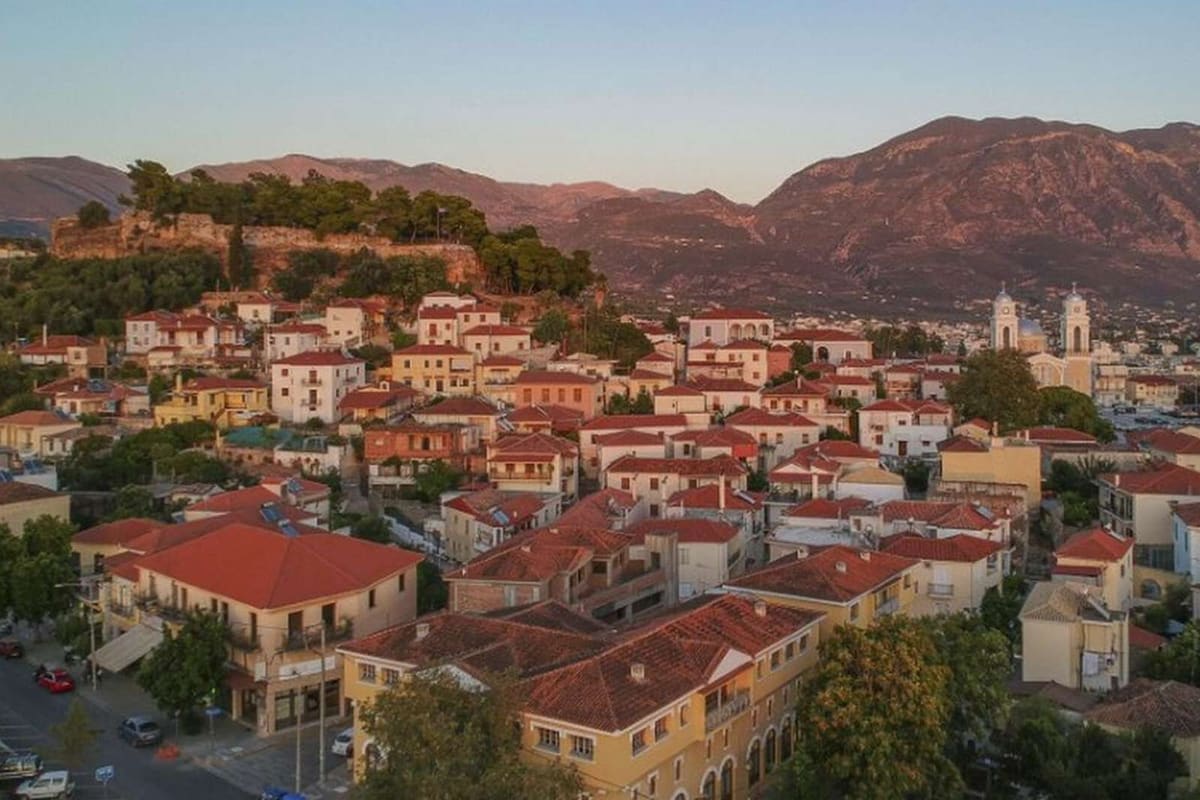
A Kalamata tour walks the old streets of this southern Peloponnese city, where crusaders, rebels and wartime spies left their stories. Among Greek tours, this walk suits travellers who prefer tales to ruins.
The sections below cover how the walk runs, the old center and its landmarks, the heroes and the spies. Booking, season and nearby trips follow, then quick answers.
What is a kalamata tour?
A kalamata tour is a small-group walk through the historic center of Kalamata. A tour leader shares stories about historical figures and past events. The cast includes crusaders, pirates, cursed princesses, rulers, heroes, spies, lovers and traitors from the city’s past.
Each group holds up to 14 people. The tour leader speaks Greek and English. Stories cover mythical battles, secret scandals and murders. These appear in official papers and diaries, yet stayed hidden.
A walking tour, in general terms, is an escorted walk past historic or cultural places inside a town or city. The leader knows each stop and explains its history, culture and art.
- Format: walking tour
- Group: up to 14
- Languages: Greek, English
- Theme: historical stories
A kalamata tour turns the old center into a chain of historical stories.


Where does a kalamata tour start in Kalamata?
A kalamata tour starts at Pl. 23is Martiou, a square in Kalamata named for 23 March. The city is the capital and main port of Messenia in southern Greece. From the square, the group sets off on foot through the historic center.
Kalamata faces the inner end of the Messenian Gulf, beside the Nedon River. It ranks second in population on the Peloponnese, after Patras. The medieval town stood further inland, below Mount Taygetos.
Travellers reach the square on their own, as hotel pickup and drop-off are not included. The walk stays in the historic center. A separate post covers the Mystras tour.
- Start: Pl. 23is Martiou
- Region: Messenia
- Coast: Messenian Gulf
- Pickup: not included
A kalamata tour begins in the square and continues on foot through Kalamata.
What does a kalamata tour show in the historic center?
A kalamata tour shows famous buildings and sites of the historic center, and access to them is part of the booking. Kalamata’s landmarks include a castle from the 13th century, the Ypapanti cathedral and the Church of the Holy Apostles.
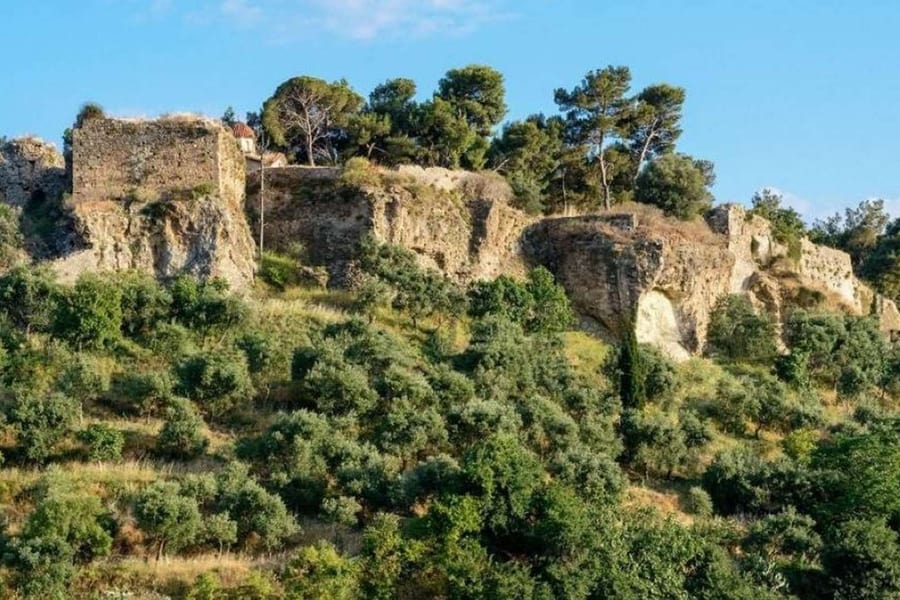
Crusader rulers of the Principality of Achaea raised the castle where ancient Pharae had its acropolis. The Ypapanti cathedral stands beneath its walls. Its foundation stone went down on 25 January 1860.
The Church of the Holy Apostles dates from a prosperous era in the 11th and 12th centuries. The Benakeion Archaeological Museum lies in the old center, but entrance fees are extra.
- Photos: allowed
- Access: famous buildings
- Wheelchairs: not suited
- Bring: camera
A kalamata tour links each stop in the old center to a real figure or event.
Which crusader history does a kalamata tour recall?
A kalamata tour recalls the Frankish era that began after the Fourth Crusade. In 1205, Geoffrey of Villehardouin and William of Champlitte took Kalamata, whose Byzantine fortress was in too poor a state to hold out. The town then joined the Principality of Achaea.
Geoffrey, a Champagne knight, received Messenia and Kalamata as a fief from Champlitte. He ruled as the second prince of Achaea. Kalamata became the centre of the family’s lands.
The principality was split into twelve baronies, and Kalamata was one of them. William II of Villehardouin, a later prince, was born in the town and died there.
- Era: Fourth Crusade
- Founders: Champlitte, Villehardouin
- State: Principality of Achaea
- Status: Villehardouin family fief
A kalamata tour links the historic centre to the knights who ruled this Messenian town.
What does a kalamata tour say about Kalamata Castle?
A kalamata tour presents Kalamata Castle as a ruined medieval fortress dating from the 13th century, built by the crusaders of Achaea. It stands on a hilltop north of the modern city, on the old acropolis of ancient Pharae.
Local Slavs once seized the castle. A prisoner used a rope to measure the drop below his cell window, then made a matching ladder. The Franks retook it and raised the walls.
The Venetians took the castle in 1685 and pulled much of it down. Retreating Ottomans had burned their own ammunition stores. In 1825, forces of Ibrahim Pasha added more damage.
- Built: 13th century
- Builders: Achaea crusaders
- Razed: 1685, Venetians
- Today: protected monument
A kalamata tour points to the castle, which a Messenian prefect turned into a park.
How does a kalamata tour tell the story of 1821?
A kalamata tour tells how Kalamata became the first town freed after 400 years under Ottoman rule. On 23 March 1821, Greek revolutionary forces took the city when the Ottoman garrison gave up without a fight, an early event of the War of Independence.
The Ottoman aga heard warnings about brigands and asked Petrobey for help. Petrobey sent his son Ilias with 150 Mani fighters. Their protection was only a pretext for the uprising.
Kolokotronis closed in on the city. Afterwards, 24 priests and monks held a doxology outside the Church of the Holy Apostles. A Nafplio day trip suits travellers exploring further.
- Date: March 1821
- Outcome: no fighting
- Ceremony: doxology
- Start: 23is Martiou square
A kalamata tour meets at a square named after this liberation date.
How does the 1986 earthquake shape a kalamata tour?
A kalamata tour walks through the historic center, the area hit hardest when an earthquake struck on 13 September 1986. The damage gathered in the central and northeast corners, where masonry houses stood about 150 to 200 years old.
The quake had a magnitude of 5.9 and an epicentre near the city. At least 20 people died and 330 were hurt. A ferry opening ceremony kept the toll lower.
Twenty percent of the city’s buildings were pulled down. The Ypapanti cathedral below the castle suffered heavy harm and was later restored, so travellers see it repaired today.
- Rescuers: France, Germany
- Shelters: 30 campsites
- Worst hit: Elaiochori village
- Aftershock: Ms 5.3
Travellers on a kalamata tour walk central streets where the earthquake did its worst damage.
Which season suits a kalamata tour?
A kalamata tour runs outdoors, and Kalamata has a hot-summer Mediterranean climate. Its summer months stay dry, with hot days and plenty of sunshine, while winters stay mild and wet. Travellers who want dry streets pick summer; those avoiding heat pick winter.
The southern low-lying Peloponnese shares this climate type. Summer rain arrives as showers or thunderstorms. Days run hot, and nights stay warm. Rain and cloud are common further inland across Messenia.
Heatwaves along the coast stay milder because the cooler sea and sea breeze ease the heat. Even so, walkers are told to bring water, a sun hat and sunscreen.
- Hottest: 45.0 °C
- Coldest: −5 °C
- Snow: mainly on Taygetus
- Lowlands: warmer than Athens
A kalamata tour in hot months needs sun protection; cooler months bring more rain.
What else near Kalamata pairs with a kalamata tour?
A kalamata tour pairs with sites across Messenia, the regional unit whose capital is Kalamata. Ancient Messene lies 25 kilometres north, Mount Taygetus rises over the city skyline, and the Mani Peninsula stretches south as the range’s southern extension.
Ancient Messene keeps the ruins of a large classical city-state, built by Epaminondas in 369 BC, with a museum inside its walls. Fans of ruins can add the Ancient Olympia tour.
The Kalamata olive is large and dark purple, and pickers harvest it by hand to avoid bruising. Under PDO rules, only olives from the region around Kalamata carry the name.
- Highest peak: Profitis Ilias
- Mani ends: Cape Matapan
- Mani fossils: Apidima Cave
- Taygetus mention: the Odyssey
Pairing a kalamata tour with Messene, Taygetus or Mani adds ancient ruins and mountains.
Who can join a kalamata tour?
The kalamata tour runs as a standard small group of up to 14 people. Visitors who follow spoken English or Greek can join the stories as they unfold. The route is not suited to wheelchair users or to people with mobility impairments.
Comfortable walking shoes come first on the list of notes before the day. The route crosses the historic centre on foot, so sturdy footwear helps travellers keep pace with the group.
Packing notes list a camera along with water, sunscreen and a sun hat. The last three items give walkers protection from the sun while the group moves through the streets.
- Group: up to 14
- Languages: English, Greek
- Footwear: comfortable shoes
- Not suited: wheelchair users
Walkers who match these notes can join the kalamata tour in the heart of Kalamata.
How do travellers book a kalamata tour?
The kalamata tour is reserved in advance on a booking site that offers a reserve now and pay later option. Travellers pay nothing on the day they book. Cancelling free of charge returns the full amount if done at least one day ahead.
The group meets at Pl. 23is Martiou, a square in Kalamata. No hotel transfer is offered in either direction, so visitors reach the square on their own before the start.
Meals, drinks and museum entrance fees are left out of the price, so travellers cover these costs themselves. Travellers who want another escorted outing can read the Monemvasia tour post.
- Payment: pay later
- Cancellation: free, full refund
- Meeting: Pl. 23is Martiou
- Pickup: not included
Booking early and arriving at the square in good time keeps the kalamata tour simple for travellers.
What do travellers ask about a kalamata tour?
The kalamata tour draws questions about language, group size, access, food and clothing. The answers below come from the activity listing, which describes an expert-led walk through the historic centre of Kalamata, with stories of historical figures and access to famous buildings.
Which languages does a kalamata tour use?
The walk is led live in two languages, Greek and English. Reviews on the listing show that every English-speaking traveller who rated the activity gave it a full score.
How large is a kalamata tour group?
The booking falls into the standard group type, with a cap of 14 people. This size lets each person hear the stories and stay close as the group moves along the route.
Can wheelchair users take a kalamata tour?
No. The listing marks the walk as unsuitable for wheelchair users and for people with mobility impairments. Travellers with limited mobility can look for other formats, such as self-led routes with maps or audio.
Are meals and drinks part of a kalamata tour?
No. Food and drinks sit outside the package, so travellers plan their own meals in the city. The booking covers the walk, the stories and entry to the sites on the route.
What clothing suits a kalamata tour?
Dress follows the walking notes on the listing: comfortable shoes on the feet and a hat on the head for sun protection. No dress code beyond these practical points is listed.