Zenobia wreck snorkeling means floating at the surface above the MS Zenobia, a sunken ferry in Larnaca Bay, Cyprus. Fans of Greek tours will find a Cyprus option here, a wreck swim just off the Larnaca coast.
Below come how the ship sank, what snorkelers see from the surface, and how deep the wreck lies. Season, safety, who can join, packing and booking follow, with quick answers at the end.
What is zenobia wreck snorkeling?
Zenobia wreck snorkeling is a boat outing from Larnaca in Cyprus that pairs a sea cruise with a swim above a sunken ferry. Snorkelers stay at the surface and look down toward the wreck, using equipment that the crew hands out on board.
Snorkeling means swimming face-down in water while breathing outside air through a bent tube known as a snorkel. A diving mask covers the eyes. This kit lets swimmers watch the underwater world for long spells with little effort.
On this outing, the boat leaves Larnaca for a mini cruise before stopping above the wreck. Each booking is private, so only one party of up to 20 people rides. Instructors speak English, Greek and other languages.
Every zenobia wreck snorkeling booking includes wet suits, masks and snorkels, along with coffee, water and boat fees. Tips are optional and are not part of the package. Cancelling a day ahead brings a full refund.
Sunken ships attract recreational divers for a mix of reasons. Their structures are worth exploring, they give marine life large homes, and each carries a history. The Zenobia is counted among the ten best recreational dive sites worldwide.
- Base: Larnaca, Cyprus
- Group: private party
- Position: sea surface
- Kit: supplied on board
Zenobia wreck snorkeling joins a mini cruise with a surface swim off Larnaca.


Where does zenobia wreck snorkeling take place?
Zenobia wreck snorkeling takes place in Larnaca Bay, off the city of Larnaca on the southeast coast of Cyprus. The sunken ferry lies on the seabed of the bay, about 1,500 meters from the shore, below the boats that carry snorkelers.
Larnaca ranks third in size among Cyprus cities, after Nicosia and Limassol. It serves as capital of Larnaca District, one of six districts on the island. Its modern streets cover the remains of Kition, an ancient Greek city.
For zenobia wreck snorkeling, boats stop above the spot in Larnaca Bay where the ship sank. The hull lies on its port side at around 42 meters, far below the swimmers who float on the surface.
Larnaca has both a seaport and a marina, and its port is the second largest in Cyprus. The city also lends its name to Larnaca International Airport, the primary airport serving the whole island.
The Finikoudes promenade, with rows of palm trees, runs along the seafront. Travellers wanting a second day at sea can read about the Larnaca boat safari, which covers a separate sea outing from the city.
- Country: Cyprus
- Bay: Larnaca Bay
- Offshore: 1,500 meters
- Depth: around 42 meters
Zenobia wreck snorkeling starts near Larnaca, with the sunken wreck lying offshore in the bay.
How did the ship behind zenobia wreck snorkeling sink?
Zenobia wreck snorkeling centres on a ferry that capsized on 7 June 1980, during its first voyage. A software fault made its pumps push too much water into side ballast tanks, the ship leaned more and more, and it went down without any deaths.
The ferry came from the Kockums shipyard in Sweden and was launched in 1979. She was a roll-on roll-off ferry of the Challenger class. Her first trip started at Malmö, bound for Tartus in Syria.
The ship behind zenobia wreck snorkeling carried 104 tractor-trailers loaded with goods heading to the Middle East and the Mediterranean. After passing Gibraltar, she called at Heraklion on Crete and at Piraeus near Athens in Greece.
Ballast tanks hold water that keeps a vessel stable and can correct a tilt to one side. During the leg to Athens, the captain spotted steering trouble and a lean to port. Crews pumped the extra water out.
The ship reached Larnaca on 2 June 1980, and the problem returned. Engineers found the computer pumping system at fault. On 4 June, she was towed out of the harbour to keep her from blocking it.
- Built: Sweden, 1979
- Cargo: 104 tractor-trailers
- Sank: 7 June 1980
- Casualties: none
Zenobia wreck snorkeling shows visitors the ferry that sank in Larnaca Bay.
What lies on the seabed at zenobia wreck snorkeling?
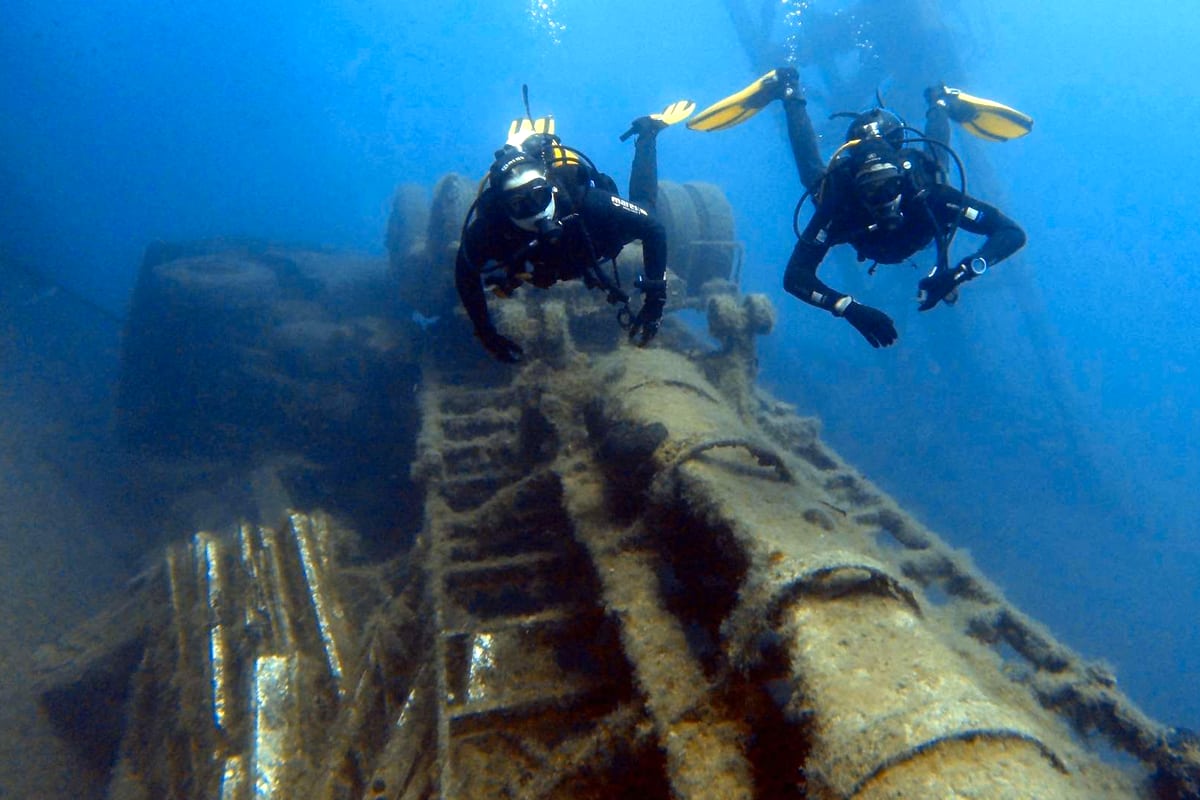
A zenobia wreck snorkeling trip shows a sunken ferry stretching over 172 meters, lying on its port side. Snorkelers floating above can make out its propellers and the remains of the vehicles it carried when it went down off Larnaca, Cyprus.
The Zenobia was a RO-RO ferry. This type of ship carries wheeled cargo such as cars, trucks and trailers. The vehicles drive on and off by their own wheels, so no cranes are needed to load them.
Inside, a RO-RO vessel is laid out like a multistorey car park. Ramps link the cargo decks to the shore. That layout explains why the Zenobia carried tractor-trailers and why vehicle remains sit in the wreck.
A shipwreck is a ship that now rests on the floor of a sea or lake. Such wrecks offer marine creatures wide habitats and attract recreational divers keen on exploring them and their history.
On a zenobia wreck snorkeling outing, an instructor shares the story of the ship. Snorkelers learn how its cargo decks and hull, built to move freight across the sea, became a landmark on the floor of Larnaca Bay.
- Length: over 172 meters
- Position: port side
- Ship type: RO-RO ferry
- Remains: vehicles, propellers
Travellers booking zenobia wreck snorkeling look down on a ferry built to carry vehicles across the sea.
How deep is the wreck during zenobia wreck snorkeling?
The zenobia wreck snorkeling site sits over a ferry resting about 42 meters down. Snorkelers stay at the surface, breathing through a snorkel, and view the ship from above while scuba divers in the group go deeper below them.
The shallowest part sits along the starboard side of the ship. Scuba divers reach it at 16 meters, which suits newly qualified divers. Deeper routes lead inside the car decks and the engine room for very experienced divers.
A snorkeler floats face-down, drawing air through a bent tube. The mask lets snorkelers watch the world below without the training or complex equipment that scuba diving demands. They breathe at the surface the whole time.
During zenobia wreck snorkeling, the lowest point of the wreck lies past the limit of recreational scuba diving, which stops at about 40 meters. The upper sections sit within reach of divers, while snorkelers look down on them.
The outing includes wet suits, masks and snorkels. In cooler water, snorkelers wear a wetsuit for warmth. The boat fees are covered too, along with coffee and water, while tips stay optional and are not included.
- Wreck depth: 42 meters
- Easiest dive: 16 meters
- Snorkelers: surface only
- Starboard side: shallowest
On zenobia wreck snorkeling, travellers stay at the surface while the ferry rests far below them.
What marine life appears on zenobia wreck snorkeling?
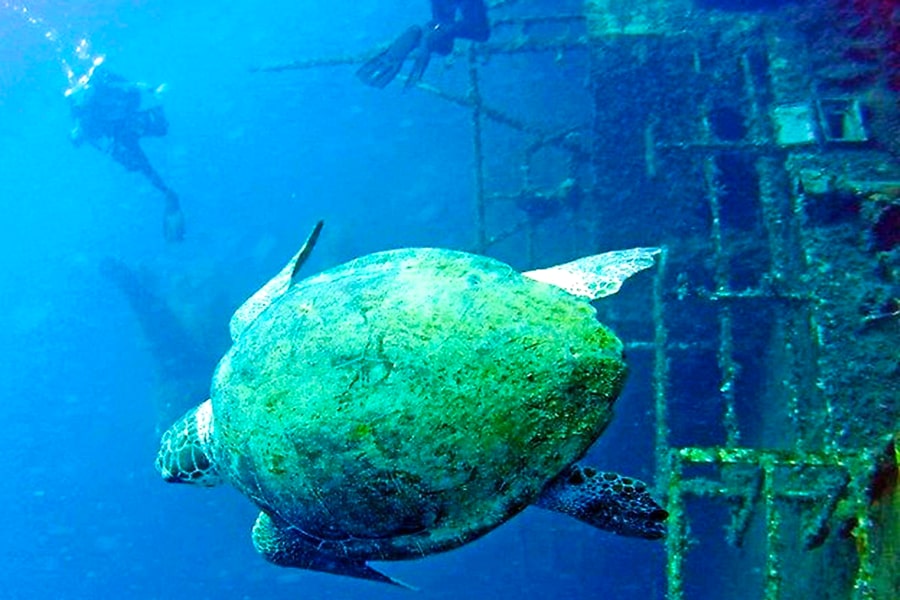
A zenobia wreck snorkeling trip brings sightings of schools of fish, barracudas, groupers and moray eels. The wreck off Larnaca has turned, over the decades, into an artificial reef, which gives these animals food and places to shelter.
An artificial reef is a structure made by people on the bed of a sea or lake. Shipwrecks can become one when they stay preserved on the seafloor, giving algae and invertebrates hard surfaces where they attach.
On zenobia wreck snorkeling, the reef explains the mix of animals. Reef life tends to arrive in stages. Groupers and eels move in to hide in holes and cracks, then hunters such as barracuda follow.
Barracudas are large saltwater predators with long bodies and sharp, fang-like teeth. They hunt by surprise, using short bursts of speed. One species, Sphyraena sphyraena, lives in the Mediterranean Sea and reaches up to 165 cm long.
The wreck lies in the Mediterranean, a sea almost enclosed by Europe, Asia and Africa, with Cyprus among its island countries. Travellers wanting another trip can look at the Limassol snorkeling boat tour.
- Fish: colorful schools
- Predators: barracudas, groupers
- Hiders: moray eels
- Habitat: artificial reef
Snorkelers on zenobia wreck snorkeling watch fish gather over a ferry that now serves as a reef.
How does zenobia wreck snorkeling work on the day?
The zenobia wreck snorkeling day starts at a meeting point in Larnaca, Cyprus. A boat takes the group on a mini cruise to the wreck site. An instructor gives a briefing, snorkelers float at the surface above the ship, and the boat returns to Larnaca.
Travellers gather first at the meeting point, set in Larnaca, a city on the southeast Cyprus coast. From there, the group boards a boat for a mini cruise toward the wreck site, which lies just off the coast.
First, an instructor explains the plan. Instruction runs in English, Greek, Bulgarian, Czech, French, Hebrew, Latvian, Polish, Russian and Romanian. The outing is private, so only the booking group joins, up to 20 people.
At the site, zenobia wreck snorkeling involves lying face down on the water. The ship rests 42 meters below, so snorkelers look down on it. Divers who share the boat go far deeper than the snorkelers.
After the swim, the boat carries everyone back to Larnaca. Free cancellation applies up to a day ahead, and travellers can reserve now and pay later. A separate post covers the Larnaca glass-bottom boat.
- Start: Larnaca meeting point
- Group: private, 20 maximum
- Position: surface floating
- Booking: pay later
The zenobia wreck snorkeling day runs in order: meeting point, mini cruise, briefing, surface swim, return.
What equipment does zenobia wreck snorkeling include?
The zenobia wreck snorkeling package includes wet suits, masks and snorkels as standard gear. Coffee and water are served on board, and boat fees are covered as well. Tips are optional and sit outside the list of included items.
A bare eye cannot focus light properly under water. The mask solves this by trapping a layer of air just ahead of the eyes. A rubber or silicone skirt presses against the face and keeps water out.
During zenobia wreck snorkeling, light bends as it passes from water into the mask. Objects then seem about 34% larger and 25% closer. The water also filters out red light, so colours at depth shift toward blue.
Each snorkel is a bent tube, formed like an L or a J. A mouthpiece sits at the lower end. It lets a swimmer breathe air from above with the face down in the water.
The wet suit is made of foamed neoprene filled with gas bubbles. These bubbles slow heat loss and add buoyancy, which helps snorkelers stay afloat. The suit also guards against scrapes, sunburn and stings.
- Wet suits: provided
- Mask, snorkel: both provided
- Drinks: coffee and water
- Tips: optional, not included
With zenobia wreck snorkeling gear, visitors see clearly, breathe face down and float above the ship.
Which season suits zenobia wreck snorkeling?
The zenobia wreck snorkeling months with warmer water are the seven up to November. In that stretch, the sea water near Cyprus averages over 20 °C. August holds the yearly peak, at 27–28 °C. February has the lowest sea reading, near 17 °C.
Cyprus has hot, dry summers that end in mid-September. In July and August, the average daytime high on the coast reaches around 37 °C. Skies stay almost cloudless, and summer rain is rare.
Larnaca’s climate is hot semi-arid, as rain stays low. Winters across Cyprus are mild and wet, with snow only in the Troodos Mountains. Rain falls mainly between November and March, when small low-pressure systems cross the Mediterranean.
Away from midsummer, zenobia wreck snorkeling still meets warm air. June and September bring coastal highs of around 30–32 °C. Warm weather holds for about eight months, between April and November. Four mild months follow.
The wet suit matters more in cooler months. Calm water draws body heat away 20 to 25 times quicker than calm air. Unprotected swimmers can get hypothermia even in mild seas on warm days.
- Warmest sea: in August
- Coolest sea: in February
- Summer: hot and dry
- Rain: November to March
Outside the seven warmer-sea months, zenobia wreck snorkeling calls for the included wet suit in cooler water.
Who can join zenobia wreck snorkeling?
Zenobia wreck snorkeling is open to first-time snorkelers and seasoned ones. Each booking forms one private group of up to 20 people. Nobody needs a diving certificate, because the whole visit happens from the surface of the bay.
Each booking is private to one party. Strangers do not join it, so families, friends and work teams stay together during the outing. A couple and a full party of the maximum size are both accepted.
A snorkeler floats face-down and inhales air via a bent tube. It takes little effort, which explains its appeal to all ages. Zenobia wreck snorkeling suits travellers who have never worn a mask before, as well as regulars.
Swimming ability still counts, as the water above the wreck is far too deep to stand in. An inflatable vest acts as a buoyancy aid for safety. Weaker swimmers can raise this with the instructor before entering.
Instructors on this outing speak Greek, English, Czech, Bulgarian, Hebrew, French, Polish, Latvian, Romanian and Russian. On children and minimum ages, listings differ, so parents check the conditions of the exact booking before paying.
- Group: private, 20 max
- Level: beginners welcome
- Languages: Greek, English, more
- Children: listings differ
Strong swimmers and nervous beginners can share zenobia wreck snorkeling inside one private party.
How do snorkelers and divers share zenobia wreck snorkeling?
Zenobia wreck snorkeling puts both groups on one boat. Scuba divers descend to the ferry, which The Times placed among the top ten wreck dive sites worldwide, while snorkelers float at the surface and watch them far below.
The ranking is not a one-off. The wreck keeps appearing on lists of the ten best recreational dive sites across the globe. That status brings divers to Larnaca Bay, and snorkelers view the same site from above.
Zenobia routes match skill. Newly qualified divers follow the starboard side to 16 meters. The upper car deck and the accommodation block suit advanced divers. Only very experienced divers reach the lower car deck or engine room.
Wreck diving means exploring sunken ships and other structures for recreation. Going inside a hull exposes divers to getting lost, entrapment and running out of air, so it demands special skills. Zenobia wreck snorkeling avoids these risks entirely.
Scuba divers train in skills and procedures that match their certification level. Travellers who want to dive rather than float can read the site’s post on Limassol scuba diving before planning a second trip in Cyprus.
- Ranking: world top ten
- Divers: deep routes
- Snorkelers: surface only
- Easiest dive: 16 meters
Mixed parties of divers and swimmers can book zenobia wreck snorkeling together on one boat.
What do travellers bring for zenobia wreck snorkeling?
Zenobia wreck snorkeling supplies the snorkel gear and drinking water, so travellers pack only personal items: swimwear, a towel, sun protection, a hat, water shoes, dry clothes and a waterproof camera. Cash for an optional tip is the one extra.
Swimwear goes on before boarding, which saves changing on deck. Travellers keep a towel plus spare dry clothing in a sealed bag aboard the vessel. After the swim, travellers dry off for the ride back to Larnaca.
Cyprus summers are hot, with coastal highs near 37 °C in July and August. Face-down swimmers expose backs and necks to that sun. A rash vest protects against sunburn, and a hat shades the head on deck.
Sunscreen needs thought. Waterproof lotions stay on in the sea, yet certain formulas damage the environment. On zenobia wreck snorkeling outings, a long-sleeved layer cuts the amount of cream that washes into the water of Larnaca Bay.
Each booking includes wetsuits, masks and snorkels, so no gear needs packing. Coffee comes with the water on board, and boat fees are covered too. Water shoes and a waterproof camera remain the travellers’ own choice.
- Supplied: mask, snorkel, wetsuit
- Pack: swimwear, towel
- Sun: hat, rash vest
- Extra: optional tip
A short packing list keeps zenobia wreck snorkeling simple from boarding to the final swim.
How does zenobia wreck snorkeling fit a day in Larnaca?
Zenobia wreck snorkeling fits a Larnaca day as one sea outing beside a walk through the city. The wreck sits just off Larnaca, so travellers can pair it with Larnaca Castle, the ruins of ancient Kition, the Salt Lake and the Church of Saint Lazarus.
Larnaca’s Church of Saint Lazarus was built in the late 9th century. Tradition places the building over the second tomb of Lazarus. A procession carries his icon through the city streets eight days before Easter, on Lazarus Saturday.
Larnaca Castle was raised to defend the southern coast and the harbour town. Today it holds a museum, and its courtyard serves as an open-air theatre for 200 people. Medieval pottery, tools and weapons fill the eastern room.
West of the city sit four salt lakes of different sizes. Flamingoes pass the winter there, feeding on brine shrimp. Hala Sultan Tekke, a mosque that holds the tomb of Umm Haram, stands on the lake’s west bank.
Ruins of ancient Kition, birthplace of the philosopher Zeno, lie inside the modern town. Zenobia wreck snorkeling fills one part of the day, and visitors who want more time at sea can add a Larnaca sunset cruise.
- Church: Saint Lazarus
- Fort: Larnaca Castle
- Wetland: Larnaca Salt Lake
- Ruins: ancient Kition
Zenobia wreck snorkeling in the bay and a walk past these old city sites fit together on one Larnaca day.
What do travellers ask about zenobia wreck snorkeling?
Zenobia wreck snorkeling raises a short set of questions from travellers. They ask whether non-divers can see the ship in Larnaca Bay, what the booking covers, whether the group stays private, how large it can grow, and what the cancellation terms say when the sea turns rough.
Can non-divers see the ship during zenobia wreck snorkeling?
Yes, from above. The ferry rests on its port side at roughly 42 meters, so snorkelers float at the surface and look down at it. One reviewer noted that scuba divers from the same group were visible far beneath while the reviewer stayed on top.
Is equipment part of the booking for zenobia wreck snorkeling?
Yes. Wet suits, masks and snorkels come with the booking, so passengers pack no gear of their own. Coffee and water are part of the deal, and boat fees are covered too. Any tips stay optional and are not part of the package price.
Can the group stay private on zenobia wreck snorkeling?
Yes. The format is private, so only the booking party joins the boat for the whole outing. Instructors speak English, Greek, French, Polish, Russian, Hebrew, Czech, Romanian, Bulgarian and Latvian. Payment can wait, since travellers can reserve a place first and pay nothing until later.
What group size applies to zenobia wreck snorkeling?
A single private group holds up to 20 people, so a large party of friends fits on one boat together. Both seasoned snorkelers and first-time visitors can take part. Over the decades the sunken hull has turned into an artificial reef for marine life.
What happens to zenobia wreck snorkeling when the sea is rough?
Bookings can be dropped at no cost while 24 hours or more remain, and a full refund follows, so travellers who see a poor forecast can step back. Rules for trips called off by the operator because of weather are not stated, and listings differ here.