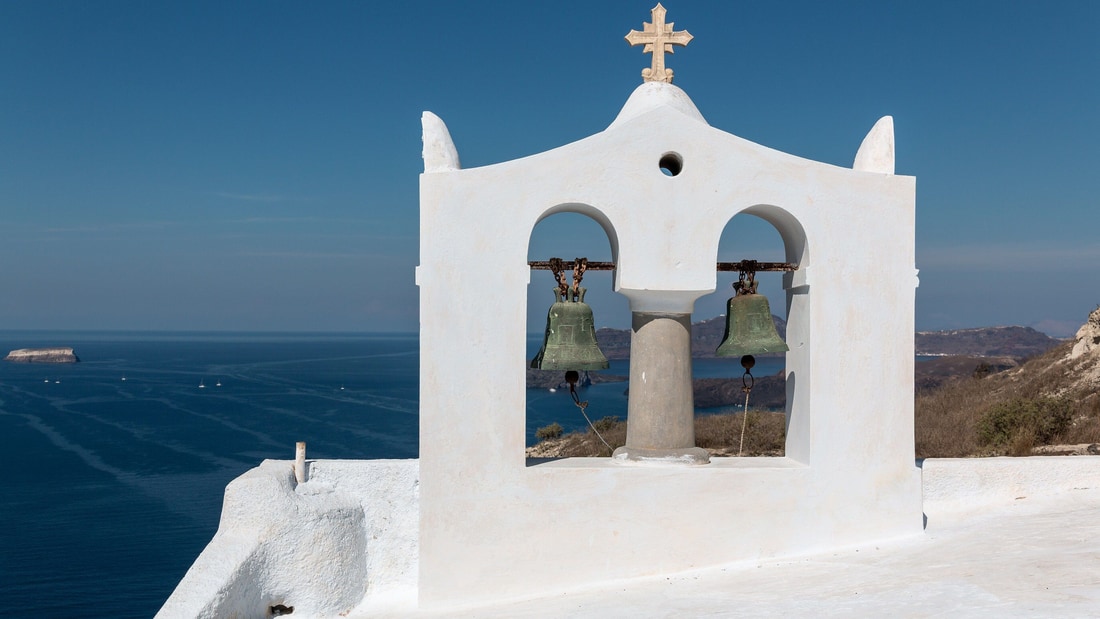
A Santorini food tour walks the lanes of Fira and the inland villages, tasting the products of the island’s volcanic soil, Greek street food, meze and seafood, local wines and spirits, and the sweets of the Greek table. This post covers what a Santorini food tour includes, where tours walk, the island products, the street food, meze and seafood, wine and spirits, sweets and the best season. It is one of the food tours in Greece on Greece VIP.
Each section ends with a Santorini food tour that can be booked online.
What does a Santorini food tour include?
A Santorini food tour is a tasting walk with a licensed tour leader through Fira and the inland villages of the island. The stops serve produce of volcanic ash soil and the dishes of Greek cuisine that rest on it.
Santorini, with 15,480 residents at the 2021 census, is the southernmost island of the Cyclades. Tourism is the primary industry, especially in the summer months. Agriculture also forms part of the economy. Before 1960, when the flow of foreign visitors gradually began, economic life rested on crops and trade. A Santorini food tour tastes what that older farm economy produced.
Greek cuisine is recorded in images and texts from ancient times, and its influence spread to ancient Rome and then across Europe. Olive oil is the characteristic and ancient element of the cuisine, and the olives themselves are widely eaten. Wheat is the basic grain, although barley is also grown. The cuisine also uses a great variety of cheese types.
A Santorini food tour is for tasting, and a Santorini cooking class is for cooking. The walk ends with food that others prepared, while the class ends with food that the participants made themselves. Only the walk moves between Fira and the villages, stop by stop. At each stop, a tour leader names the dish and the produce behind it.
- Route: The walk covers Fira, Pyrgos and Megalochori.
- Produce: Tastings cover tomato, fava, capers and aubergine.
- Leader: An expert-led group learns every dish.
The caldera formed a small, circular archipelago, and Santorini is the largest island in it. The island covers 73 square kilometres, and Therasia plus five uninhabited islands, among them Nea Kameni, share its municipality. A Santorini food tour stays on the main island, where the capital, the farms and the villages lie.


Where does a Santorini food tour walk?
A Santorini food tour walks through Fira, the capital on the caldera rim, and through the inland villages of Pyrgos and Megalochori. Fira holds the central square and the bus station, and the villages stand away from the cliff.
The modern capital of Santorini is Fira. Thira, the ancient name of the island, gave Fira its name through a variant pronunciation. Banks, pharmacies and a bus and taxi station stand at Plateia Theotokopoulou, the central square. Buses depart from the central station in Fira very frequently and cover routes to almost every place on the island and to tourist spots.
Pyrgos Kallistis, literally Beauty Tower, had 1,078 residents at the 2021 census. A Santorini food tour finds it 7 km from Fira. The village is built like an amphitheatre on a hill, with the ruins of a Venetian castle on top, where the island once had its administrative centre. Pyrgos is one of the villages that tourism has spoiled least.
Megalochori is a village on Santorini in the Cyclades. It is one of twelve local subdivisions that the municipality of Thira counts on the island, beside Akrotiri, Emporio, Imerovigli and Pyrgos Kallistis. A Santorini food tour in Megalochori stands in a settlement that the Exo Gialos desalination plant, which has two units, supplies with water, together with Fira, Karteradou, Pyrgos and Vourvoulou.
- Fira: Whitewashed houses line the edge of the 400-metre caldera.
- Pyrgos: A Venetian castle ruin crowns the hill village.
- Megalochori: The village belongs to the municipality of Thira.
Cape Akrotiri in the south and Cape Ag. Nikolaos in the north mark the ends of the 18-kilometre caldera. Nea Kameni, a volcanic island, lies at its centre with Thirassia. Large cruise ships anchor between Nea Kameni and Fira. A Santorini food tour starts at the rim and then turns inland.
Which island products does a Santorini food tour taste?
A Santorini food tour tastes the Santorini cherry tomato and fava from Spanish vetchling, two crops of the volcanic soil, along with capers and aubergine, two staples of the Greek table. Dew and sea humidity water the island’s crops.
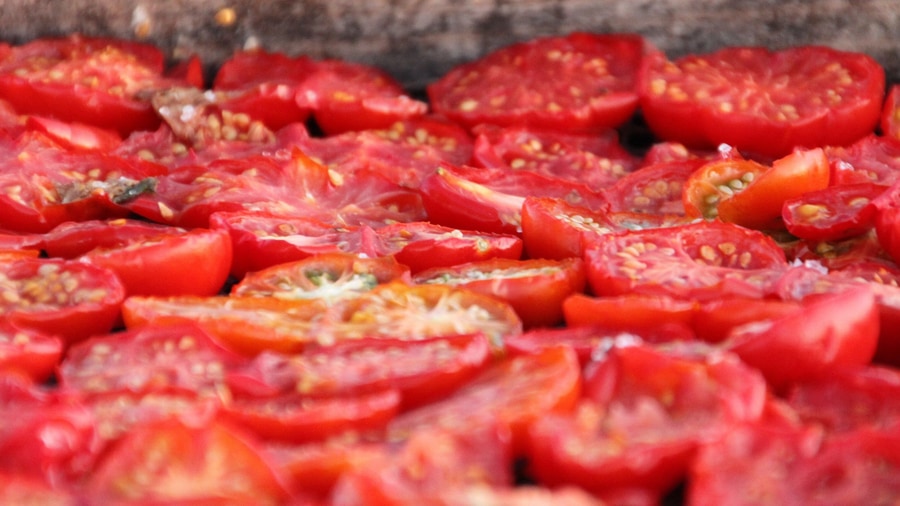
Deep red and firm-fleshed, the Santorini cherry tomato weighs between 15 and 27 grams and has a high seed content. Rainfall stays under 370 mm a year, so the crop draws water from dew and from air at 71% humidity. Hygroscopic sodium in the soil traps moisture from the air. A designation of origin has protected the tomato since June 13, 2013.
Santorini fava is a purée made from the seeds of Spanish vetchling, a legume cultivated only on Santorini and neighbouring islands. The legume has a protected designation of origin in the European Union. Protein makes up 25% of the seeds and dietary fibre 26%. A Santorini food tour tastes a legume that residents of the island have cultivated for 3,500 years.
The caper bush requires a semiarid or arid climate, and Santorini has a hot semi-arid one. Buds ready for picking are dark olive green and measure from under 7 mm to more than 14 mm. A Santorini food tour adds aubergine, which Greek cuisine lists beside tomatoes, potatoes, green beans and okra as an important vegetable. White cultivars also exist.
- Tomato: The fruit is firm and deep red.
- Fava: The purée comes from vetchling seeds.
- Capers: Pickled buds come from a dry-climate bush.
- Aubergine: Greek cuisine serves it fried or as a spread.
Production of the tomato has declined since the 1900s because of environmental, political and tourism issues. Strong winds, drought or a sudden heat wave can destroy the fava crop. In good weather, farmers reap about 800 kilograms of beans per hectare. Each Santorini food tour tasting therefore covers a limited harvest.
Which street food does a Santorini food tour try?
A Santorini food tour tries three Greek street foods: souvlaki, gyros and savory spinach pie. Greek cuisine lists souvlaki, gyros, pitas and roasted corn as common street foods, and each dish uses a skewer, a spit or an oven.
Souvlaki is small pieces of meat grilled on a skewer, and Greece and Cyprus use pork. Excavations on Santorini unearthed stone cooking supports with pairs of indentations that point to skewers, plus holes in the base that fed air to the coals. Islanders used them before the Thera eruption of the 17th century BC. A Santorini food tour tastes the modern version.
Gyros is meat roasted on a vertical spit. Cooks stack thin, round pork slices with fat trimmings between them, and the juices from the upper meat baste the lower meat. Greeks from Asia Minor brought the method to Greece after the 1922–23 population exchange. Cooks roll the shavings in an oiled, lightly grilled pita with tomato, onion and fried potatoes.
Savory spinach pie, called spanakopita, fills filo with chopped spinach, feta, onion, egg and herbs. The cheese version carries the name spanakotiropita, mainly in northern Greece. Village-style pastry with a thicker crust, or puff pastry, can replace filo, and butter with egg yolk deepens the golden color. In rural Greece, cooks replace part of the spinach with leeks, chard and sorrel.
- Piroski: Fried pita holds feta, kasseri, meat or potato.
- Chicken souvlaki: Mustard sauce and lettuce replace tzatziki.
- Northern gyros: Ketchup or mustard can top the pita.
Greek cuisine records fast food as popular in the 1970s, with chains serving souvlaki, gyros, tiropita and spanakopita. A Santorini food tour tastes the same dishes. Pork, tomato, tzatziki and feta recur across all the stops, so a Santorini food tour links three different cooking methods through one set of flavors.
Which meze and seafood does a Santorini food tour serve?
A Santorini food tour serves a meze table of small dishes, hot or cold, beside seafood such as grilled octopus and fried anchovy. Fish dishes are common across the Greek islands, and meze arrive with drinks such as ouzo and tsipouro.
Meze is a selection of small dishes, similar to Spanish tapas and Italian stuzzichini. A meze can form a meal in itself. Ayla Algar suggests that early meze were fruits such as pomegranates, quinces and citrons, set against the bitterness of unripe wine. Greek tables set meze out as a plate of snacks next to drinks, as on a Santorini food tour.
Octopus hangs in the sunlight from a rope on Greek islands, like laundry on a clothesline. Fishers spear it near shore and pound the flesh on stone to tenderize it. Dried, it is served grilled, hot or as a chilled salad dressed with olive oil, garlic, oregano and lemon juice. A Santorini food tour serves it beside ouzo, a pairing rated superb.
Fried anchovy, called gavros tiganitos, joins the table, and so does fried cod with skordalia dip and fried potatoes. Lakerda is pickled raw fish made from Atlantic bonito, and htapodi ksidato is octopus marinated in vinegar. Avgotaraho is cured roe of flathead mullet caught in lagoons. Makers salt the ovaries, dry them in the sun and seal them in melted beeswax.
- Tomatokeftedes: Tomato fritters are well known throughout Santorini.
- Sfougato: Santorini, Mytilene and Crete know this baked omelette.
- Saganaki: This meze is fried kefalograviera cheese.
Common features of a meze table include cubes of cheese, olives and grilled meats. Kalamata olives, fava spread, fried vegetables and melitzanosalata, the eggplant salad, share the table with seafood. A Santorini food tour serves island fritters, omelette and fried cheese beside the octopus, so the plates move from sea to farm.
Which drinks does a Santorini food tour pour?
A Santorini food tour pours dry white Assyrtiko and sweet amber Vinsanto, the two wines of the island, beside tsipouro and ouzo. Both wines come from vineyards on volcanic soil, and the two Greek spirits are sipped with meze.
Assyrtiko is a white grape indigenous to the island of Santorini. The vines grow low in baskets called kouloura, in ash-rich volcanic soil that holds none of the clay a phylloxera parasite needs. Old vines grow from roots that are centuries old. The grape holds high acidity even in ripe years, and its food-friendly reputation suits a Santorini food tour.
Vinsanto is the sweet passito wine of Santorini, made from grapes that dry in the sun after picking. One theory says packages leaving the island were labeled Santo, and vin, the Italian word for wine, completed the name. A glass beside a plate on a Santorini food tour is a tasting with food, while a full winery visit belongs to a Santorini wine tour.
Tsipouro is an un-aged grape brandy of Thessaly, Epirus and Macedonia, made from pomace, the residue of the winepress. Makers discard the first and last runs and keep the heart. Ouzo is a dry anise-flavored aperitif, distilled in copper stills from 96% rectified spirit. Ouzeries serve ouzo with water or ice, and drinkers share mezedes with it over the early evening.
- Assyrtiko: Wine writers cite its aging potential.
- Tsipouro: Anise-flavored versions appeared in the 1900s.
- Ouzo: Producers developed copper-still distillation in 1932.
Tsipouro arrives in shot glasses with nuts, cheese, olives and seafood, and ouzo comes with small fresh fish, olives and feta. Both spirits sit beside the octopus and fritters of a Santorini food tour. Greece won protected status for both spirits in 2006, and EU rules reserve the names for Greece and Cyprus.
Which sweets does a Santorini food tour try?
A Santorini food tour tries four Greek sweets: loukoumades, baklava, Greek strained yogurt with honey and melitinia, a dessert that Greek cuisine lists as traditional to the island of Santorini. Honey, nuts, cinnamon and cheese tie these sweets together.
Loukoumades start as a thick, smooth yeast batter that rises until it turns very soft and foamy. Cooks drop the batter into hot oil and fry it to a golden brown. Thirteenth-century Arabic cookery books name the dish luqmat al-qādi, meaning judge’s morsels. Loukoumades have also been likened to charisioi, the joy cakes that Aristophanes and Eubulus describe at nocturnal festivals.
Layers of filo hold chopped nuts in baklava, and syrup or honey sweetens the whole pastry. Melted butter separates the layers, the pastry is cut into lozenges, triangles, diamonds or rectangles before baking, and syrup is poured over it after baking. The Greek version carries cinnamon and counts 33 filo layers, a number taken from the years of Jesus’s life.
Strained yogurt is the base of tzatziki in Greece and also a dessert, topped with honey, sour cherry syrup or spoon sweets. Straining draws off the whey, so the yogurt turns thick and keeps its sour taste. Sheep’s milk is the traditional base of Greek yogurt, and Greek honey comes mainly from fruit trees and citrus trees, with thyme and pine honey.
- Melitinia: A Santorini dessert made from sweet cheese, eggs, sugar and mastic.
- Plakous: A baklava-type pastry on Lesbos keeps an ancient Greek name.
- Ingredients: Greek desserts use nuts, honey, fruits, sesame and filo pastries.
The sweets on a Santorini food tour carry long written records. Thin breads sweetened with walnuts and honey appear in Homer’s Odyssey, and food historian Patrick Faas names a honey-covered baked layered-dough recipe from the 2nd century BC as the origin of baklava. Strained yogurt also adds protein, calcium, iodine and vitamin B12.
When is the best season for a Santorini food tour?
A Santorini food tour follows the food year of the Aegean island: a hot semi-arid climate that is dry in summer and wetter in winter, crops that live on dew and cisterns, and a grape harvest in mid-August.
The Köppen code for Santorini is BSh, a hot semi-arid climate, yet the island shares the dry summers of a Mediterranean climate. Yearly rain comes to about 270 mm, and the National Observatory of Athens puts the mean annual temperature near 19 °C. In the growing season, temperatures are warm and rain is low, but humidity is high.
Fresh water is short on Santorini: no rivers, one spring and little rain explain why islanders led roof and courtyard rain into elaborate underground cisterns. Vines and olives survive without irrigation on dew that early-morning fog leaves on the ground. A number of cisterns went out of use after the 1956 earthquake, and desalination plants now supply running water.
Growers on Santorini pick the grapes in mid-August, and the vines grow in low spiralling baskets with the grapes hanging inside to shelter them from the wind. Growers traditionally picked the grapes for one white wine at night to avoid the heat. Moustalevria, called oinouta in Ancient Greece, is a grape must pudding that is popular when the must is fresh.
- Summer: Tourism, the main industry, is strongest in the summer months.
- Winter: The island receives its wetter weather in winter.
- Ferries: Up to five crossings from Piraeus go direct in summer.
About 1,200 hectares of Santorini lie under vine, and viticulture is the main sector of farm production on the island. Wine growing goes back to prehistoric times on the island, and rising tourism has gradually reduced it. A Santorini food tour therefore reflects a food year set by a dry island.
What do travelers ask about a Santorini food tour?
A Santorini food tour prompts five questions: vegetarian dishes, alcohol, cruise passengers, the sunset and nuts. Fava is plant food, Assyrtiko wine carries alcohol, a gondola lift links Skala to Fira, Oia fills for the sunset and baklava holds nuts.
Does a Santorini food tour suit vegetarians?
Fava is made from split peas mashed with onion, garlic, lemon juice and oil, and Greek cuisine also uses vegetables, olive oil and cheeses. Loukoumades met the fasting rules of Byzantine Lent, since the dough held only flour, yeast and water.
Do the drinks on a Santorini food tour include alcohol?
Wine is a staple of Greek cooking, and vines have grown on the island since ancient times. Assyrtiko, the flagship grape, makes wines averaging 13.5% alcohol. Greek coffee, mountain tea, hot milk and fruit juice also belong to the Greek table.
Can cruise passengers join a Santorini food tour?
Cruise passengers who join a Santorini food tour land at Skala, the Old Port, by boat transfer. A pulsed gondola lift links the pier to Fira, the capital, and the alternatives are a climb of about 600 steps or a mule ride.
Can a Santorini food tour combine with the sunset?
Sunset viewing is an evening event in Oia, where the town fills with people. Narrow village paths fill up during the tourist season. A Santorini food tour in Oia or Fira therefore stays on the caldera edge.
Do the sweets on a Santorini food tour contain nuts?
Baklava holds chopped nuts between its filo layers: walnuts and pistachios, with hazelnuts and almonds in other recipes. In southern Greece the filling is mostly almonds, and in the north walnuts. Loukoumades take walnuts as one topping beside honey and cinnamon.
Featured photo: Dietmar Rabich, CC BY-SA 4.0, via Wikimedia Commons.