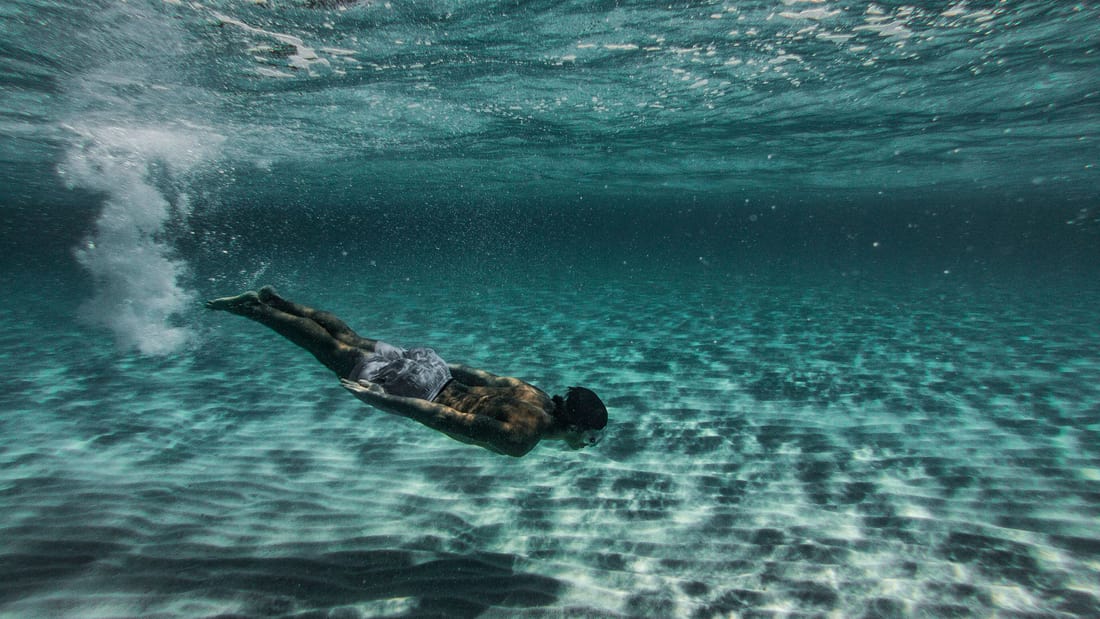
Crete scuba diving takes beginners and certified divers below the clear water of the largest Greek island, from try dives in sheltered bays to reefs, caves and wrecks off the north coast and the deep blue of the Libyan Sea in the south. This post covers what Crete scuba diving includes, where dives take place, the marine life, the caves, reefs and wrecks, the courses, first dives, visibility, the law, safety and the best season. It is one of the sea activities in Greece on Greece VIP.
Each section ends with a Crete scuba diving experience that can be booked online.
What does Crete scuba diving include?
Crete scuba diving includes try dives for newcomers, certification courses for beginners, and boat and shore dives for certified divers. A try dive takes place in a pool or in calm water with a professional instructor, so no previous training is required.
A Crete scuba diving try dive introduces the equipment and the first breaths underwater inside confined water. Beginners then follow an entry-level course that combines theory, practice in confined water and training dives in open water. Certified divers book single dives or full days on the water, choosing between shore entries along the coast and boat trips to offshore ground.
Boat diving in Greece uses registered recreational diving vessels, and crews carry groups to sites that shore divers cannot reach. Shore diving suits guests who stay close to the beach, because rocky seabed and seagrass beds begin a short swim from the sand. Both options for Crete scuba diving run in small groups led by certified staff on every dive.
- Try dives: First breaths underwater in confined water.
- Courses: Entry-level and advanced training.
- Certified diving: Boat and shore dives with staff.
Groups stay small, and every dive follows a plan agreed before entry. Course levels follow the standards of training agencies such as PADI and SSI, which publish depth limits and supervision rules for each certification level. Divers holding a card from a recognised agency join the same sites as staff.


Where does Crete scuba diving take place?
Crete scuba diving takes place along the north coast near Chania, Rethymno, Heraklion and Agios Nikolaos, and along the south coast on the Libyan Sea. Chania sits 70 kilometres west of Rethymno and 145 kilometres west of Heraklion.
The north shore faces the Sea of Crete, a part of the Aegean Sea with a surface area of 45,000 square kilometres. The sea stretches between the Cyclades and the Cretan coast. Chania, Rethymno, Heraklion and Agios Nikolaos are port towns on that shore. Crete scuba diving on this side works from beaches, harbours and boats leaving in the morning.
The south coast faces the Libyan Sea, which reaches a maximum depth of 5,109 metres and an average depth of 1,500 metres. Gavdos, the southernmost Greek island, lies beyond that shore, and Koufonisi belongs to the same sea. Crete scuba diving in the south reaches open water and steep ground far from the busier northern resorts and the summer crowds.
- North coast: Chania, Rethymno, Heraklion and Agios Nikolaos.
- South coast: The Libyan Sea shore near Ierapetra.
- Bays: Souda Bay, 15 kilometres long.
Crete measures 8,450 square kilometres and has 1,046 kilometres of coastline, with 260 kilometres between the western and eastern ends. Souda Bay is formed between the Akrotiri peninsula and Cape Drapano, and it gives shelter when the wind rises. Road distances between the main towns are short, and plans fit a day trip.
Which marine life does Crete scuba diving show?
Crete scuba diving shows octopus, moray eel, grouper and parrotfish, plus Posidonia seagrass meadows, loggerhead turtles and the Mediterranean monk seal. Rocky reefs and seagrass beds close to the coast hold the animals that divers meet on a single dive.
The common octopus ranges through the Mediterranean Sea, and it hides in crevices and among stones during the day. The Mediterranean moray has a long eel-like body and can give a dangerous bite, so divers keep away from its hole. Groupers, including the dusky grouper, live on rocky ground throughout the Mediterranean, and they are regular sightings during Crete scuba diving.
Posidonia oceanica, known as Neptune grass, forms meadows between one and 35 metres deep and covers about three per cent of the Mediterranean basin. The Mediterranean parrotfish feeds on rocky reefs down to 50 metres and visits neighbouring seagrass. Loggerhead turtles, which average 135 kilograms, cross the open water that Crete scuba diving groups reach by boat from the coast.
- Seagrass: Posidonia meadows shelter young fish.
- Turtles: Loggerheads are listed as vulnerable.
- Seals: Numbers stay between 800 and 1,000.
The Mediterranean monk seal uses sea caves for shelter, feeds at depths of up to 250 metres and can live for 45 years. Posidonia meadows grow between one and six centimetres a year, so a single bed takes centuries to spread. Divers watch animals without touching them or chasing them.
Which caves and reefs does Crete scuba diving explore?
Crete scuba diving explores the Elephant Cave near Chania, other submerged caves and rocky reefs. The Elephant Cave lies southeast of Cape Drapano near Souda Bay, and its entrance sits ten metres below the surface of the sea.
The Elephant Cave is a submarine cave that was found by chance. Divers enter through the flooded section and rise into an inner chamber above the water, which holds stalagmites. Fossil bones of elephants and deer were found in that chamber, and the animals sheltered inside the cave when it stood above sea level. Crete scuba diving visits in small groups.
The fossil elephant is a dwarf species, Palaeoloxodon creutzburgi, which reached around 3,000 kilograms and about 40 per cent of the size of its mainland ancestor. It lived during the Middle and Late Pleistocene, and remains from a cave at Chania in west Crete are placed with it. Crete scuba diving on rocky reefs shows the same limestone ground from the outside.
- Cave: The Elephant Cave holds elephant fossils.
- Reefs: Rocky ground and seagrass lie near shore.
- Depth range: One to 35 metres for Posidonia.
Caves and reefs call for a torch, a reel and training in overhead environments. Wreck and cavern courses teach line handling and buoyancy control before divers enter enclosed ground, and reef dives stay in open water. The first days of a trip suit the open reef sites, while the cave needs a course.
Which wrecks does Crete scuba diving visit?
Crete scuba diving visits wrecks from the Second World War, including ships lost during the Battle of Crete in 1941. The Royal Navy lost 12 fleet ships and seven auxiliary ships around the island in that single battle.
The Battle of Crete ran from the late spring of 1941 until the first day of June. German aircraft sank the cruisers HMS Gloucester, HMS Fiji and HMS Calcutta and the destroyers HMS Kelly, HMS Greyhound and HMS Kashmir. Italian bombers sank HMS Juno in 1941, and HMS Hereward went down nine days later under attack by Junkers Ju 87 dive-bombers.
At Souda Bay the heavy cruiser HMS York was disabled by Italian explosive motor boats on 26 March 1941, beached, and later wrecked by demolition charges. Aircraft were lost in the same weeks, with 21 Royal Air Force machines shot down and 12 destroyed on the ground. Crete scuba diving reaches the sites that remain in navigable water for divers on a trip.
- Cruisers: HMS Gloucester, HMS Fiji and HMS Calcutta.
- Destroyers: HMS Kelly, HMS Greyhound and HMS Kashmir.
- Aircraft type: Junkers Ju 87 dive-bombers.
Wreck dives are booked with a certified professional and follow the depth limit printed on a diver card. Corrosion, fishing gear and unstable plates make penetration risky. Visits stay outside the hull and look at the deck, the guns and the surrounding seabed, and a torch helps a group stay together.
Which courses does Crete scuba diving offer?
Crete scuba diving offers Discover Scuba Diving, Open Water Diver, Advanced Open Water Diver and specialty courses. Training agencies set minimum ages: junior entry-level certification starts at ten years, with a depth limit of 12 metres under adult supervision.
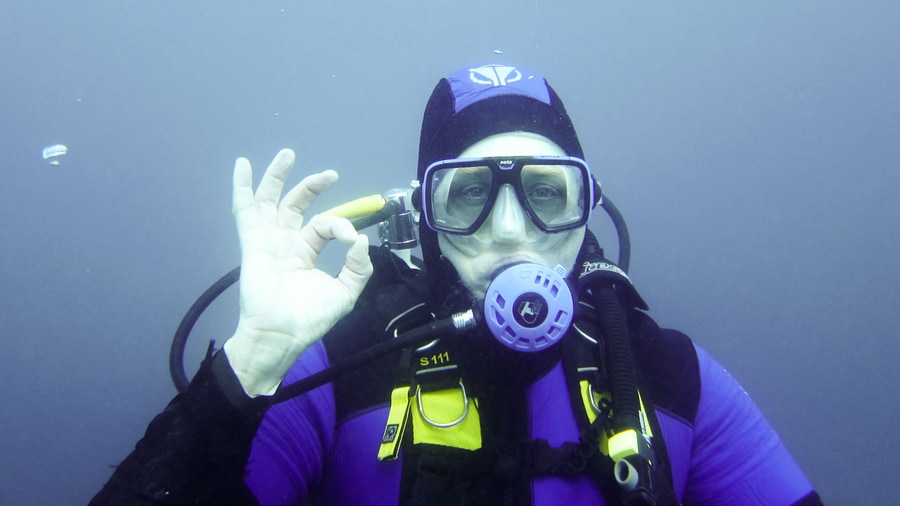
Beginner levels from PADI include Discover Scuba Diving, Scuba Diver and Open Water Diver. Continuing education covers Advanced Open Water Diver, Enriched Air Nitrox Diver and Night Diver, and the adventure range adds Peak Performance Buoyancy, Underwater Navigator, Deep Diver and Boat Diver for Crete scuba diving guests. Specialty paths include Wreck Diver, Drift Diver and Full Face Mask Diver.
Agencies accept people younger than 15 for training and diving under adult supervision, and junior certification carries a 12-metre depth limit. PADI Seal Team and Bubblemaker programmes take children from the age of eight in confined water. Advanced Open Water Diver raises the depth limit above the entry level that Crete scuba diving beginners hold after the first course.
- Entry level: Scuba Diver and Open Water Diver.
- Second level: Advanced Open Water Diver.
- Specialties: Wreck, deep, night and navigation courses.
Course length depends on the schedule agreed with the training team, and a certification card lasts a lifetime. Divers who return after a long break refresh their skills before joining open-water sites. Children and adults train in separate groups, and the choice of level follows experience in the water and comfort in the sea.
Can beginners try Crete scuba diving?
Beginners can try Crete scuba diving through a Discover Scuba Diving session in a pool or in calm water. A professional instructor brings the equipment, explains the basic skills and stays close during the first experience under water.
Training agencies ask every participant to complete a medical declaration before entering the water. Anyone with a heart condition, asthma or ear surgery is referred to a doctor for a check in advance of the booking. Equalising the ears is the first skill to learn for Crete scuba diving, because middle ear barotrauma happens when a diver descends without equalising enough.
The first open-water dive of a junior certification stays inside 12 metres, and certified divers follow the limit printed on their card. Buddy pairs or groups of three dive together and help each other in an emergency, which is the buddy system. A safety stop of one to five minutes at three to six metres is standard practice before surfacing.
- Medical form: A declaration before the dive.
- Skills first: Breathing, mask clearing and equalising.
- Buddy system: Divers stay together and share air.
Shallow ground suits the first session, because pressure changes are smaller and the bottom stays visible. Beginners who enjoy the experience move to an entry-level certification across two or three days of training. Non-swimmers take swimming lessons before booking, and comfortable swimmers progress faster through the skills. Sessions start in shallow water.
How clear is the water for Crete scuba diving?
The water for Crete scuba diving stays clear because the open sea carries little silt, and Posidonia seagrass grows only in clean water. Sea temperature near Heraklion runs from 15 degrees in winter to 25 degrees in August.
Sea temperature near Heraklion reaches 16 degrees in January, 16 degrees in April, 22 degrees in June, 24 degrees in July, 25 degrees in August, 24 degrees in September, 22 degrees in October and 18 degrees in December. The yearly average stands at 19.7 degrees Celsius. Across the Mediterranean the maximum is 28 degrees and the minimum is 12 degrees.
Posidonia oceanica grows best in clean water and serves as a marker for the absence of pollution, so its meadows indicate clear conditions. The depth of its lower limit follows the transparency of the water. Dead leaves from the meadows wash up on the beaches in autumn, which shows how close the beds lie to the Crete scuba diving entries.
- Winter: 15 to 16 degrees from December to March.
- Summer: 24 to 25 degrees in July and August.
- Autumn: 22 to 24 degrees.
Silt rises after storms, and a day of rough weather reduces clarity near the shore. Meadows cover about 38,000 square kilometres of the Mediterranean, which is roughly three per cent of the basin. Open-water sites beyond the shelf keep the clearest water of the season, and Posidonia beds stabilise the sandy bottom.
What does Greek law say about Crete scuba diving?
Greek law regulates Crete scuba diving through Law 3409/2005, which covers underwater activity with breathing apparatus. The law forbids diving in marine protected areas and in ecologically sensitive marine ecosystems, and it bars divers from taking fauna or flora.
Law 3409/2005 was published in the Official Gazette number 273 on 4 November 2005. It prohibits underwater activity with breathing appliances inside marine protected areas and sensitive ecosystems. Divers using compressed-air equipment are also forbidden to fish with spear guns or any other means, and the collection or destruction of micro-fauna and micro-flora is banned under the same article.
Underwater antiquities receive separate protection. At accessible underwater archaeological sites, divers keep 1.5 metres from the seabed and one metre from finds, and touching a find is forbidden. Eight diver-visitors form the maximum for one visit, and breaches fall under Laws 3028/2002 and 4688/2020. Divers check timings with the operator and the authorities before a Chania boat trip.
- Protected zones: Banned in marine protected areas.
- Antiquities: Finds stay untouched.
- Fishing: Scuba divers do not carry spear guns.
The law sets a national framework for diving in Greek waters, and the prohibitions define the closed areas. Port authorities still control traffic near harbours and anchorages, and local rules apply inside those limits. Penalties for damage to underwater cultural heritage are set in Greek law, and operators confirm current rules.
How does Crete scuba diving stay safe?
Crete scuba diving stays safe through training standards, dive planning and the buddy system. DAN advises a minimum preflight surface interval of 12 hours after a single no-decompression dive and 18 hours after repeat days of diving on a trip.
Decompression sickness comes from dissolved gases forming bubbles inside body tissues during decompression, and it can follow an ascent from a dive. Symptoms appear during a dive or soon after the ascent, and they range from joint pain to numbness and breathing problems. Recompression in a hyperbaric chamber with oxygen is the recognised treatment for the condition in a medical facility.
DAN keeps a global recompression chamber network, a database of hyperbaric chambers able to treat injured divers. The team updates chamber details and refers a patient to the closest suitable facility. Divers who fly after diving wait longer than the minimum when the flight follows repeat days of diving, so Crete scuba diving schedules leave room before departure by air.
- Safety stop: A short pause at three to six metres.
- Hydration: Dehydration raises the risk of decompression sickness.
- Sun and heat: Hot, dry summers call for water.
Divers drink water before and after a dive, and they avoid alcohol on a dive day. A slow ascent and a safety stop let excess gas leave the tissues. Anyone with symptoms of decompression sickness stops diving, breathes oxygen and seeks medical help early. Emergency oxygen training forms part of the rescue level in agency programmes.
What equipment does Crete scuba diving use?
Crete scuba diving uses a scuba set with a cylinder and a regulator, a buoyancy compensator, a wetsuit, weights and a dive computer. The set lets the diver carry the breathing gas, so the diver moves freely and stays underwater longer than on one held breath.
A cylinder stores the breathing gas at high pressure, between 200 and 300 bars, and the diver wears it on the back. The regulator works in two stages. The first stage lowers the pressure, and a low-pressure hose links it to the second stage on the mouthpiece. In Crete scuba diving, that second stage delivers a breath whenever the diver inhales. A full-face mask can replace the mouthpiece.
The buoyancy compensator keeps the diver neutrally buoyant, neither floating up nor sinking. A low-pressure hose from the regulator fills its bladder, and a valve lets the gas out. Weights add density so the diver can submerge fully. Lead blocks on a belt were the first system, and weights now also fit into the compensator or the harness of Crete scuba diving sets.
A wetsuit gives thermal insulation. The thickness follows the water temperature and the planned depth. The thicker the suit, the warmer the diver stays and the more it restricts movement. A 5/3 suit has a torso thickness of 5 mm and a limb thickness of 3 mm. Crete scuba diving suits insulate less at 15 metres, where the neoprene foam loses about half its thickness.
The dive computer measures the elapsed time and the depth during a dive. It uses both values to calculate an ascent profile with a low risk of decompression sickness. The display shows the current depth, the maximum depth, the no-stop time and the elapsed dive time. In Crete scuba diving, divers wear the computer on the wrist or mount it on a console.
- Cylinder: It stores breathing gas at high pressure.
- Regulator: It lowers the pressure in two stages.
- Wetsuit: Its thickness follows the water temperature.
- Fins: Open-heeled fins with a strap fit over boots.
The submersible pressure gauge shows the pressure left in the cylinder. A transmitter sends that reading to the dive computer by wireless link, so one display holds the gas supply, the depth and the time. Each item has one job, and together the items form a set for Crete scuba diving.
When is the best season for Crete scuba diving?
The best season for Crete scuba diving runs from late spring to early autumn, when the sea reaches its warmest values. Water near Heraklion reaches 22 degrees in June, 24 degrees in July and 25 degrees in August.
The meltemi, the strong dry north wind of the Aegean, blows from the second half of spring until the middle of September and is at its strongest in the afternoon. Gusts can reach force 7 to 8 on the Beaufort scale. In the southern Aegean and the Cretan Sea the same wind arrives from the northwest and can stop boats.
Crete has hot, dry summers and mild, wet winters. Spring water stays cool while the air warms, and autumn keeps summer warmth after the wind drops. Chrysi lies about 15 kilometres south of Crete in the Libyan Sea, and a day on that coast pairs with a Chrissi island cruise for visitors who want warm water for Crete scuba diving.
- Spring: Rising temperatures and quiet mornings.
- Summer: The warmest water and the strongest wind.
- Autumn: Warm sea and calmer afternoons.
Morning departures beat the afternoon wind on the north coast, while the south coast stays calm on more days of the week. Gavdos, the southernmost Greek island, gives shelter to boats on its leeward side. Divers plan around the wind rather than the calendar and keep one day free of plans.
What do travelers ask about Crete scuba diving?
Travelers ask about Crete scuba diving when they have no experience, when they travel with children, when they wear eyeglasses and when they want to snorkel. A boat day and a beach day fit a week, and the answers concern training and warm water.
Does Crete scuba diving need any experience?
No experience is needed for an introductory session. A professional provides the equipment, explains the skills and supervises the water time. A Discover Scuba Diving experience takes place in confined water, so a guest with no card can join it.
Which age suits Crete scuba diving?
Training agencies set the minimum age for junior entry-level certification at ten years under adult supervision. PADI lowered its minimum age from 12 years to ten after three decades of data. Medical fitness decides the rest for Crete scuba diving.
Can people with eyeglasses join Crete scuba diving?
People who wear eyeglasses join by using corrective lenses fitted inside the mask viewport, or by wearing contact lenses under water. A diver who keeps the same prescription on land sees the reef clearly under water on Crete scuba diving days.
Can snorkelers join Crete scuba diving?
Snorkelers watch the seabed from the surface with a mask, a snorkel and fins. The equipment allows long periods face-down in the water with ease. Snorkeling covers shallow ground, while scuba training adds depth, bottom time and a supply of air.
Can a beach day be combined with Crete scuba diving?
A morning dive fits a beach day because shore entries start from the coast and need no boat. Posidonia leaves wash up on the sand, and the beds behind them shelter fish. Guests swim afterwards and keep the afternoon free.
Featured photo: Ultimouomo, CC BY-SA 4.0, via Wikimedia Commons.