Acropolis tickets give entry to the rock above Athens, with the Parthenon, the Erechtheion, the Propylaea and the Temple of Athena Nike. This page explains what Acropolis tickets cover, which kinds exist, where visitors enter, how the tickets work with the Acropolis Museum and how to reach the site. It belongs to the best tours in Greece on Greece VIP.
Each section ends with an Acropolis ticket, or a ticket with a tour, that can be booked online.
What do Acropolis tickets cover?
Acropolis tickets cover entry to the archaeological site of the Acropolis and its Slopes, a UNESCO World Heritage Site in Athens. The rock holds the Parthenon, the Erechtheion, the Propylaea and the Temple of Athena Nike, and the slopes below hold ancient theatres and sanctuaries.
The official unit in charge is the Ephorate of Antiquities of the City of Athens. The rock rises 150 m above sea level and covers about 3 ha, so the summit is compact. Acropolis tickets open two zones on one entry: the plateau, with the buildings of the fifth century BC, and the slopes around the base, where theatres, a stoa and sanctuaries line the hillside.
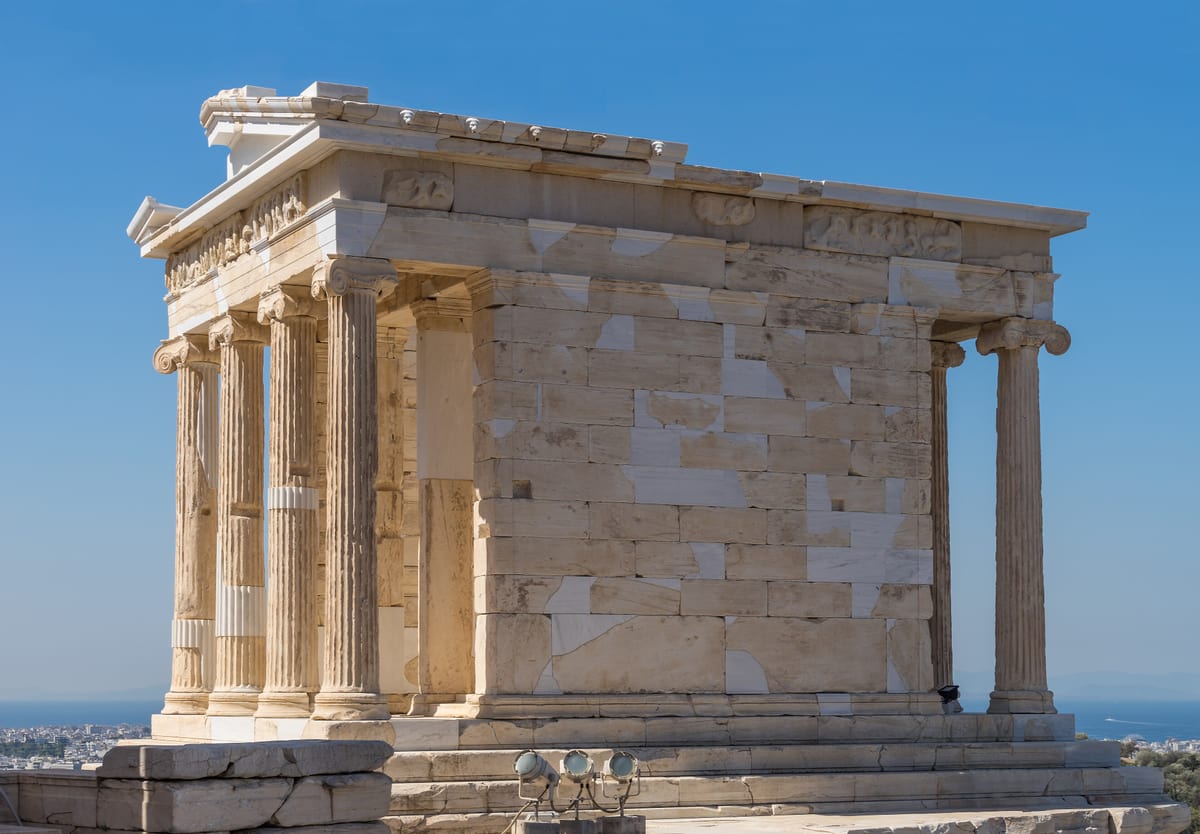
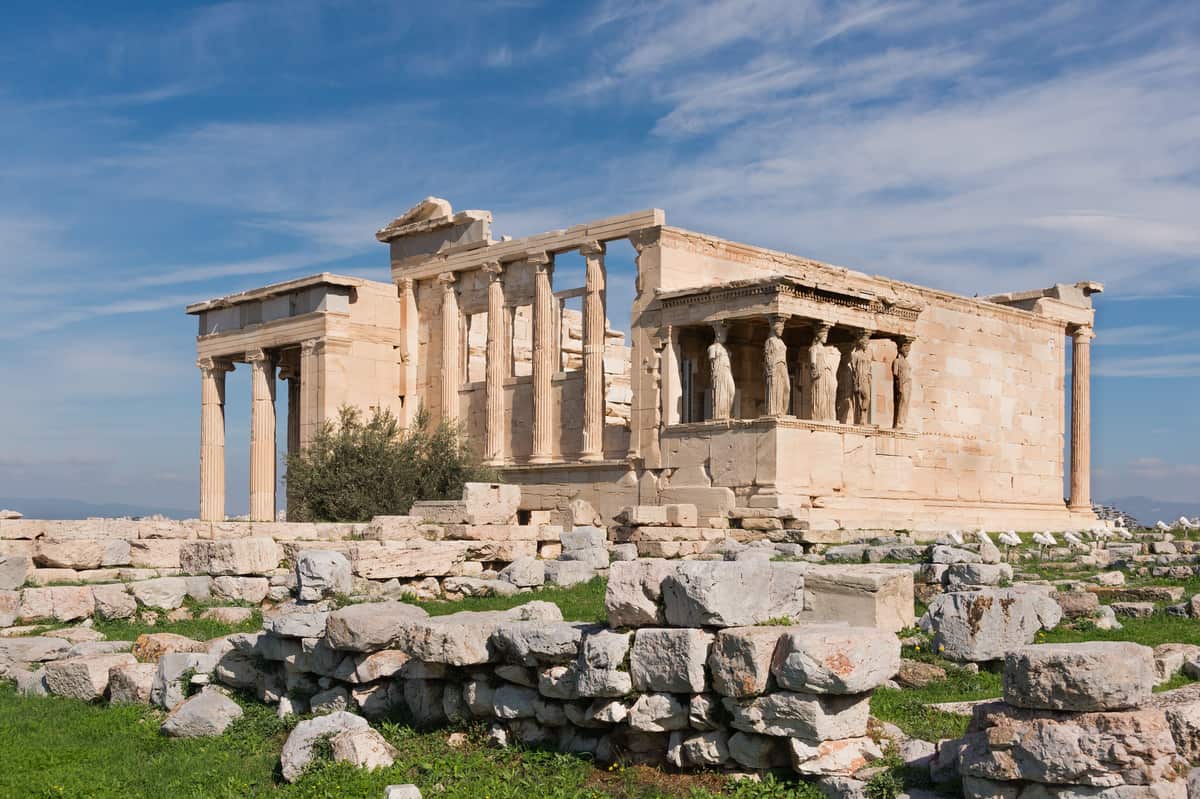
Four buildings define the summit that Acropolis tickets open. The Propylaea forms the monumental gateway on the west side. The Temple of Athena Nike, the smallest temple on the Acropolis, stands on a steep bastion to the right of the entrance. The Parthenon, a former temple of Athena, fills the centre of the plateau. The Erechtheion, an Ionic temple on the north side, carries the Porch of the Maidens.
The slopes form the second part of the ticketed area. The remains of the Theatre of Dionysus lie south of the summit platform, and the Sanctuary of Asclepius sits west of the theatre. The Odeon of Herodes Atticus was built on the south slope in 161 AD and reconstructed during the 1950s. The Stoa of Eumenes runs between the theatre and the odeon. On the north slope, a cave of Pan sits beside a cave sanctuary of Apollo.
The site also carries a UNESCO listing. UNESCO lists two World Heritage Sites in Athens: the Acropolis and the medieval Daphni Monastery. Greece has 21 such sites in total. The Acropolis Restoration Project, begun in 1975, has restored the Parthenon colonnades, part of the Propylaea roof and, by 2010, the Temple of Athena Nike. Holders of Acropolis tickets therefore see reassembled original stone beside new marble from Mount Pentelicus.
- Summit: The Propylaea, the Temple of Athena Nike, the Parthenon and the Erechtheion stand on the plateau.
- South slope: The Theatre of Dionysus, the Sanctuary of Asclepius, the Stoa of Eumenes and the Odeon of Herodes Atticus lie below the summit.
- North slope: A cave of Pan and a cave sanctuary of Apollo mark this side of the rock.
- UNESCO status: Acropolis tickets open one of the two World Heritage Sites in Athens.
Acropolis tickets thus join two areas: a compact summit with four main buildings, and the slopes with theatres, a stoa and sanctuaries. The ticket name, “Acropolis and Slopes”, reflects this scope. A visitor sees the Parthenon and the Theatre of Dionysus on the same ticket by following the signed path between them instead of leaving the site.
Which kinds of Acropolis tickets exist?
Acropolis tickets come as a single-site ticket named “Acropolis and Slopes”, sold at a full and a reduced rate, as a special ticket package listed by the Ministry of Culture, and as formats that add audio commentary or a live tour leader.
The standard option among Acropolis tickets is the single-site ticket. The Hellenic Ministry of Culture and Sports lists it as “Acropolis and Slopes”, at a full rate and a reduced rate. Ticket offices on site sell it, and the official e-ticketing service of the Ministry sells it online. A separate Ministry document sets out who qualifies for free or reduced admission to Greek state sites, monuments and museums.
Single-site Acropolis tickets allow one entry. The official page states that the “Acropolis and Slopes” ticket is used only once. Leaving either the Acropolis Site or the South Slope ends its use, and no site accepts it again. The rule sets the order of the visit: the summit and the South Slope share one ticket, so both belong in one continuous walk before the final exit.
Combined Acropolis tickets that join the rock with other archaeological sites of Athens do not appear on the official Acropolis page, which names only the “Acropolis and Slopes” ticket. The Ministry page for the Ancient Agora of Athens shows how another site handles entry: its standard ticket covers the archaeological site and the museum of the Ancient Agora, and a special ticket package appears beside it. Buyers confirm the site list of any combined offer before purchase.
Formats with audio or a live tour leader add commentary to the same visit. Audio formats play recorded commentary on a phone or headset. For self-paced visits, the Ministry of Culture has also announced a digital tour application, funded by the European Union, to be made available to the public free of charge. Live formats pair Acropolis tickets with a licensed tour leader for an expert-led, small-group walk.
- Single-site ticket: The “Acropolis and Slopes” ticket covers the summit and the slopes at a full or a reduced rate.
- Special ticket package: The Ministry page for the Ancient Agora lists one beside the standard Agora ticket.
- Audio format: Recorded commentary runs alongside the standard entry, and a free Ministry application has been announced.
- Tour leader format: A licensed tour leader walks the group through the site under the official operating rules.
The choice among Acropolis tickets comes down to scope and company. The single-site ticket suits a visit to the rock and its slopes. A package suits a plan that adds other Athens sites. Audio and tour leader formats suit visitors who want commentary on each monument. For the single-site ticket, the one-entry rule on the official page decides the route.


Where do visitors enter with Acropolis tickets?
Acropolis tickets admit visitors at the Main Entrance on the west slope, and the path then climbs to the Propylaea, the gateway to the summit. The official page also names a South entrance on the South Slope, while the Beulé Gate now serves mainly as an exit.
The Main Entrance, which the official page also calls the Central Entrance, lies on the west slope. Geography fixes this side: only one easy route reaches the plateau, between the Nike bastion and the terrace of the Agrippa Monument. Holders of Acropolis tickets climb from the entrance toward the Propylaea, the gateway built between 437 and 432 BC to designs by Mnesikles. A zig-zag ramp from his plan still survives on the approach.
The Beulé Gate stands at the foot of a monumental staircase that once led about 37 m east to the Propylaea. It is a fortified gate of the Roman period, assembled from reused marble of the Choragic Monument of Nikias, whose dedication can still be read on its entablature. The French archaeologist Charles Ernest Beulé uncovered it in 1852. After the main entrance moved in the 1960s, the gate became primarily an exit for holders of Acropolis tickets.
The South entrance serves the South Slope. The official access notes describe a route through the South Slope site from Dionysiou Areopagitou and Thrasyllou streets. Holders of Acropolis tickets on the summit reach it from the other direction: after the Beulé Gate, signs point south, to the left, and the ascent path leads to the South Exit of the Acropolis site and the entrance to the South Slope.
The choice of gate for Acropolis tickets depends on the plan. Visitors with disabilities have their tickets validated at the Main Entrance only, since the South entrance does not handle their entry. A start at the Main Entrance puts the Propylaea and the Temple of Athena Nike first, with the South Slope reached later by the signed path. A start at the South entrance leads through the South Slope site, home to the Theatre of Dionysus, before the climb.
- Main Entrance: Holders of Acropolis tickets enter at the Central Entrance on the west slope.
- Propylaea: The gateway of Mnesikles marks the passage from the approach onto the summit.
- South entrance: The South Slope route starts from Dionysiou Areopagitou and Thrasyllou streets.
- Beulé Gate: The Roman-period gate below the Propylaea now serves primarily as an exit.
Acropolis tickets therefore work with three gates. The Main Entrance on the west slope is the standard way in. The South entrance links the summit with the South Slope and its theatres. The Beulé Gate, a Roman fortification at the foot of the old staircase, now serves as the way out of the summit area, with signs toward the South Slope.
How do Acropolis tickets work with the Acropolis Museum?
Acropolis tickets do not include the Acropolis Museum. The museum sells its own ticket, kept apart from entry to the rock and the other archaeological sites tied to it, so a full visit needs two entries: one for the hill and one for the museum.
The museum’s visitor page treats its ticket as independent, so Acropolis tickets bought for the rock do not open the museum doors. General admission comes from the museum Ticket Desk or its own e-ticketing service, while reduced and free tickets are issued only at the desk, once visitors show proof of eligibility. Each museum ticket works once, on the date for which it was issued. Cash and credit cards are both accepted.
The museum stands at the foot of the south slope, on the line of the ancient road that climbed to the sacred rock in classical times. It faces the Theatre of Dionysus and lies 280 metres from the Parthenon, a 400-metre walk away. Its entrance, at Dionysiou Areopagitou 15, sits beside Akropoli metro station, and holders of Acropolis tickets reach it on foot from the south slope.
Its galleries were planned for every find from the rock and its slopes, from the Greek Bronze Age to Roman and Byzantine Greece. More than 4,250 objects are on show across 14,000 square metres, with the Parthenon marbles in a glass-walled top-floor hall. The museum ticket also covers the excavation beneath the building, entered from the courtyard, where classical and early Byzantine houses and workshops came to light.
Inside, all visitors pass the ticket validation machines on the ground floor before the galleries, and Acropolis tickets do not work at these machines. A security check with an X-ray scanner stands at the entrance, and ground-floor cloakrooms take backpacks and bulky items. The ground-floor shop and café need no ticket, while groups of 16 to 40 people must make a reservation in advance.
- Separate ticket: The museum ticket stands apart from Acropolis tickets and is valid once, on its issue date.
- Where to buy: General admission is sold at the Ticket Desk and online, while reduced and free entry is issued only at the desk.
- Location: The building lies 280 metres from the Parthenon, beside Akropoli metro station.
- Included: A museum ticket opens all exhibition areas and the excavation beneath the building.
The museum and the rock run two ticket systems that meet on Dionysiou Areopagitou Street. Acropolis tickets are sold through a separate e-ticket website, which the museum’s own FAQ gives for the Acropolis site. A day that includes both places needs two valid tickets, plus eligibility documents for anyone who claims reduced or free museum entry.
When is the best time to use Acropolis tickets?
Acropolis tickets are best used outside the peak of summer heat. Athens has a hot-summer Mediterranean climate and has been called the hottest city in mainland Europe, while the museum below the rock drew almost one million visitors in its first summer.
The Köppen system classes the Athens climate as Csa, a hot-summer Mediterranean type. In summer the city can be warmer than Seoul, Melbourne, Buenos Aires and Cape Town, which lie at similar distances from the Equator or closer. A National Observatory of Athens station near the centre gives a mean annual temperature of 19.2 °C (66.6 °F), and holders of Acropolis tickets meet these conditions on a rocky outcrop above the city.
Summer heat in Athens is partly driven by a strong urban heat island effect. The city has been described as the hottest in mainland Europe, and it was the first in Europe to appoint a chief heat officer for severe heat waves. Readings of 47.5 °C and above have been reported at points in the metropolitan area, so Acropolis tickets for midsummer dates come with a heat risk.
The Acropolis Museum divides its year into a summer season from 1 April to 31 October and a winter season from 1 November to 31 March. Snow is relatively uncommon in Athens, and fog is rare in the city centre, though advection fog can form in spring, chiefly along the coastline. For Acropolis tickets dated in winter or spring, these records show snow and fog as exceptions.
Visitor numbers add a second factor. Athens welcomed more than 5 million tourists in 2018, 1.4 million of them on city breaks, and Greece as a whole drew over 33 million visitors that year. The museum recorded almost one million visitors between June and October 2009 alone and now cites high traffic on peak days. Plaka, on the slopes beside the rock, receives hundreds of thousands of tourists around the year.
- Climate: Athens has a hot-summer Mediterranean climate, class Csa.
- Summer: Acropolis tickets for summer dates meet heat severe enough that Athens appointed a chief heat officer.
- Winter: Snow is relatively uncommon, and the museum’s winter season runs from 1 November to 31 March.
- Spring: In spring, advection fog can occur along the coastline, while fog stays rare in the centre.
Summer brings the strongest heat and heavy visitor traffic, while snow and fog stay uncommon in the centre for the rest of the year. The museum’s calendar splits the year at 1 April and 1 November. Visitors who choose dates for Acropolis tickets outside midsummer avoid the heat that made Athens the first European city with a chief heat officer.
How do visitors reach the site with Acropolis tickets?
Acropolis tickets are used after a metro ride or a walk. Akropoli station on Line 2, now named Acropolis in English, opens beside the Acropolis Museum, Dionysiou Areopagitou runs as a pedestrian street along the south slope, and Plaka, Monastiraki and Thissio offer walking routes.
Line 2, the red line of the Athens Metro, runs entirely underground from Anthoupoli in the northwest to Elliniko in the south, by way of Syntagma. It connects with Line 1 at Attiki and Omonia and with Line 3 at Syntagma, so visitors holding Acropolis tickets can reach Akropoli station from all three lines with no more than one change. The station’s English name has changed from Akropoli to Acropolis.
The station lies under Makrygianni Street, on the east side of the Acropolis Museum and south of Dionysiou Areopagitou Street. It has three ground-level entrances: two on the eastern wall of the museum, one of them for the elevator only, and a third across Makrygianni Street. A large diagonal escalator leads down from a concourse decorated with antiquities, and the station ranks among the deepest in the system, with three underground levels.
Dionysiou Areopagitou Street is a pedestrian street along the south slope of the Acropolis, in the Makrygianni district. It runs east to west, from Amalias Avenue near the Arch of Hadrian to Philopappos Hill, where Apostolou Pavlou continues the pedestrian zone. Architect Dimitris Pikionis gave it its present form in 1955. Past Makrygianni Street its north side has no buildings, only the archaeological site that Acropolis tickets open.
Plaka spreads over the northern and eastern slopes of the Acropolis, between Syntagma and Monastiraki Square, and its upper part, Ano Plaka, sits right under the rock. Adrianou Street runs through both Plaka and Monastiraki, whose station on the square serves Lines 1 and 3. Thissio lies northwest of the Acropolis, and the pedestrian street Apostolou Pavlou leads from there past the Agora towards the rock. The Thissio metro station is one of the oldest on Line 1.
- Metro: Akropoli station opened on 15 November 2000 and serves Plaka, Koukaki and Makrygianni.
- Bus and trolley: The nearest stop to the museum is Makrigianni, served by city buses and by trolley lines 1, 5 and 15.
- Tram: The nearest tram station to the museum is Leoforos Vouliagmenis.
- Bicycle: Riders with Acropolis tickets find metal racks at the museum entrance and at the Akropoli station entrance.
All of these routes end at the same rock. The pedestrian route from the Temple of Olympian Zeus to Thissio gives views of the Parthenon and the Agora away from the busy city centre. Visitors with Acropolis tickets can arrive by metro at the south slope, on foot through Plaka on the northern and eastern slopes, or through Thissio to the northwest.
What rules and access points come with Acropolis tickets?
Acropolis tickets come with operating rules from the Ministry of Culture and with set access points. A lift serves visitors with mobility difficulties, food and smoking are banned, and works are in progress in parts of the site, so visitors keep to marked routes.
The Acropolis is a rocky outcrop 160 m high. In 2020 it gained a lift for people with mobility difficulties and disabilities. A separate entrance north of the Central Entrance, on the West slope, opens onto a 350 m path designed for disabled visitors. The lift sits at the end of that path, rises about 25 m and stops on the plateau north of the Erechtheion. Wheelchair users always ride it with trained security staff.
On the plateau, a marked route runs west of the Erechtheion and the Ancient Temple of Athena toward the north side of the Parthenon. One branch toward the Propylaea has a gradient of more than 6%. A second lift near the old Acropolis Museum takes visitors down to its courtyard and to sanitary facilities. Holders of Acropolis tickets in wheelchairs return to the exit along the same routes. The site is partially accessible, and new concrete paths added in 2021 to improve access caused controversy among archaeologists.
The operating rules rest on Law 4858/2021 and on Ministry of Culture decisions, and they bind every holder of Acropolis tickets. They bar entry to anyone under the influence of intoxicants or narcotics, and any dress or behaviour unsuited to an archaeological site. Nobody can collect, remove or damage any object, ancient or modern, or any natural item. Litter, food, drinks, smoking and indecent or defamatory photos and videos are banned. Pets stay out, except dogs that accompany people with disabilities.
The rules also ask visitors to follow the instructions of security staff, keep to signs and marked routes, avoid restricted areas and not touch any work of art. Extra care is requested near high-risk spots and areas where works are in progress. The Acropolis Restoration Project began in 1975 to reverse damage from pollution, war and centuries of wear. It reassembled original stone, used new Pentelic marble sparingly and fixed pieces with titanium dowels, so the work can be reversed.
- Ticket check: Acropolis tickets for visitors with disabilities are validated only at the Main Entrance, not at the South entrance.
- Free entry: Persons with disabilities enter free on showing proof, and one escort joins them free in the case of 67% disability.
- Weather: The lift service stops during severe weather or strong winds.
- Footwear: The official page recommends footwear suitable for walking on the archaeological site.
- Restoration record: The project restored 2,675 tons of architectural members and used 530 cubic metres of new Pentelic marble.
Breaking the rules can lead to eviction from the site, whatever kind of Acropolis tickets a visitor holds. The official page also posts urgent notices, for example when the lift is out of order. Visitors who need the lift phone the Acropolis guards’ office before arrival to confirm the conditions of use. A look at the official page on the day of the visit avoids a wasted trip to the gate.
Which nearby sites pair with Acropolis tickets?
Acropolis tickets pair with five nearby sites: the Ancient Agora, the Roman Agora, Hadrian’s Library and Kerameikos to the north and northwest, and the Temple of Olympian Zeus, about 500 m south-east of the Acropolis. Together they span Greek and Roman Athens.
The Ancient Agora lies northwest of the Acropolis. The Areopagus hill bounds it on the south, and Agoraios Kolonos, also called Market Hill, bounds it on the west. It began as a gathering place for trade, assembly and residence. The Temple of Hephaestus stands on its west side. On the east side, the Stoa of Attalos, a 2nd-century BC hall lined with shops, was rebuilt in the 1950s. It now houses the Museum of the Ancient Agora, whose exhibits link to Athenian democracy.
The Roman Agora stands north of the Acropolis, around 100 metres east of the older agora. Eucles of Marathon built it between 27 BC and 17 BC with funds from Augustus. Its west entrance is the Gate of Athena Archegetis, and its east gate stands next to the Tower of the Winds. Hadrian’s Library lies on the north side of the Acropolis. Hadrian built it in AD 132, and a porch opened it onto the Roman agora. A colossal statue of Nike, excavated there in 1988, is on display.
Kerameikos lies northwest of the Acropolis, on both sides of the Dipylon Gate and along the Eridanos River. It was the potters’ quarter of the city, and the English word ceramic comes from its name. It also held an important cemetery, and the Sacred Way to Eleusis began there. The enclosed site opens through an entrance on the last block of Ermou Street, near Peiraios Street. The Kerameikos Museum inside holds the largest collection of burial finds in Greece.
The Temple of Olympian Zeus, also called the Olympieion, stands about 500 m south-east of the Acropolis and about 700 m south of Syntagma Square. Work began in the 6th century BC, and Hadrian completed it in the 2nd century AD, 638 years later. The temple once had 104 columns. Sixteen columns remain. Fifteen are upright, and the sixteenth has lain where it fell since a storm in 1852. Like the site covered by Acropolis tickets, it is supervised by the Ephorate of Antiquities.
- Ancient Agora: The Monument of the Eponymous Heroes on the west side once served as a notice board for new laws.
- Roman Agora: An inscription on the Gate of Athena Archegetis records a decree from Hadrian’s reign on the taxes of oil merchants.
- Hadrian’s Library: Remains of three Byzantine churches survive, including the first cathedral of the city, known as Megali Panagia.
- Kerameikos: The pet ban that applies with Acropolis tickets also covers this site, apart from dogs that accompany people with disabilities.
- Temple of Olympian Zeus: A walled, marble-paved precinct once surrounded the temple and placed it at the heart of the ancient city.
Holders of Acropolis tickets can plan by direction. The Ancient Agora, the Roman Agora, Hadrian’s Library and Kerameikos form one group to the north and northwest of the hill. The Temple of Olympian Zeus stands apart to the south-east. A check of each site’s page on the Ministry of Culture website before the day confirms its entry details and any current notices.
What do visitors ask about Acropolis tickets?
Acropolis tickets raise four practical questions: how the gate check works, what bags and strollers can come in, which children enter free, and which option suits a first visit. The answers below follow the official Ministry of Culture pages and plain planning advice.
Are Acropolis tickets checked at the gate?
Yes. Acropolis tickets are validated at entry, and the ticket for the Acropolis and Slopes works only once. A visitor who exits either the Acropolis site or the South Slope cannot re-enter any site with the same ticket. To see both, visitors pass the Beulé Gate and follow the signs south to the South Slope entrance.
Are bags and strollers allowed with Acropolis tickets?
Holders of Acropolis tickets can bring small backpacks and handbags onto the site. The baggage and stroller check-in at the cloakroom does not accept large luggage. The cloakroom stands north of the Main Entrance, outside the archaeological site. A parent alone with two or more infants can use the lift. Large suitcases are best left at the hotel.
Do children need Acropolis tickets?
Children up to 18 from countries outside the European Union are entitled to free admission. So are children and young people up to 25 from EU member states. Free entry depends on proof of age and country of origin, so families bring each child’s passport, or an ID card for EU citizens.
Which Acropolis tickets suit a first visit?
Standard Acropolis tickets cover the Acropolis and its Slopes, which suits visitors who prefer to explore alone. First-time visitors who want the monuments explained on the spot can join an expert-led tour of the Acropolis with a licensed tour leader. Both options follow the same site rules and access points.