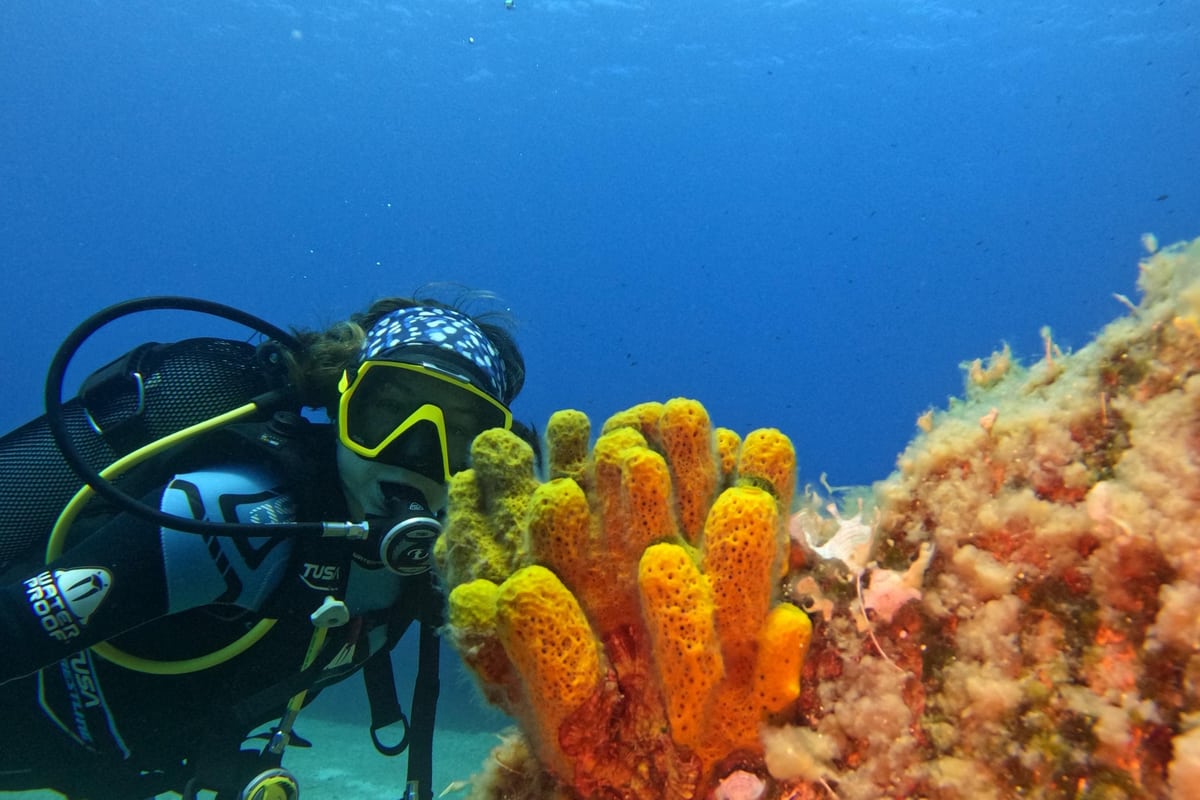
A Paros scuba diving trip takes divers below the clear Aegean Sea around Paros and Antiparos. Dives reach rocky reefs, sea caves and seagrass. First-time divers start with an instructor, and certified divers join boat dives. It is one of the dive trips in Greece on Greece VIP.
This post covers what a Paros scuba diving trip includes, the dive sites and the sea caves and reefs. It also covers sea life, the protection of the sea and safety. What divers wear, the best season and common questions come last.
Each section ends with a Paros scuba diving trip or a nearby sea tour that can be booked online.
What does a Paros scuba diving trip include?
A Paros scuba diving trip includes safety steps before, during and after the dive. Divers pair up and check each other’s gear. Hand signals, entry methods and safety stops follow set rules. A name list tracks every diver.
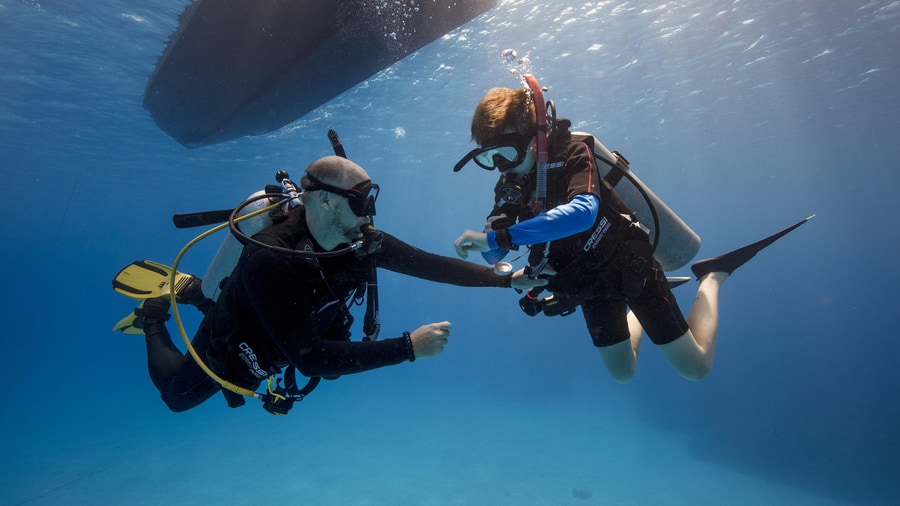
A buddy check comes just before the dive. Each diver checks that the partner’s equipment is set up and working. The check can be the only chance to learn a partner’s gear.
PADI, a diver training body, teaches the check as BWRAF. The letters mean BCD, Weights, Releases, Air and Final check. A BCD is a vest that controls floating. The British Sub-Aqua Club uses a shorter check, BAR.
On a Paros scuba diving boat dive, divers jump in while floating and signal OK. The backward roll suits small open boats on boat trips around Paros. A row of divers can roll in at once.
A 2004 Divers Alert Network study tested stops on the way up. A stop at about 15 m plus one at about 6 m cut body stress. A later study set the deep stop at 2.5 minutes.
- Up and down: A thumb up means “ascend,” and a thumb down means “descend.”
- Stop: A flat raised hand, palm facing the other diver, means stop.
- Low on air: A steady clenched fist at head or chest level warns of low air.
Paros scuba diving ends with rest at the surface. The United States Navy 2008 Air tables allow up to 16 hours there. That time lets leftover gas leave the body.


Where are the dive sites around Paros?
Paros scuba diving sites lie around the island. The municipality names the reefs at Prasonisi and Dryonisi in Pyrgaki Bay as main spots. An underwater gorge at Akro Makronisi is another. The Cave of Amphitrite sits off Aliki.
Aliki beach lies on Agkairia Bay in the south-west of Paros. The beach is 200 m long. Off the beach the seabed slopes gently. The 5 m depth line lies about 160 m from shore.
Krios beach lies about 2 km north of Parikia. It sits inside a closed bay 1900 m long. Here the seabed drops steeply. The water is about 5 m deep at an average 50 m out.
Paros scuba diving also reaches Despotiko, an island nearby. Early Bronze Age stone cist graves, or box-shaped tombs, lie off Koimitiri down to 3 m deep. Walls and an oven rest offshore from Agios Georgios.
- Psaralyki: This Antiparos beach lies 500 m from the main town.
- Monastiri: This Naoussa bay beach has very shallow water, with the 5 m line 290 m out.
- Pounta: This beach faces west towards Antiparos, with a gentle, sandy seabed.
- Islets: Red Tourlos and Black Tourlos are two small uninhabited islets around Antiparos.
Wildlife joins the history here. The Mediterranean monk seal is a permanent resident of the shallow sea around Despotiko. Reefs, beaches and old ruins spread across the area.
What sea caves and reefs can a Paros scuba diving trip see?
Paros scuba diving reaches deep caverns, reef caves and old rock walls. The Panteronisi cavern lies more than 30 m down. The Trypiti reef leads to a cave. Rockfish, octopus, schools of small fish, sponges and anemones live along the reefs.
The Panteronisi cavern sits at the end of a 12 m long wall. Only advanced divers reach it, through a massive opening. Inside, divers take off their masks. They see colourful stalactites, or stone icicles.
The Cave of Archilochus lies near Agios Fokas beach. It is called the island’s main cave. Waves pour into its opening in rough seas. Legend says the poet Archilochus hid here to find ideas for poems.
Paros, Antiparos and Despotiko sit on the Attic-Cycladic Crystalline. This is a stack of rock sheets changed by heat and pressure. It holds mainly gneiss, schist, marble and amphibolite. The south of Despotiko is white to yellowish marble.
Volcanoes shaped this area too. Six early Pliocene volcanic pipes of rhyolite, a light volcanic rock, cut through Despotiko. They hold rare small pieces of obsidian, a black volcanic glass.
- Old sea level: Seabed finds show the sea near Despotiko was once at least 3 m lower.
- Land bridge: A marble inscription reading “Hestias Isthmias” hints that land once joined Despotiko and Antiparos.
- Slow growers: The date mussel bores into sea rock. It takes 15 to 35 years to reach 5 cm.
Paros scuba diving reaches a wide mix of sea caves. Deep caverns, reef caves and walls of marble and gneiss lie below the waves.
Which sea life does a Paros scuba diving trip meet?
A Paros scuba diving trip meets fish, seahorses and sea urchins on rocks and seagrass. Scorpionfish hide among the stones. Seabream swim close to the rocky reefs. Each habitat holds its own mix of small and large creatures.
The black scorpionfish rests on rocks and seaweed. It is around 15 cm long. Poisonous spines sit on its fins and gill cover. It waits without moving, then leaps to suck in blennies and gobies.
The red scorpionfish grows to 50 cm and about 3 kg. Its colour runs from brick red to light pink. It hides in caves by day and hunts at night.
Seahorses are a quiet reward of Paros scuba diving. The long-snouted seahorse lives 1 to 20 m deep near Posidonia seagrass meadows. In the short-snouted seahorse, the male carries the eggs in a pouch.
The purple sea urchin lives down to twenty metres on rocks and seagrass. Young clingfish and gobies shelter among its spines. Where these urchins crowd together, they leave bare ground with little life.
- Black sea urchin: It is deep black, and its spines are all about the same size.
- White seabream: It feeds by day on algae, sea urchins, worms and snails.
- Two-banded seabream: In the Aegean Sea, it spawns, or lays eggs, from September until March.
The Mediterranean monk seal is the key mammal in the local sea. Its pups first enter the water two weeks after birth. They stop drinking milk at around 18 weeks of age.
What protects the sea around Paros and Antiparos?
Paros scuba diving takes place near a NATURA site, a listed nature protection zone. The site covers the islands of Despotiko and Strongylo and their sea. A state department also protects old remains under the water. Divers follow its rules.
The site code is GR4220017. It covers 1858.34 ha, or hectares, in total, and 935.31 ha is land. Its edge runs for 25.3 km. It was first recorded on 01/03/1995.
A belt of Posidonia seagrass surrounds the islets. The monk seal lives all year in their underwater caves. Tourist fishing, water sports and professional fishing keep this sea in a fragile balance.
Seagrass meadows are being destroyed at about 3 m2 every second. Part of this harm comes from boats that drag dredges or trawls, which are heavy nets. These uproot the grass. Careful Paros scuba diving keeps fins above the meadows.
Early Bronze Age cist graves, or stone box tombs, lie in Despotiko Bay off Koimitiri. Walls, a well-head and an oven of unknown age lie 3 m deep off Agios Georgios on Antiparos.
- Saliagos: Burial sites of this Stone Age settlement, from 5000 to 4500 BC, sank under the sea.
- Ephorate: The Ephorate of Underwater Antiquities, a Ministry of Culture department, was founded in 1976.
- Permits: Divers need its permission for survey and photo dives on shipwrecks in Greek waters.
Responsible scuba instructors hesitate to visit known seal caves. Careless dive trips scare monk seals away from caves that suit them. In July 2021 a rescued seal called Kostis was killed by a spear gun in the Cyclades.
How safe is a Paros scuba diving trip?
A Paros scuba diving trip stays safe when divers follow clear rules. Buddies check each other’s gear before every dive. They keep within depth limits and rise slowly. These habits cut the risk of narcosis and decompression sickness.
Nitrogen narcosis is a drunk feeling caused by breathing gas under pressure. Serious loss of clear thinking becomes a growing risk below about 30 m. The pressure there is about 4 bar.
No reliable method predicts where narcosis starts. The depth can change from dive to dive on the same day. Cold, stress, hard work, tiredness and carbon dioxide build-up raise the risk.
Decompression sickness, or DCS, comes from gas bubbles in the body. It is also called divers’ disease and the bends. Bubbles in knees or elbows make people bend over in pain.
Since 1960 doctors split DCS into two types. The simple type affects skin, muscles and joints. The serious type affects organs such as the central nervous system. Good Paros scuba diving habits aim to avoid both.
- Buddy check: The BWRAF check covers BCD, or float vest, Weights, Releases, Air and a Final check.
- Buddy line: A strap of about two metres, with a float, ties two divers together in low visibility.
- Chamber care: Treatment puts the diver under 2.8 bar, like 18 m of water, on pure oxygen.
Body factors matter too. In about 20% of adults, a heart flap does not fully seal. Gas bubbles can then skip the filter of the lungs. Nitrogen dissolves five times more in fat than in water, so body fat raises DCS risk.
What do divers wear on a Paros scuba diving trip?
Paros scuba diving gear starts with a wetsuit, a mask and a pair of fins. Wetsuits suit water between 10 and 25 °C. Fins come as full-foot or open-heel models. Boots, socks and hoods add extra comfort and warmth.
Full-foot fins are sometimes called “slipper” fins. Their sizes do not adjust. Divers in them can wear neoprene socks, made of thin rubber. The socks stop chafing and blisters and add warmth.
Open-heel fins stay on with springs or adjustable straps. They are common where divers walk into the sea from a shore. Diving boots fit these fins but not full-foot fins.
For Paros scuba diving, tests suggest larger fin blades turn effort into thrust more efficiently. A 2003 study by Pendergast et al. found split fins brought no significant change in performance.
A low-volume mask has two windows set close to the face. It holds less air to clear, so it floats less. The same mask basics apply to scuba diving off Corfu.
- Hoods: A minority of users report claustrophobia, sometimes from poor fit.
- Core warmer: A shortie worn over a full wetsuit adds insulation.
- Old neoprene: Neoprene stiffens and shrinks with age and sunlight.
Fin grips are flat rings that stop full-foot fins slipping off in choppy water. Beuchat patented them in Marseille in 1959. Georges Beuchat designed vented fins in 1964, sold as Jetfins.
When is the best season for a Paros scuba diving trip?
Paros scuba diving is at its warmest in August and September, when the sea surface peaks. February and March bring the coldest water. Breezy days change sea temperature less than calm days. Wind also changes the water below.
On Kea, a Cyclades island known for diving, the water ranges from 20 to 26 °C. On calm days the surface can shift by 6 °C in a single day.
Deeper water warms later than the air. The sea at depth lags by 15 days per 10 m. So a Paros scuba diving trip finds deep water trailing the season.
A satellite study of the eastern Aegean covered June to November in 2003-2015. It found the Etesian wind 78% of the time. Upwelling, cold deep water rising, came 69% of the time.
Upwelling began 24 to 48 h after the wind started. The link between them was closest from June to September. Coastal upwelling also cools the air just above the sea.
- Low point: Total sea heat is lowest in March.
- Heat risk: A 2003 Mediterranean marine heatwave killed 25 seabed species.
- Thin top layer: The warm top layer of the sea is thinner in summer than in winter.
Marine heatwaves caused Mediterranean die-offs of sea life five years in a row, from 2015 to 2019. Wind, depth and season all shape the water on a Paros scuba diving trip.
What do travelers ask about a Paros scuba diving trip?
Paros scuba diving questions cover flying after a dive, age limits, ear pressure and eyesight. Diving bodies like DAN, SSI, NAUI and PADI give clear answers. Simple ear tricks ease pressure. Lens masks help divers who wear glasses.
How long do divers wait to fly after Paros scuba diving?
DAN’s 2002 workshop advised a 12-hour wait after a try dive before flying. The same wait covered going higher than 2000 feet. For cabin altitudes between 8000 and 10000 feet, DAN suggests doubling the wait. A try dive is a first taste of scuba.
What age limits apply to Paros scuba diving for children?
SSI’s pool Try Scuba takes children from age 8, down to 5 m. SSI’s open-water Try Scuba Diving needs an age of at least 10, with a 12 m limit. NAUI starts at 10, and its first open-water dive has a 6 m limit.
Does a try dive count toward Paros scuba diving training?
A PADI Discover Scuba Diving session can count as the first confined-water dive of the Open Water course. It must happen within one year. ISO 11121 is the international standard for the minimum rules of introductory scuba programmes. Intro programmes are first-time sessions.
How do divers clear their ears during Paros scuba diving?
In the Frenzel manoeuvre, the diver closes nose and throat and makes a “K” sound. This pushes air into the Eustachian tubes. It carries a much lower risk of over-pressurising the ear than the Valsalva. The Lowry technique: pinch the nose, then blow and swallow together.
Can people who wear glasses enjoy Paros scuba diving?
DAN says stock-lens masks correct short sight from 0 through -8.00. They correct long sight from 0 through +4.00. Bubbles under hard contact lenses can blur vision after a dive. DAN expects diving to be safe about two weeks after photorefractive keratectomy, a laser eye surgery.
What causes a red eye or dizziness after Paros scuba diving?
A red spot on the eye after a dive is mainly a small bleed, called a subconjunctival hemorrhage. A mild mask squeeze causes it and needs no treatment. A burst eardrum underwater lets cold water reach the middle ear. This chills the inner ear and causes vertigo.