
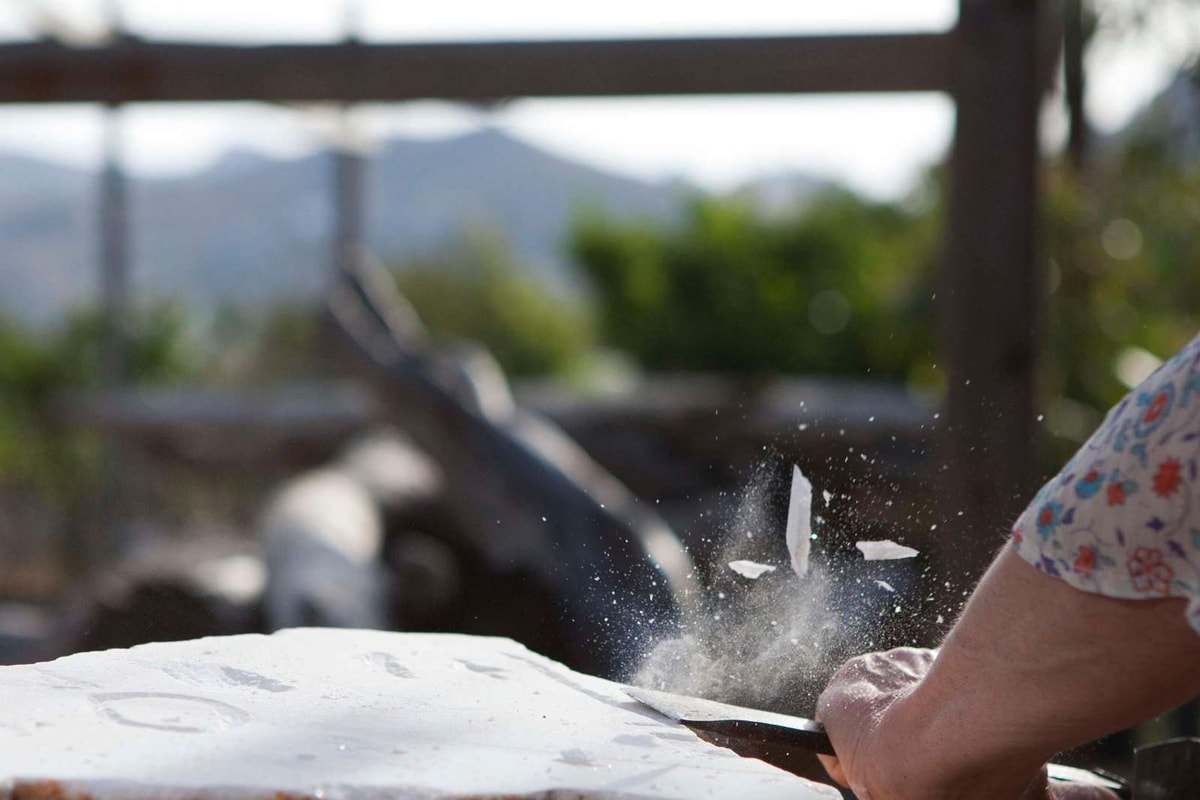
A Naxos marble carving workshop puts a chisel in a beginner’s hand and a block of island stone on the bench. Travellers reading about Greek tours will find it a hands-on Cycladic stop.
The page covers the bench session, the tools and the marble, the setting on the island, the timing, the booking steps and the questions people ask first.
What is a naxos marble carving workshop?
A naxos marble carving workshop is a hands-on session where participants explore marble sculpture by hand with traditional tools. The listing describes an outdoor activity for a small group, and no experience is needed, so complete beginners can join in.
Marble sculpture, the craft behind a naxos marble carving workshop, turns a rough block into a finished figure. Sculptors have chosen marble since ancient times: its fine grain allows tiny details and its soft look suits human skin.
Sculptors first knock off large chunks of unwanted stone with a point chisel and a mallet that needs accuracy, then refine the shape with other tools. The listing names only traditional tools, so the set is not stated.
- Setting: Outdoor workshop
- Group: Small group
- Experience: None needed
- Tools: Traditional tools
In short, a naxos marble carving workshop lets beginners shape marble by hand, outdoors, in a small group.
Where does a naxos marble carving workshop take place on Naxos?
A naxos marble carving workshop takes place outdoors on Naxos, the biggest Cycladic island, which sits in the southern part of the Aegean Sea. The listing confirms the island and the outdoor setting, while the exact meeting point appears after booking.
The Cyclades lie southeast of the Greek mainland, and about 220 islands form a circle around sacred Delos. Between the Balkans and Anatolia lies the Aegean Sea. Travellers who want more island background can read the Naxos tour post.
Naxos Town, also called Chora, is the island’s largest town and capital, on the west side by the sea, and the seat of its municipality. Listings differ on whether a naxos marble carving workshop meets in town or inland.
- Island: Naxos, Cyclades
- Sea: Aegean Sea
- Main town: Naxos Town
- Meeting point: After booking
Set on the largest Cyclades island, a naxos marble carving workshop is an outdoor activity for beginners.
Why does a naxos marble carving workshop use marble from Naxos?
A naxos marble carving workshop uses marble from Naxos because the island is rich in the stone, and the listing says participants work with Naxos marble. Marble itself is a metamorphic rock, made mainly of the minerals calcite or dolomite.
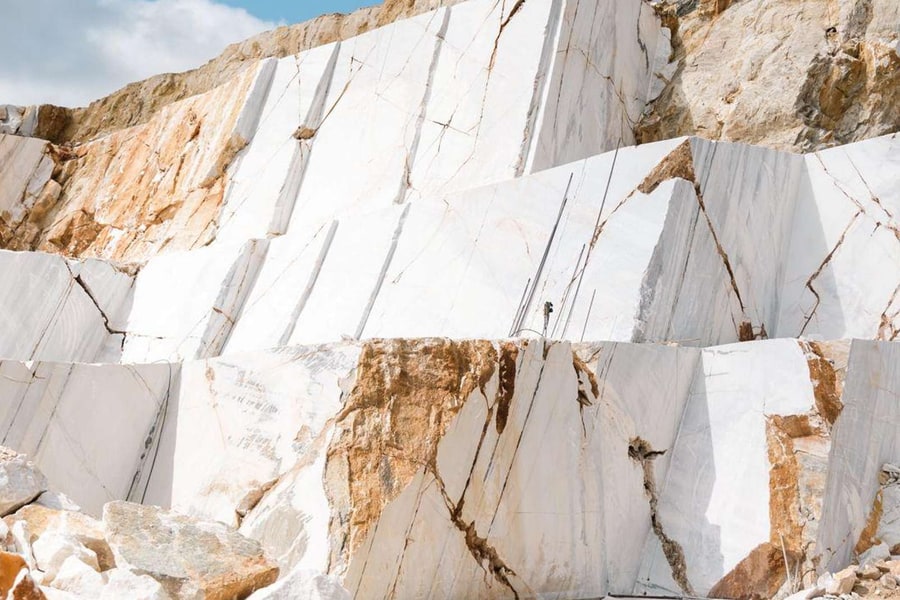
Heat and pressure transform limestone into marble. That limestone began as seabed deposits of calcium carbonate, left by microscopic animal skeletons, and other material later buried it. Very clean limestone or dolomite gives pure white marble, preferred for sculpture.
Parian marble came from Paros, another Cycladic island, and is fine-grained, pure white and semi translucent. Ancient Greek sculptors prized it and carved the Venus de Milo from it. The listing names Naxos marble, not Parian marble.
- Rock type: Metamorphic
- Parent rock: Limestone
- Minerals: Calcite, dolomite
- Stone used: Naxos marble
That is why a naxos marble carving workshop uses island stone: the listing names Naxos marble as the working material.
Which hand tools does a naxos marble carving workshop use?
A naxos marble carving workshop uses traditional tools, according to the listing, which names no single tool. Stone work in general draws on a chisel for cutting, a rasp for shaping, a hammer for added force and sandpaper for smoothing.
A chisel is a hand tool with a wedge-shaped cutting edge, useful for cutting hard material such as stone. A hammer, a weighted head on a long handle, can add driving force to the blade; modern heads are steel.
A rasp is a coarse file for shaping, with individually cut teeth, and finer files smooth the rough marks it leaves. Sandpaper is an abrasive: grit glued to paper or cloth wears material away through rubbing, leaving surfaces smoother.
- Chisel: wedge-shaped edge
- Hammer: weighted head
- Rasp: coarse file
- Sandpaper: grit-coated sheet
The chisel, rasp and hammer are hand tools for shaping stone, and a naxos marble carving workshop is hands-on.
How does a naxos marble carving workshop shape a block of stone?
A naxos marble carving workshop centres on marble sculpture, which shapes a block by carving: tools scrape away portions of the stone. Rough cutting comes first, smoothing and polishing follow, and the listing states that no experience is needed.
Roughing out comes first. Sculptors remove big chunks of unwanted marble with rhythmic blows, so stone comes off quickly and evenly. Accuracy matters with every blow: a tiny miscalculation can destroy the sculpture and even hurt the sculptor.
The sculptor refines the form with sweeping strokes that remove excess stone as chips or dust. Polishing is the last step, using fine abrasives to highlight patterns in the stone, and polished marble looks more translucent than unpolished marble.
- Rough: remove bulk
- Refine: finer strokes
- Rub: coarse to fine
- Polish: final step
Roughing out, refining and polishing are the stages of marble sculpture, the craft a naxos marble carving workshop explores.
What history stands behind a naxos marble carving workshop?
A naxos marble carving workshop connects hands and history, in the words of the listing. Marble history in the Aegean islands includes the ancient Cycladic culture, which flourished from about 3300 to 1100 BCE and left behind marble figurines.
The common Cycladic figurine is a female figure in full length with folded arms and a sharply defined nose. A cemetery on Naxos gave its name to the Spedos type, which has the widest distribution of the Cycladic types.
Kouroi are free-standing statues of nude male youths from the Archaic period, about 800 to 480 BC, and the early examples are largely in Naxian marble. By the Classical period, monumental Greek sculpture was nearly all marble or bronze.
- Cycladic: marble figurines
- Spedos: Naxos cemetery
- Kouros: nude youths
- Classical: marble or bronze
Cycladic figurines and Archaic kouroi are older marble works in the history around a naxos marble carving workshop.
Which landmarks near a naxos marble carving workshop show the marble tradition?
Naxos marble carving workshop visitors can see the island’s marble tradition at the Portara, a temple doorway made of five marble pieces weighing up to 20 tons each. The mountain village of Apeiranthos and Mount Zas then add the island’s high country.
A causeway built in 1919 links the Portara’s islet, Palatia, to the town of Naxos. Quarried at Flerio, about 10 km away, its marble reached the islet, and carved bumps once held ropes, which shows the temple was never finished.
Apeiranthos, a mountain village 28 km north-east of the capital, has four museums, including a Geological Museum. Mount Zas, named after the god Zeus, rises 1,001 m, tops the Cyclades and overlooks the town of Filoti.
- Portara: marble gateway
- Flerio: marble quarry
- Apeiranthos: mountain village
- Mount Zas: highest peak
Travellers can set a Naxos marble carving workshop beside these landmarks, from the Portara’s marble door to Mount Zas.
Which season suits a naxos marble carving workshop?
Naxos marble carving workshop sessions are held outdoors on the island, so the season sets the conditions. Summers in the Mediterranean climate of Greece are frequently sunny and dry, winters are wet, and travellers compare that pattern with their own dates.
The Cyclades climate is mostly dry and mild, and Schoinoussa is Greece’s driest area. In summer, any rain arrives as showers or thunderstorms. Heatwaves can happen, yet a sea breeze and the cooler sea ease the heat along the coast.
Winter rain can be persistent. Very windy days also occur, especially in the Cyclades islands and around them. Higher ground in the islands stays cooler and rarely sees wintry weather, so outdoor days differ by season.
- Summer: sunny, dry
- Winter: wet, rainy
- Wind: very windy days
- Setting: outdoor workshop
Travellers planning a Naxos marble carving workshop can check the forecast before the date, since the work happens outdoors.
What else on Naxos pairs with a naxos marble carving workshop?
Naxos marble carving workshop trips can begin at Naxos Island National Airport, take in the main villages and the neighbouring island of Paros, and include the story of Naxos emery, a rock mined as an abrasive for over two thousand years.
The airport lies 3 km from Naxos City, near Agios Prokopios, and opened in 1992. Its runway is 900 m long, and its code is JNX. The island’s main villages include Vivlos, Agios Arsenios, Koronos and Glynado.
Paros, 8 km west, has Golden Beach, while constant strong wind in the strait favours windsurfing. Miners worked the eastern side of Naxos for emery. Travellers wanting a food activity can try the Naxos cooking class.
- Airport: near Agios Prokopios
- Paros: neighbouring island
- Emery: mined abrasive
- Villages: Koronos, Glynado
Together these places let travellers build a day around a Naxos marble carving workshop on the island.
Who can join a naxos marble carving workshop?
A naxos marble carving workshop runs as a small group, and the listing states that no experience is needed, so beginners are welcome. The listing gives no age rule for children, so listings differ on the age of young participants and on any other entry rules.
The listing does not describe clothing for the workshop. Details on what to bring appear once a place is booked, so listings differ on dress and equipment until a booking is made. The short summary leaves both points unstated.
Hands-on stone work needs care. A mallet must be struck accurately, because a slip can spoil the piece or hurt the carver. Sculptors work rhythmically and rotate the tool after every strike, so the stone comes away quickly and evenly.
- Group: small group
- Experience: none needed
- Beginners: welcome
- Children: listings differ
A naxos marble carving workshop is open to first-time carvers who work stone by hand in a small group.
How do travellers book a naxos marble carving workshop?
A naxos marble carving workshop is booked in advance through its listing, and free cancellation is part of the stated terms of the activity. Each reservation must be made a short time before the start of the workshop, and the exact cut-off shows on the booking page.
The cut-off is the only timing rule the listing states, and the booking page gives the exact number of hours. Travellers adding more to a Naxos stay can also read the Naxos wine tour post for another activity.
Free cancellation is stated in the listing, so a reserved place can be released again. The exact meeting point is shown after booking, and the listing gives no cancellation deadline, so listings differ on that limit.
- Booking: ahead, via listing
- Cancellation: free
- Cut-off: on booking page
- Lead time: short
A naxos marble carving workshop needs booking ahead through the listing, and free cancellation is stated there.
What do travellers ask about a naxos marble carving workshop?
A naxos marble carving workshop raises five common visitor questions about prior experience, the setting, tools, keepsakes and the stone. The listing answers four of them directly, and the question about taking a finished piece home stays open, so listings differ on that point.
Is experience needed for a naxos marble carving workshop?
Earlier carving experience is not required for joining, according to the listing. Marble has a hardness that allows carving without great difficulty, whereas granite is much harder to shape and less suited to fine detail.
Is a naxos marble carving workshop held indoors or outdoors?
The listing places the workshop outdoors on Naxos itself, so the work happens in open air rather than in a closed studio. It is also hands-on, which means participants shape the stone with their own hands.
Which tools does a naxos marble carving workshop use?
The listing names traditional tools but not which ones, so listings differ on the exact set. A chisel is a hand tool with a wedge-shaped cutting edge, and a point chisel removes large unwanted chunks of stone first.
Can a finished piece from a naxos marble carving workshop be taken home?
The listing does not state whether a finished piece can be taken home, so listings differ. Stone sculpture moves a rough block toward a final form in stages, and marble itself is inflexible and vulnerable to fracturing.
Is Naxos marble used in a naxos marble carving workshop?
Yes, the listing names Naxos marble as the working material for participants. Marble in general suits sculpture because it absorbs light a short distance into the surface, which gives the carved stone a soft look suited to human skin.