A Crete cooking class brings visitors into a village kitchen, a farm or a town kitchen to cook the dishes of the Cretan table with olive oil, local cheeses, wild greens and mountain herbs, and then to sit down and share the meal. This post covers what a Crete cooking class includes, where classes are held, the place of olive oil in the Cretan diet, the dishes, the cheeses, the wild greens, the herbs and the best season. It is one of the tours in Greece on Greece VIP.
Each section ends with a Crete cooking class that can be booked online.
What does a Crete cooking class include?
A Crete cooking class teaches Cretan dishes made from local produce. A session covers a visit to a market or garden, hands-on cooking in a kitchen and a shared meal. The menu comes from the island’s own farms and kitchens.
Cretan cuisine is the traditional cuisine of the Greek island of Crete, the largest island in Greece. Because of the climate and terrain, an emphasis remains on agriculture and stock breeding. Farming, processing and packaging, and services are directly connected and interdependent across the island. A class follows that chain from local produce in a market or garden to a cooked dish at the table.
Farming on Crete is old. Settlements from the seventh millennium BC used cattle, sheep, goats and pigs and grew cereals and legumes. Three kinds of Crete cooking class draw on that base. A village class works in a house kitchen, a farm class among crops and animals, and a town class in a kitchen near a market.
- Market or garden: The class gathers produce from a stall or a garden bed first.
- Cooking: Cooks prepare each dish by hand in a kitchen.
- Shared meal: The group eats the cooked dishes together at one table.
A Crete cooking class differs from a tasting walk. A Chania food tour moves from stall to stall and tastes finished dishes, while a class puts the knife, the pan and the dough in each cook’s hands. The class adds the work of preparing the food and ends at a shared table.


Where is a Crete cooking class held?
A Crete cooking class is held in village houses, on farms and in olive groves, and in kitchens in towns such as Chania, Rethymno and Heraklion. Each place gives the class a different source of produce, from groves and gardens to town markets.
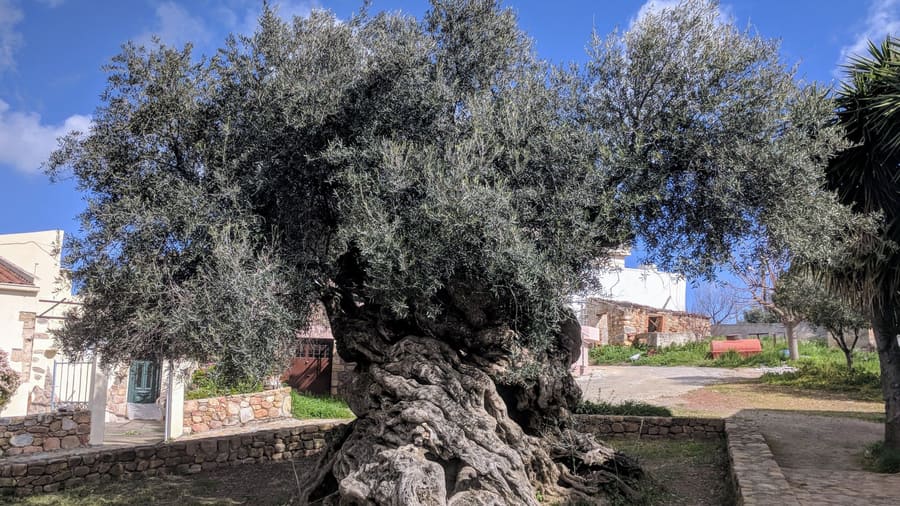
Farm and village classes sit beside the crops of the island. Olive groves and viticulture are significant on Crete, and growers also cultivate oranges, citrons, avocadoes and bananas. About 45% of Cretans live in rural areas, so a village house or a farm is an everyday setting. A Crete cooking class in a grove can start with the tree, the fruit or the vine, then move indoors to the stove.
Farm settings change with the land. The mountains give Crete valleys, such as Amari, and fertile plateaus, such as Lasithi, Omalos and Nidha. The fertile region around Ierapetra, in the southeast, has year-round agricultural production, with summer vegetables and fruit grown in greenhouses through the year. The south coast, including the Mesara Plain, has significantly more sunny days. A farm-based Crete cooking class works with the crops that its own ground supports.
Town classes run in city kitchens. About 42% of Cretans live in the main cities and towns. Heraklion is the largest city and administrative capital of Crete, and Chania grew around an old town beside its harbour. In Rethymno, tourism is the main source of income, and agriculture is also notable, especially olive oil and other Mediterranean products.
- Chania: The greater city area holds the Mediterranean Agronomic Institute of Chania.
- Rethymno: The city has more than 35,000 inhabitants, and the municipal unit has nearly 40,000.
- Heraklion: The wider metropolitan area has 211,370 inhabitants.
Where a Crete cooking class is held decides how the day begins. A grove or farm class starts with the crop, a village class at a house, and a town class at a market or a city kitchen. The three cities differ in size and history, yet each stands on an island where olive groves are significant.
Why does a Crete cooking class start with olive oil?
A Crete cooking class starts with olive oil because it was the main supply of fat in traditional Cretan food, used in salads and in cooking. The Mediterranean diet, built partly on data from Crete, also names olive oil as its principal source of fat.
The Seven Countries Study began in 1956 and compared lifestyle, diet, coronary heart disease and stroke in different populations. Its director, Ancel Keys, studied men in traditional occupations in cultures that contrasted in diet, especially in the proportion of fat calories of different composition. Entry examinations drew an average participation rate of 90%, and the study has continued for more than 50 years. Fat is also why a Crete cooking class opens with the oil.
Researchers later tied the study to an eating pattern called the Mediterranean diet. Antonia Trichopoulou and Anna Ferro-Luzzi detailed what the term means today. A 25-year follow-up published in 1996 defined the diet as olive oil, bread, pasta, vegetables, herbs and seafood with moderate meat, and those populations showed low blood cholesterol and reduced coronary heart disease. A Crete cooking class works with the same foods, with olive oil as the fat.
Olive oil also has a chemical profile that researchers study. It contains monounsaturated fats, notably oleic acid. A European Food Safety Authority panel approved health claims on olive oil, covering the protection of blood lipids against oxidation by its polyphenols. The Mediterranean diet also holds a paradox: people in Mediterranean countries eat relatively high amounts of fat, yet show lower cardiovascular disease incidence than people in countries with similar fat intake, such as the United States. A Crete cooking class handles that oil as a main ingredient.
- Ancient roots: Elements of the diet trace to the ancient Greeks and Romans, who used olive oil, seafood, bread and wine.
- Italy: In northern and central Italy, lard and butter are common in cooking, and olive oil is kept for dressing.
- Shared tables: The diet’s wider habits include simple but varied cooking methods and communal meals.
A Crete cooking class begins with olive oil because the oil links the island’s farms and the research behind the Mediterranean diet. A 2014 meta-analysis found that higher olive oil consumption is associated with reduced risk of all-cause mortality, cardiovascular events and stroke. The cooks then build the other dishes around it.
Which dishes does a Crete cooking class teach?
A Crete cooking class teaches dishes from the traditional Cretan table: dakos, a rusk salad; kalitsounia, small whey cheese pastries; chochlioi, fried snails; gamopilafo, a rice dish for weddings; and boureki, a small pastry in the Greek burek family.
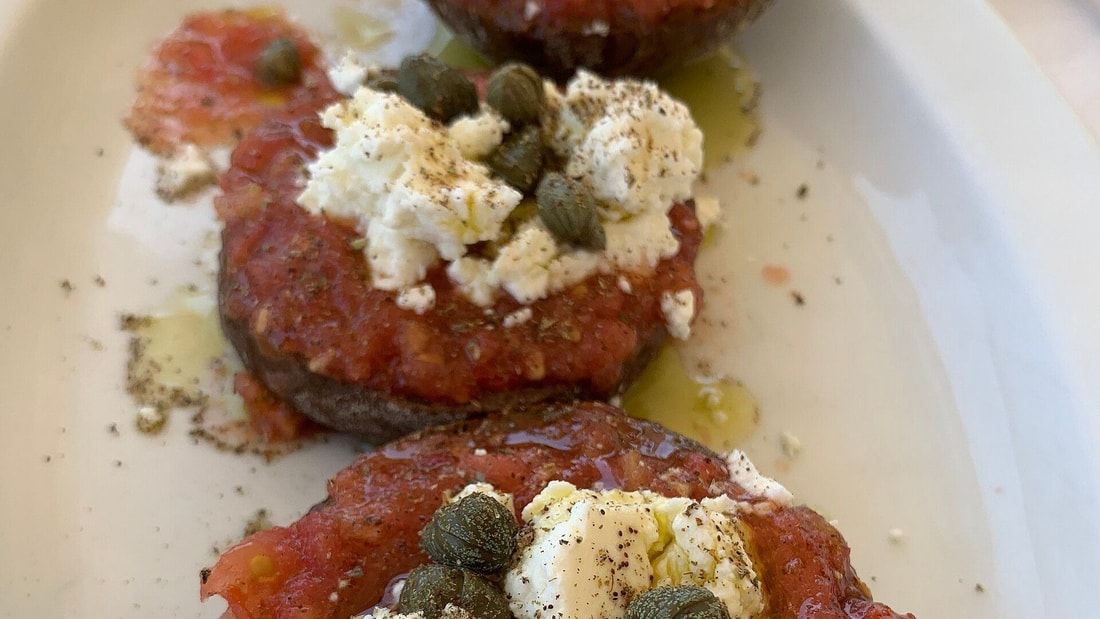
In a Crete cooking class, dakos starts with paximadi, a hard barley rusk. Cooks soak it in water or olive oil and rub it with garlic and sea salt. Tomato, crumbled feta or mizithra, dried oregano and olives go on top, and capers join the plate. The salad is also called koukouvagia, the Greek word for owl.
Pies form a second group in a Crete cooking class. Boureki is a small pastry made with filo dough, and pastries of the Greek burek family are also called pita. Cretan cuisine adds mizithropita, a flatbread stuffed with mizithra, and sarikopita, a cheese pie twisted into the shape of the sariki, a traditional Cretan headwear. Meat pies include kreatotourta from western Crete and tzoulamas from Messara.
- Chochlioi: Snails are fried with rosemary and vinegar, or cooked with tomato.
- Gamopilafo: Rice is boiled in lamb or goat broth, then finished with lemon juice.
- Tsigariasto: This lamb or goat dish comes from the Sfakia region.
Cretan cuisine sorts the dishes of a Crete cooking class into two lists. The appetizer list holds dakos, kalitsounia, paximadi, piktí, a pork charcuterie, and stafidota, cookies with a raisin filling. The speciality list holds gamopilafo, the snail dishes, the meat pies and the sweets amygdalopita and portokalopita.
Which cheeses does a Crete cooking class use?
A Crete cooking class uses graviera, mizithra, anthotyros and staka. Graviera is a hard cheese from sheep’s milk, mizithra a fresh whey cheese, anthotyros a flowery fresh cheese, and staka a hot roux made by cooking sheep’s milk cream with flour.
In a Crete cooking class, graviera arrives as a wheel whose rind carries the crisscross mark of the draining cloth. The main graviera varieties come from Crete, Lesbos, Naxos and Amfilochia. The Cretan wheel is made from sheep’s milk, while the graviera of Naxos is made mostly from cow’s milk, between 80 and 100 percent.
Mizithra is essentially the same cheese as anthotyros, though anthotyros can contain cow’s milk. The ratio of milk to whey is 7 to 3 in mizithra and 9 to 1 in anthotyros. Fresh mizithra drains in a hanging cheesecloth bag, which gives it a rounded bottom and a conical, wrinkled top. Anthotyros drains in a basket lined with tulle, and matured cheese is covered in thick salt.
- Graviera: Cooks bake it in a casserole, fry it as saganaki and shave it over salads.
- Anthotyros: The fresh cheese goes with honey and fruit, and the dry kind goes on spaghetti.
- Staka: It goes to the table hot with bread for dipping, and sometimes over French fries.
Xynomizithra shows how far one Cretan cheese can change in a Crete cooking class. Makers heat strained ewe or goat whey, stir in a small share of full-cream milk, press the curd in molds and let it ripen. The sour cheese takes the shape of a truncated cone or a ball, and it fills the small cheese pies called kalitsounia.
Which wild greens does a Crete cooking class gather?
A Crete cooking class gathers wild greens: horta, the boiled greens of Greek cooking, and stamnagathi, the spiny chicory of Crete. Horta is dressed with olive oil and lemon, and stamnagathi is served as a salad or cooked with goat or lamb.
In Greek, khorta means greens, and in a Crete cooking class horta is a side dish eaten hot or cold. At least 80 kinds of greens are used, depending on the area and the season. The list includes black mustard, dandelion, wild sorrel, chicory, fennel, chard, mallow, black nightshade, wild leeks and smooth sow thistle.
Stamnagathi means spiny chicory. Its botanical name is Cichorium spinosum, a plant native to the Mediterranean region that reaches 20 cm. People collect it in the wild and grow it as a leafy green. The genus name Cichorium comes from the Ancient Greek word kíkhora, meaning endive. Wild chicory leaves taste bitter, especially the older ones, and the Cretan salad dresses them with olive oil and lemon juice.
- Salad greens: Horta salad draws on antidia (endives), vlita (amaranth greens), myronia (wild chervil) and seskoula (chard).
- Askordoulakoi: The wild bulbs of the tassel hyacinth are boiled repeatedly, pickled and kept in olive oil.
- Cardoons: Cretans eat them raw, with a drizzle of lemon juice, as a meze.
Greek cooks use greens beyond the side dish. Hortopita is a filo pie filled with wild or cultivated greens, and hortosoupa is a vegetable soup of greens. Golden thistle, the herb of a Cretan lamb stew, has a long record: since at least the time of Theophrastus in ancient Greece, the plant has been known for medicinal and culinary uses. A Crete cooking class that gathers greens joins that old plant knowledge to everyday cooking.
Which herbs does a Crete cooking class use?
A Crete cooking class uses dittany of Crete (diktamo), mountain tea (malotira), oregano and thyme. Dittany grows wild only on Cretan mountainsides and gorges. Malotira is the Cretan Sideritis tea plant. Oregano and thyme are indigenous herbs of the island.
Dittany of Crete, Origanum dictamnus, is a tender perennial plant that grows 20–30 cm high. Soft, woolly white-grey hair covers its stems and round green leaves. The Cretan dialect name is erontas. Its tiny rose-pink flowers appear in summer and autumn.
The herb has a long kitchen history. In antiquity it flavoured wine. Today dittany is exported to flavour drinks such as vermouth and absinthe, and cultivated plants are made into herbal tea. Wild dittany is rare and protected by European law, so cultivation centres on Embaros and the surrounding villages south of Heraklion.
Malotira is the collective name for Sideritis syriaca, Sideritis cretica and Sideritis boissieri, found in Crete. The genus is also called ironwort and shepherd’s tea. The plants grow at high elevation with little soil. The tea is made by boiling stems, leaves and flowers in water, then serving it with honey and lemon.
- Dittany oil: Carvacrol is the main compound in its essential oil.
- Malotira: The plant is dried before use.
- Oregano and thyme: Both are indigenous herbs of Crete.
Wild herbs and aromatic plants were eaten in great amounts and formed part of the base of traditional Cretan cuisine. Cooks pair herbs with dishes such as snails fried with rosemary and vinegar, and cuttlefish with fennel. A Crete cooking class therefore treats herbs as core ingredients, not as garnish.
When is the best season for a Crete cooking class?
A Crete cooking class suits every season of the year. The climate is mainly hot-summer Mediterranean, winter is fairly mild, and the Ierapetra area grows crops all year. Traditional Cretan cooking followed the seasons, using products from the wider local area.
Two climatic zones meet on Crete, the Mediterranean and the semi-arid, and the island falls mainly within the Mediterranean one. Parts of the south and east have a hot semi-arid climate, and the higher elevations have cold-summer conditions. The atmosphere is humid near the sea.
The south coast, including the Mesara Plain and the Asterousia Mountains, has more sunny days and higher temperatures through the year. Western Crete, the province of Chania, receives more rain than the eastern part of the island. Crete also holds European temperature records for October, November, January and February.
Traditional Cretan cooking relied on seasonal products with little or no processing. Fresh and dried fruit, pulses, wild herbs and rough cereals formed the base, and the regional climate favoured their cultivation. The area around Ierapetra, in the southeast, produces summer vegetables and fruit in greenhouses throughout the year.
- Summer: Dittany is gathered while in bloom, and cicadas grow louder on hot days.
- Autumn: Dittany flowers appear in both summer and autumn.
- Winter: Snow is common on the mountains from November to April.
Fruit and orchard crops matter as well. Oranges, citrons, avocadoes and bananas are cultivated on the island, beside the significant olive groves and vineyards. A Crete cooking class in any month therefore works with produce shaped by the same mild climate that attracts northern Europeans who want a holiday home.
What do travelers ask about a Crete cooking class?
A Crete cooking class prompts questions about diets, children, recipes, shared meals and farm visits. The answers below rest on how Cretan cuisine works: plant-based food at its core, seasonal produce, olive oil and wild herbs. Each host confirms the details when booking.
Does a Crete cooking class cater for vegetarians?
Cretan cuisine suits vegetarians, because its core consists of food derived from plants. Stamnagathi is a cichorium salad, sofegada is a vegetable stew, and sfougato is an omelette with vegetables and cheese. Travelers tell the host about any diet before booking.
Can children join a Crete cooking class?
Salads, vegetable stews and cheese pies are among the traditional Cretan dishes. Dairy products were eaten daily in low to moderate quantities, and yogurt with fresh fruit was the common dessert. Each host sets the age limit, so families ask before booking.
Are recipes shared at a Crete cooking class?
Recipes built on seasonal products with minimal processing are simple to repeat at home. Olive oil is the main fat, wild herbs add flavour, and pulses and cereals form the base. Travelers ask the host whether written recipes are handed out.
Do travelers eat what they cook at a Crete cooking class?
A traditional Cretan meal pairs the dishes with red wine in moderation, and olive oil serves in salads and in cooking. Hosts confirm whether a Crete cooking class finishes with a shared meal, and travelers name any dish they avoid.
Can a Crete cooking class include a farm visit?
Agriculture plays an important role on Crete, and olive groves, vineyards and dairy production are significant. A Crete cooking class paired with a farm stop shows where the oil, wine and cheese begin. Hosts confirm whether a farm stop is offered.
Featured photo: Benoît Prieur, CC0, via Wikimedia Commons.