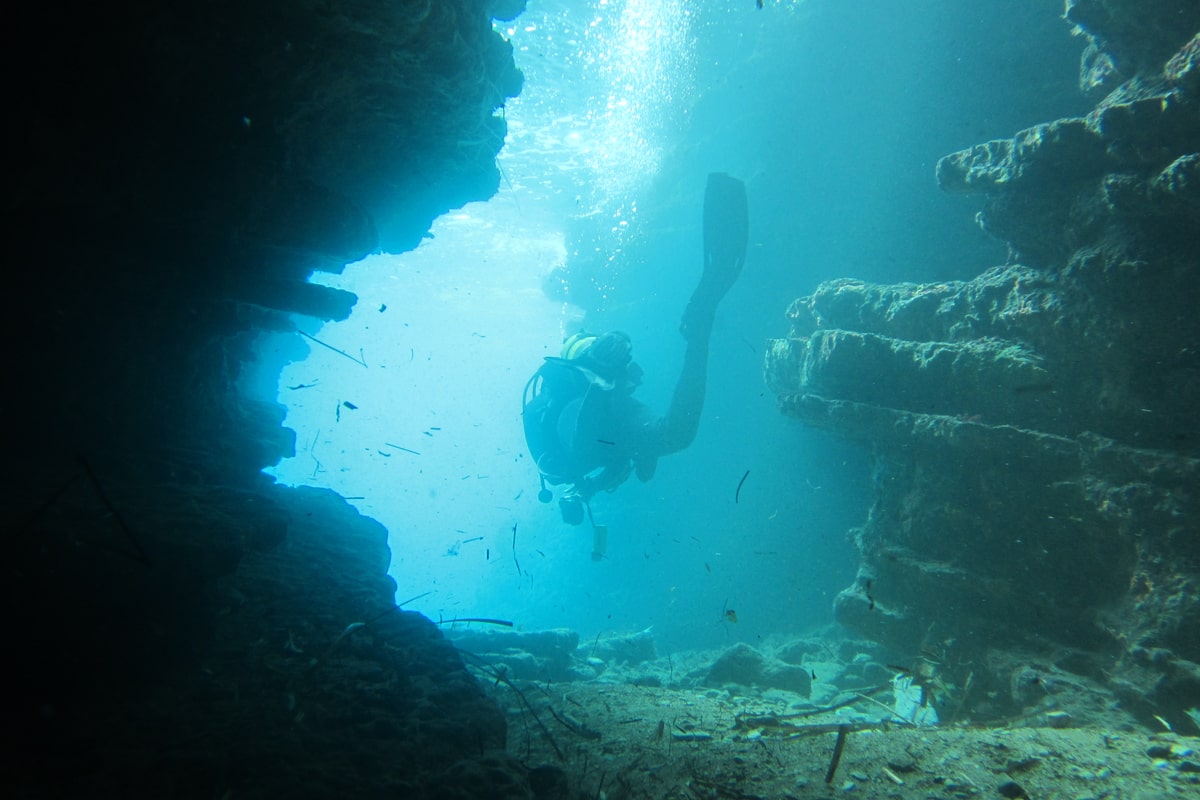
A Corfu scuba diving trip takes divers into the clear Ionian Sea off Corfu. Dives pass sea caves, reefs and rocky bays. New divers start with an instructor, and certified divers go to deeper sites. It is one of the diving tours in Greece on Greece VIP.
This post covers what a Corfu scuba diving trip includes, the dive sites and the caves of Paleokastritsa. It also covers sea life, the Corfu Channel and safety. What divers wear, the best season and common questions come last.
Each section ends with a Corfu scuba diving trip or a nearby sea tour that can be booked online.
What does a Corfu scuba diving trip include?
Corfu scuba diving starts with gear checks and a briefing on land. Divers check air hoses, gauges and cylinder fittings. Nitrox, an air mix with extra oxygen, is one gas option. A safety talk explains the site and boat rules.
Each diver carries a spare mouthpiece called an octopus. Its hose is longer than the main hose, so it reaches a buddy. In the common recreational set-up, it sits on the right side.
The octopus or its hose is yellow, so it is quick to find in an emergency. Dave Woodward used a spare mouthpiece at UNEXSO around 1965–6. It supported freedive attempts by Jacques Mayol.
For Corfu scuba diving, divers also read an SPG, or contents gauge. It shows how much air is left. A Bourdon tube, a curved metal tube, works behind a dial about 50 mm across.
Nitrox is any nitrogen and oxygen mix with more than 21% oxygen. Common mixes hold 32% and 36% oxygen, with deepest safe depths of about 34 m and 29 m. Before the dive, a little gas goes into an oxygen analyser.
A Corfu scuba diving briefing follows the PADI list of 10 points. It runs from the site name to the safety check. It also covers recall signals and where safety gear is kept. Divers on boat trips around Corfu learn where to sit.
- Yoke fitting: This clamp-style connector is rated up to 240 bar working pressure.
- DIN fitting: Named after a German standards body, it is the standard in much of Europe.
- Travel tip: A diver with a DIN regulator abroad can need an adaptor for a rented cylinder.
Briefings repeat the basics. Entry-level divers who dive only a handful of times a year tend to lose skills. A short talk keeps the steps fresh.


Where are the dive sites on Corfu?
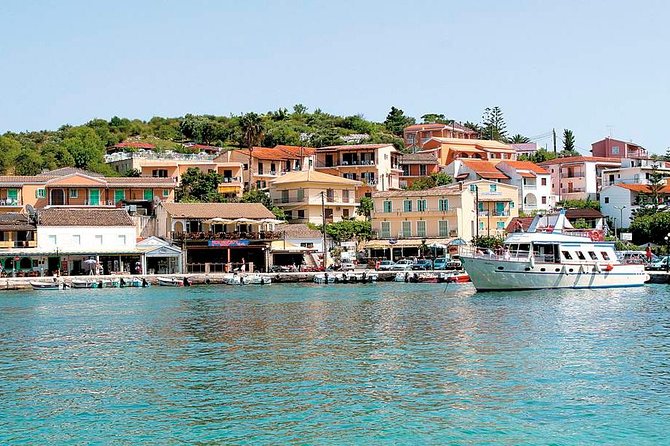
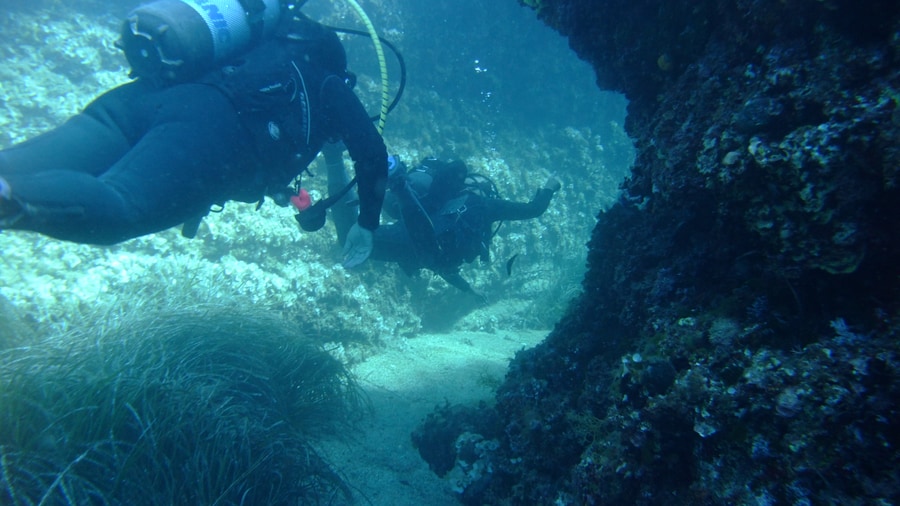
Corfu scuba diving sites sit mainly on the west coast and around small nearby islands. Paleokastritsa, Liapades and Agios Gordios face the open sea. Ipsos offers clean, calm water. The Diapontia Islands to the northwest add caves and wrecks.
The EO24 national road runs about 23.5 km from Corfu city west to Palaiokastritsa. Liapades lies about 20 km northwest of the city. Its main beach, Gefyra, mixes sand, gravel and pebbles, with sea caves in the rocks.
Agios Gordios lies about 17 km southwest of Corfu city. A tall rock called Ortholithi, or Megalo Tholetto, stands in the sea. It rises at the south end of the beach. A shipwrecked vessel lies north of the village.
Ipsos lies 14 km from Corfu city. Its water is very clean and does not get deep suddenly. A long sandy beach made it a resort from the 1970s. It has a marina and a small fishing port.
For Corfu scuba diving further out, Othonoi lies 12 nautical miles from Cape Drastis. Its seabed of odd shapes and caves draws underwater photographers. Fyki bay holds the sunken wreck of a ship called Sara.
- Mathraki: The smallest Diapontia island lies a 45-minute boat ride from the coast of Corfu.
- Ereikoussa: It has three beaches, Porto, Bragini and Fiki, with its only port at Porto.
- Paxos: This island is about 10 km long and up to 3 km wide.
The Diapontia island group is a Special Protection Area in the Natura 2000 network. This European network protects important wildlife places. Divers treat the seabed and its caves with care.
What does a Corfu scuba diving trip see at Paleokastritsa?
A Corfu scuba diving trip at Paleokastritsa meets sea caves, blue light and legends. The caves were shaped by dissolving rock and waves. Hills with an old fort rise above the bay. The cool turquoise water hides a long story.
The Blue Eye cave takes its name from a patch of very blue water. The patch looks like an eye. Nausica Cave honours the Homeric princess who helped Odysseus. Both lie on this coast.
In blue sea caves, sunlight enters through an underwater opening. The water filters out red light. Only blue light reaches inside. This gives Corfu scuba diving here its deep blue glow.
From the water, Monkey Face Hill and Bella Vista hill come into view. Bella Vista holds the remains of a 12th century fort. Locals call one rock the petrified ship of Odysseus. In the Odyssey, Poseidon turns that ship to stone with one blow.
Alipa, today’s harbour, is named after Byzantine seafarers called Alipaktoi. They landed there first and later founded Liapades. Another tale names settlers from Mani, wrecked by a storm. Pirate raids later pushed villagers uphill to Lakones, at 240 m.
- Water: Strong currents from the Adriatic Sea keep the water cold.
- Village: Paleokastritsa sits only 15 m above sea level.
- Beach: The main beach in the bay has won a Blue Flag award.
Each year the Varkarola, a boat show, re-enacts Odysseus meeting Nausicaa in the bay. It was first held in 1997, on 13 July. Today it takes place in the first week of August.
Which sea life does a Corfu scuba diving trip meet?
Corfu scuba diving trips meet soft corals, sea fans, octopus, cuttlefish and colourful sea slugs. The reefs of the Ionian Sea hold red, yellow and white sea fans. Small sea slugs hide among them. Each dive shows life at a different depth.
The violescent sea-whip is a fan-shaped soft coral. A colony grows up to 1 m high and 1 m across. It is mainly red, but parts can turn yellow. Colonies grow slowly and live for well over 50 years.
On a Corfu scuba diving trip, sea fans line the reefs. The sea-whip grows between 10 and 100 m deep, mainly at 15 to 40 m. The yellow gorgonian reaches about 50 cm tall. It grows only about 1 to 2 cm a year.
Red coral grows in dark places such as caves and crevices. It lives at depths from 10 to 300 meters. Harvesting has stripped it from much of its shallow habitat. Divers on a Corfu scuba diving trip leave it untouched.
The common cuttlefish comes inshore in spring and summer to spawn. Males then flash a black and white zebra pattern. The common octopus hunts at dusk for crabs, lobsters and cockles.
- Violet sea slug: Flabellina affinis grows to 50 mm and lives down to 50 m.
- Regal sea goddess: This dark blue sea slug has yellow markings and grows to about 13 cm.
- Dotted sea slug: This white slug with brown spots lives down to 40 m.
The dusky grouper is a fish under threat. The IUCN lists it as vulnerable. Its catch fell by 88% in seven countries between 1990 and 2001. Calm Corfu scuba diving leaves such animals in peace.
What does the Corfu Channel add to a Corfu scuba diving trip?
Corfu scuba diving gains a layer of history from the Corfu Channel. This strait between Corfu and Albania carries busy shipping. A naval battle and a famous mine disaster took place here. The bow of a British destroyer is believed to lie on the seabed.
Ships use the channel to reach Saranda in Albania and Igoumenitsa in Greece. The Vivari Channel links Lake Butrint in Albania with the strait. Its water changes direction every six hours with the tide.
On 8 July 1716, an Ottoman fleet landed 33,000 men at Ipsos. The same day, the Venetian fleet beat the Ottoman fleet off the Corfu Channel. The Royal Navy swept the channel in 1944 and 1945 and found no mines.
On 22 October 1946, the destroyer HMS Saumarez struck a mine near Saranda. HMS Volage hit a second mine while towing it, and lost its bow. The toll was 44 killed and 42 wounded. A Corfu scuba diving trip crosses waters with this hard past.
In November 1946, the Royal Navy cut 22 mines from their moorings. The dispute became the first case decided by the International Court of Justice. In 2009, researchers found what they believe is the Volage bow, under about fifty metres.
- Shore guns: In 1946, Albanian guns fired on the cruisers HMS Orion and HMS Superb but missed.
- Court award: In December 1949, the court awarded Britain £843,947.
- Free passage: By fourteen votes to two, the court ruled that ships can cross such straits in peacetime.
The case closed in 1996, when Albania paid $2 million and Britain released 1,574 kg of gold. Today, Corfu scuba diving takes place in a strait shaped by this history.
How safe is a Corfu scuba diving trip?
Corfu scuba diving follows Greek law and clear safety habits. Dive providers need a licence and insurance, and rules limit where divers go. Divers use floats so boats can see them. Sound training covers safe ascents and basic first aid.
Under Greek Law 3409/2005, a dive provider needs a licence from the local Port Authority. Every recreational dive follows the national diving standards of Presidential Decree 39/2001. Each provider must insure clients and third parties against death or injury.
Corfu scuba diving is banned in shipping lanes, anchorages and naval exercise areas. It is also banned where underwater cables lie. Dives without a licensed provider face a night ban. They cannot run from one hour after sunset to one hour before sunrise. Written Port Authority permission is the only exception.
Divers more than 50 metres from their boat must carry an orange float with a diving flag. All vessels must stay more than 100 metres from that flag.
A controlled emergency swimming ascent, or CESA, is a safe way up in an emergency. The diver swims up at a safe speed, breathing out all the way, regulator in the mouth.
- Oxygen: First aid gives oxygen as close to 100% as practicable.
- Timing: Oxygen within four hours of surfacing makes chamber treatment work better.
- No aspirin: Painkillers can hide symptoms, so only medical staff decide on them.
An injured diver lies flat on the back. A diver who vomits goes into the recovery position. These simple habits help keep Corfu scuba diving safe, calm and well organised.
What do divers wear on a Corfu scuba diving trip?
Corfu scuba diving gear starts with a wetsuit and a mask. Divers sometimes add a rash guard under it to stop chafing, the rubbing of skin. Dry suits are for water colder than 15 °C. Straps, watches and gloves also need care.
Rash guards are thought to come from Australia. People there call them “rashies”. The dry suit is a heavier choice. It keeps the whole body dry except the head, the hands and sometimes the feet.
A diving hood must not seal airtight over the outer ear hole. Divers do not wear earplugs either. This lets the ears equalise, which means balancing the pressure inside them.
The mask strap is the part of the mask under the greatest stress. Divers check it for cracks before a dive. Worn well around the back of the head, it keeps the mask on.
On Corfu scuba diving trips, hair causes leaks. Hair under the mask skirt, its soft rubber edge, lets water in. The hairline is worse than a beard. The tip also holds for scuba diving off Zakynthos.
- Mask care: Ultraviolet light harms the skirt and frame, so masks dry in shade after a fresh-water rinse.
- Dive watch: Under the ISO 6425 standard, a true diving watch resists water to at least 100 m.
- Gloves: Gloves that are too tight tire the hands early and can cause cramps by cutting blood flow.
Reef managers sometimes restrict gear thought to cause more reef contact, such as gloves and cameras. A mask pushed onto the forehead at the surface falls off more easily. Corfu scuba diving goes best with gear that stays put.
When is the best season for a Corfu scuba diving trip?
Corfu scuba diving is warmest from June to October. The sea peaks at 24 °C in August, the warmest sea month. September still holds 23 °C, and October keeps 21 °C. Winter water falls to 14 °C from January to March.
Spring water warms step by step. The sea at Corfu reaches 16 °C in April and 18 °C a month later. June brings 21 °C and July 23 °C. Late autumn cools again, to 18 °C in November and 16 °C in December.
The month after April is mild on land. Air highs average 24.0 °C, with lows of 13.3 °C. Rain totals 36.5 mm over 7.7 rain days. The month gets 276.8 hours of sunshine.
Corfu scuba diving in summer comes with warm air. June has a daily mean of 24.2 °C, with humidity at 63.2%. Humidity is the share of moisture in the air. August is dry, with only 21.7 mm of rain.
April is wetter, with 65.2 mm of rain and 206.5 hours of sunshine. September has a daily mean of 22.7 °C. Its record high is 37.4 °C. Across the year, the air averages 17.6 °C.
- Spring bloom: In the Mediterranean, floating plant life bursts into growth between March and April.
- Winter mixing: Strong winds and rain stir the sea and lift nutrients from deep water to the surface.
- Deep growth: The bulk of Mediterranean chlorophyll, the green plant pigment, forms between 80 and 200 metres deep.
The sea at Corfu averages 19 °C over the year, based on data for 1961 to 1990. Corfu scuba diving fans who want the warmest water pick summer and early autumn.
What do travelers ask about a Corfu scuba diving trip?
Corfu scuba diving questions cover cards, logbooks, repeat dives and health. A C-card is proof of diver training. A logbook proves dive experience. Ear trouble, sinus squeeze and pregnancy each bring clear safety advice from experts.
What is a C-card for Corfu scuba diving?
A C-card is the general name for any diver certification card. It is a wallet-sized plastic card in a lot of cases. It shows the agency, the diver’s name and photo, and a serial number. The level, the date and the instructor appear too.
Do dive shops check cards before Corfu scuba diving?
Dive shops, charter boats and resorts can ask to see a C-card. They check it before filling cylinders, renting gear or allowing a dive. Entry-level cards from different training agencies are not always equal. So the level on the card matters.
Why keep a logbook for Corfu scuba diving?
A logbook is mainly proof of diving experience. It can be a paper book, software or a web service. It records the date, place, dive profile, gear, air use and conditions like current and waves. A buddy or instructor signs each dive.
How do repeat dives work on Corfu scuba diving days?
A repetitive dive starts while the body still holds leftover inert gas from an earlier dive. It needs a longer decompression allowance. The surface interval is the time at the surface between dives. Dive computers add the leftover gas to the next plan automatically.
Can a cold affect Corfu scuba diving?
Sinus squeeze follows a cold-type infection or an allergy in a lot of cases. It can cause facial pain or a nosebleed. Over-the-counter nasal sprays can rebound as they wear off. The worse congestion can block the ears on the way up.
Is Corfu scuba diving safe during pregnancy?
The diving industry recommends no diving while pregnant. A Divers Alert Network medical article says it raises risk to the baby by an unknown amount. Dives made before a pregnancy is known are no cause for concern. Pregnancy also swells sinus linings and can make gear fit badly.