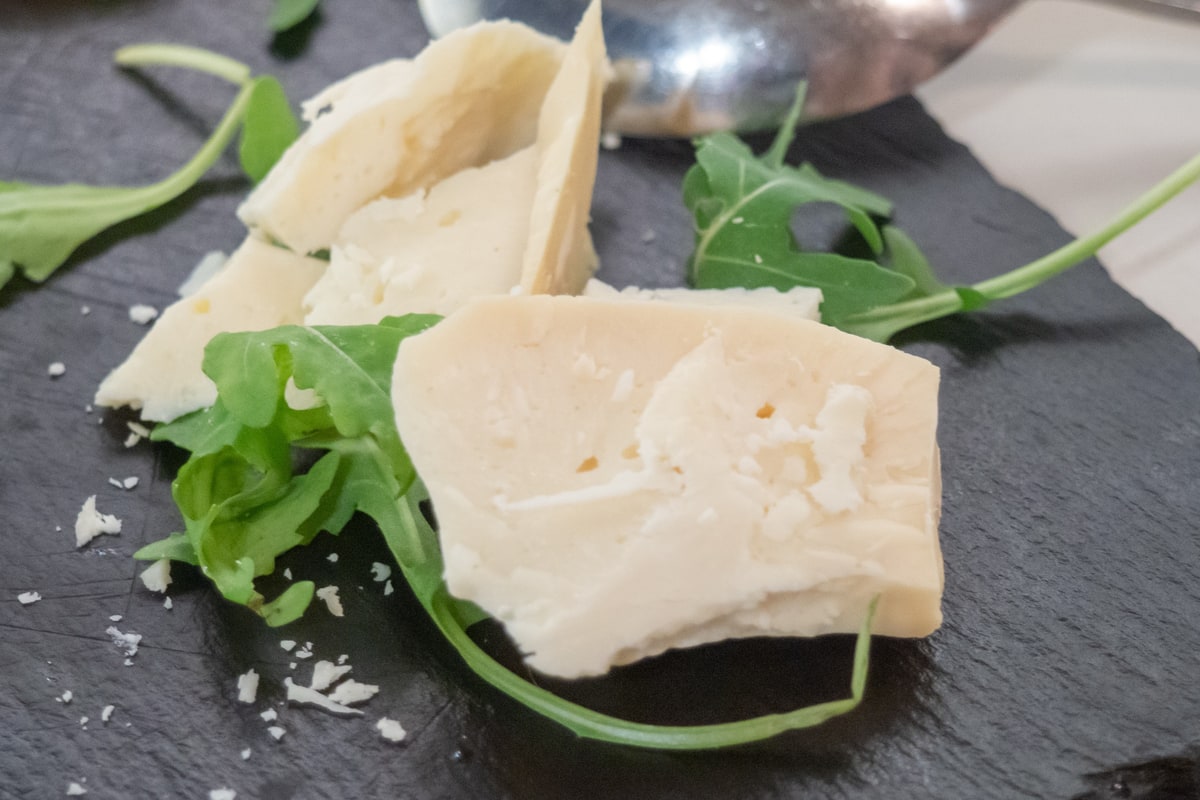
A Naxos food tour tastes the farm produce of the largest island of the Cyclades, from graviera and arseniko cheese, potatoes and cured meats to olive oil, thyme honey, sweets and the citron liqueur kitron, in the old town and the mountain villages. This post covers what a Naxos food tour includes, why Naxos feeds the Cyclades, the cheeses, potatoes, meats, olive oil and honey, the drinks, the sweets, the town, the villages and how Naxos compares with Santorini and Mykonos. It is one of the food tours in Greece on Greece VIP.
Each section ends with a Naxos food tour or tasting that can be booked online.
What does a Naxos food tour include?
Naxos food tour days mix a walk or a drive across the island with tastings of cheese, potatoes, cured meats, olive oil, honey, sweets and kitron. The route links farms, dairies and village kitchens, and the format stays small-group and expert-led.
A Naxos food tour starts in the lowland villages, where potato fields give way to citrus groves and grazing land. Tastings move from fresh cheese to cured meat, then to bread dipped in new olive oil. Kitron, a citron liqueur made on the island from the fruit and leaves of the citron tree, closes the tasting. Walkers cover lanes between villages, while drivers reach the higher slopes faster. Both versions stop at producers who work with local milk and local fruit.
Cheese, potatoes and honey travel well, so tasting stops double as shopping stops. Cured meats arrive sliced with bread, and sweets come from the bakeries that supply village festivals. Groups stay small, which keeps conversation with producers possible. Kitchen stops are tastings and demonstrations rather than cooking lessons. Shade, water and rest stops are planned around the middle of the route.
A Naxos food tour rarely covers one food group alone, because the stops link a dairy, a bakery, a beekeeper and a small press. Flavours build from savoury to sweet, and sweets arrive as pastries and honey cakes rather than as a separate course. The pace stays slow enough for questions about feed, soil and method. Anyone joining a Naxos food tour for the first time can expect a mixed board rather than a single speciality.
- Cheese: fresh and aged wheels from island dairies, tasted with bread and olive oil.
- Cured meat: smoked and air-dried slices served as a meze before the main tastings.
- Produce: potatoes, tomatoes and citrus grown on the island plains.
- Sweet finish: honey, pastries and kitron at the end of the route.
A Naxos food tour suits travellers who put flavour before monuments. Farms, dairies and bakeries sit close together on Naxos, the largest island of the Cyclades, so a walk between two villages already delivers cheese, cured meat, oil and honey. Small groups keep the pace steady and the questions flowing. The same routes work for walkers and for travellers who arrive by car.


Why is Naxos the food island of the Cyclades on a Naxos food tour?
A Naxos food tour follows the island farming base: fertile soil, a reliable water supply, grazing land and a long tradition of mixed crops. Naxos is the Cyclades richest island in farmland, and it feeds itself from its own fields, herds and orchards.
Naxos stands out because its soil is fertile while the rest of the Cyclades carries thin, dry earth. Rain clouds gather on Mount Zeus, the highest peak in the Cyclades at 1,001 metres, and the mountain holds them over the island. That rainfall feeds springs, wells and the lowland fields. Vegetables, fruit trees and livestock sit inside the same small area, so a Naxos food tour crosses farms, orchards and grazing land without long transfers.
Farming remains an economic pillar on the island. The 12th-century geographer al-Idrisi recorded extensive cattle raising on Naxos, and mixed farming has continued since. Naxos counts as the Cyclades leading island for self-sufficiency, because its fields, herds and orchards cover what the population needs. On a Naxos food tour the result is visible: the products tasted were grown, raised or made within a short drive of the table.
Farming on the island supports the tasting route at every stop. Milk becomes cheese within a day of milking, meat is cured before it travels, and fruit is eaten fresh or cooked. The short distance between field and counter keeps flavours bright. A Naxos food tour shows that chain directly, and the result is a board that changes from one village to the next. Walkers and drivers see the same chain on a Naxos food tour, at different speeds.
- Soil: deep, workable ground on the plains, where other islands carry thin earth.
- Water: springs and wells fed by rain that the mountain pulls from passing clouds.
- Livestock: sheep, goats and cattle grazed on the slopes above the fields.
- Range: vegetables, fruit, grains and pulses grown inside one small island.
Naxos earns its reputation through geography rather than promotion. Fertile ground, trapped rainfall and long farming traditions turned the island into the food store of the Cyclades. A Naxos food tour works because the producers are neighbours: the potato grower, the shepherd and the cheesemaker live within sight of one another. That density of farms keeps tasting routes short and rich.
Which cheeses does a Naxos food tour taste?
A Naxos food tour tastes graviera of Naxos, arseniko, kefalotyri and xinomyzithra, plus fresh whey cheeses sold on the day they are made. The island dairy herds supply the milk, and the tasting order runs from mild to sharp.
Graviera Naxou holds protected designation of origin status in the European Union. The Naxian version is made mostly from cow milk, with up to a fifth sheep or goat milk, and it ripens for five to twelve months. The result is a hard wheel with a sweet, nutty edge that slices cleanly and grates well. A Naxos food tour opens the cheese board with it, because the flavour carries bread, tomatoes and cured meat.
Arseniko Naxou joined the same register as a protected designation of origin cheese. Kefalotyri, a hard and salty white cheese of sheep or goat milk, fries in olive oil as saganaki and grates over pasta. Xinomyzithra, a sour whey cheese, appears with honey as a dessert. Naxian dairies also sell xinotyro and aged wheels, so a Naxos food tour can compare young, mature and smoked cheeses side by side.
- Graviera Naxou: the protected hard cheese of the island, aged for months before sale.
- Arseniko Naxou: a protected island cheese named in the European register.
- Kefalotyri: salty and hard, fried in olive oil or grated over food.
- Xinomyzithra: a soft, sour whey cheese eaten with honey or in baked goods.
Cheese sits at the centre of the island table, and tasting it explains the farming behind it. Milk from island herds, salt, rennet and time produce a small family of cheeses that differ by texture and age. A Naxos food tour visits the dairies where that work happens, so the tasting covers the herd as well as the wheel.
Which potatoes and farm produce does a Naxos food tour taste?
A Naxos food tour tastes Patata Naxou, the protected potato of the island, plus tomatoes, aubergines, pulses and citrus from the same fields. Sandy loam soil, strong sun and steady warmth give the tubers a firm skin and a clean, earthy flavour.
Patata Naxou carries protected geographical indication status in the European Union, and the crop grows only on this island. Growers plant a spring and an autumn crop. A mild climate and long sunny seasons stretch the growing cycle, while sandy loam soil drains fast and keeps the tubers clean. After lifting, farmers pile the potatoes under straw in the field so the skins harden before transport.
The potato arrived early here and became famous quickly, offered to visiting dignitaries as a local speciality. Citrus fruit and vegetables from the same plains travel to markets beyond the Cyclades, with Naxos named among the islands that export them. Tomatoes, aubergines and pulses fill the gaps between potato crops. A Naxos food tour tastes the produce raw, roasted or fried, depending on the stop.
- Patata Naxou: the protected island potato, boiled, roasted or fried at the table.
- Citrus: fruit from island groves, tasted fresh or pressed into juice.
- Vegetables: tomatoes and aubergines picked from the plains.
- Pulses: dried seeds from island fields, cooked into slow dishes.
The fields supply the whole board of a Naxos food tour, not just the potato. Warmth, sun and fast-draining soil suit root crops, while the lowland plains carry vegetables and citrus. Because growers sell close to home, the produce on a Naxos food tour arrives with the soil still on it. Potatoes leave the field cured rather than washed, which is why they keep through the winter.
Which cured meats and meat dishes does a Naxos food tour taste?
A Naxos food tour tastes smoked and air-dried meats, loukaniko sausages and slow-cooked dishes such as rosto, kalogeros, lemon-marinated lamb and goat baked in clay pots. Sheep and goats graze the slopes, and the kitchens use the whole animal.
Loukaniko, the Greek sausage, comes from pork or lamb and takes its flavour from orange peel, fennel seed and dried herbs. Island butchers smoke part of the production over aromatic wood, and the sausages arrive sliced and fried as a meze. Cheese dairies on Naxos also sell smoked cured meats beside aged graviera and mature wheels. A Naxos food tour uses these slices as the bridge between the cheese board and the cooked dishes.
Cooked dishes follow. Kalogeros counts among the local specialities of the Cyclades and belongs to Naxos, and tavernas on the island serve rosto, the slow-cooked roast, beside lemon-marinated lamb, zoulithra and goat kid baked in clay pots. Pork cooked with onions, potatoes and wine appears on the same menus. A Naxos food tour tastes these plates in small portions, because the day holds cheese, oil and honey as well.
- Smoked meats: cured cuts sold from island dairies and sliced thin for tasting.
- Loukaniko: pork or lamb sausage with orange peel and fennel, fried as a meze.
- Rosto: slow-cooked roast meat served at village tables.
- Kalogeros: a Naxian dish listed among the local specialities of the Cyclades.
Meat on Naxos comes from small herds rather than large units, so the cuts differ from the supermarket standard. Curing, smoking and slow cooking carry the flavour through the year and give island kitchens their winter store. A Naxos food tour tastes cured slices first and hot dishes second, which keeps the palate fresh. Vegetable plates arrive from the same kitchens on request.
Which olive oil and honey does a Naxos food tour taste?
A Naxos food tour tastes fresh olive oil pressed from island groves and thyme honey gathered from the dry slopes. Bread dipped in new oil opens the tasting, and honey closes it, spooned over cheese or folded into pastry.
Olive oil has a long record here: remains of the oil were found in jugs over 4,000 years old in a tomb on Naxos. Groves still cover the lower slopes, and olive oil ranks among the crops that the Cyclades send to markets, with Naxos named among the producing islands. The oil is pressed young and used raw over bread, tomatoes and cheese. A Naxos food tour tastes it before the heavier dishes arrive.
Honey follows the same dry landscape. Naxian honey comes largely from the nectar of thyme, the low shrub that covers the uncultivated slopes, and thyme supplies honey across the Cyclades, where it is a main ingredient of local pastry. The flavour is dark, aromatic and slow to fade, which is why it suits cheese and yoghurt as well as cakes. A Naxos food tour ends the tasting with it.
- Olive oil: pressed from island groves and poured raw over bread and vegetables.
- Thyme honey: thick and aromatic, gathered from the dry hillsides.
- Pairings: oil with cheese and tomatoes, honey with cheese and pastry.
- Take-home: bottled oil and jars of honey sold by the producers met on the route.
Oil and honey carry the flavours of the island furthest, because both keep well and travel easily. The oil reflects the groves on the lower slopes, and the honey reflects the thyme that grows where crops will not. Together they turn bread, cheese and pastry into a complete tasting on a Naxos food tour. A Naxos food tour places them at the two ends of the day, and both can be bought from the producers.
What does a Naxos food tour drink?
A Naxos food tour drinks kitron, a citron liqueur made on the island from the fruit and leaves of the citron tree, plus tsipouro, an un-aged Greek brandy drawn from grape pomace, and local wine. Kitron comes in green, yellow and colourless versions.
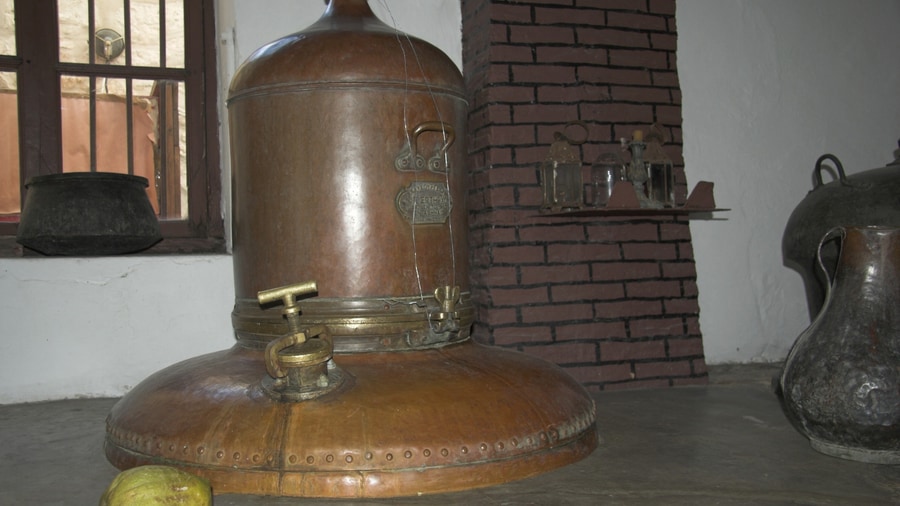
The citron tree resembles the lemon tree, yet its fruit tastes stronger and slightly different. Kitron carries a citrusy aroma and flavour, and islanders traditionally drink it as a digestif after a meal. The green version holds thirty per cent alcohol by volume and tastes sweeter, the colourless version sits at thirty-three per cent, and the yellow version is the strongest at thirty-six per cent with the least sugar.
The first distillery opened in 1896 in Halki, a village at the centre of the island, and citron growing there still feeds a small distilling trade. Stops on a Naxos food tour put a small glass of kitron beside a glass of tsipouro, which is distilled from grape pomace and reaches forty to forty-five per cent alcohol by volume. Tsipouro is distilled twice, while tsikoudia is distilled once.
- Citron fruit: the thick white rind carries the aroma, and the pulp holds little juice.
- Distilling: the first and last batches are thrown away, and only the middle one, called the heart, is kept.
- Meze: small glasses on a Naxos food tour arrive with nuts, dried fruit, raisins, cheese, olives, seafood, meat, halva or paximadi.
- Wine: retsina carries pine resin, and the Cyclades belong to the Aegean Islands wine region, which takes in Paros, Rhodes and Samos as well.
Greece won protected designation of origin status for tsipouro in 2006. Kitron had a spell of fashion in the early 1980s, yet a shortage of citron trees keeps the drink close to the island today. A Naxos food tour closes with one last small glass, cold water and a short walk back to the harbour.
Which sweets does a Naxos food tour taste?
A Naxos food tour tastes galaktoboureko, filo pastry filled with semolina custard and soaked in syrup, spoon sweets made from fruit preserved in sugar, citron rind cooked into a sweet called kitro glyko, and melomakarona, the honey and olive oil biscuits of the Christmas season.
Galaktoboureko takes filo on top and underneath, twenty layers in total, and the pan is cut into square portions. On a Naxos food tour the custard takes lemon, orange or rose for flavour, and it bakes with the pastry rather than going in afterwards. References to the dessert reach back to the Byzantine period, and each region of Greece keeps its own version. Notable versions come from Athens and Thessaloniki.
Spoon sweets on a Naxos food tour arrive as fruit preserves offered on a spoon, a gesture of hospitality in Greece. Cooks work with almost any fruit, and sour and bitter fruits win the highest praise. A host serves them by the teaspoon in a small porcelain or crystal dish, with coffee or tea and cold water. A well-made spoon sweet keeps the shape, colour, aroma and taste of the fruit.
- Kitro glyko: the thick rind of the citron is cooked in sugar syrup and served as a spoon sweet.
- Vanillia: a snow-white spoon sweet made from mastic resin, dropped into cold water as a vanilla submarine.
- Melomakarona: the egg-shaped biscuits are dipped in cold syrup of honey and sugar, then finished with ground walnut.
- Coffee: a small cup brewed in a briki arrives beside the dish of preserves.
The name melomakarono joins meli, the Greek word for honey, with makaria, an ancient bread eaten at funerals. Spoon sweets travel beyond the teaspoon, since they top yoghurt and ice cream, or spread on toast at breakfast. A Naxos food tour leaves the sweet course for the end of the walk, when appetite has room for one more spoonful.
Where does a Naxos food tour walk in the town?
A Naxos food tour walks the lanes of Chora, the island capital also known as Naxos Town. The route climbs from the harbour through Bourgos and Nio Chorio, the old quarters below the Kastro, and reaches the waterfront near the marble gate of the Portara.
Chora holds 8,897 residents and sits on the west side of the island, in the Cyclades. The name means town in Greek, a habit shared across the islands. The old town keeps narrow lanes just behind the port, where curtain doors open onto courtyards and the smell of fresh bread fills the air at midday. Stone walls, small churches and shuttered shops line the climb.
The Kastro stands on the old acropolis and holds a palace, exterior walls, a keep, a gothic chapel, the houses of the Latin families and the Catholic cathedral. Greek families built between the harbour and the fortress, in the suburbs of Bourgos and Nio Chorio, so the lanes below the castle grew as two separate quarters, and a Naxos food tour moves between them.
- Bourgos: merchants, landowners and artisans lived in this quarter below the fortress.
- Nio Chorio: poorer peasant families built their houses here.
- Portara: the marble door frame on the islet Palatia belongs to a temple of Apollo begun in the sixth century BC by the tyrant Lygdamis.
- Causeway: a link built in 1919 joins Palatia to the town, and the marble blocks came from the quarry at Flerio, ten kilometres away.
Marco Sanudo moved the island’s capital from the interior back to the seaside because the harbour there beat Potamides, where his fleet first landed. He built at least one pier, thought to lie partly beneath a chapel. A Naxos food tour finishes on that same waterfront, where the old lanes open onto the quay and the boats.
Which villages does a Naxos food tour visit?
A Naxos food tour visits Halki in the Tragaia area at the centre of the island, Apeiranthos on the slopes of Mount Fanari, and Filoti at the foot of Mount Zas. Each village keeps its own kitchens, its own streets and its own pace.
Halki, written Chalkeio on maps, served as the seat of the old municipality of Tragaia, and later of Drymalia. Drymalia covered about seventy per cent of the island and counted 4,889 residents at the 2021 census. A Naxos food tour keeps to the interior here. Naxos holds dozens of well-populated villages, and walking routes leave the squares for the mountain tops or for ravines with running water and lush vegetation.
Apeiranthos stands twenty-eight kilometres north-east of the island capital, on the foothills of Mount Fanari, between six hundred and fifty and seven hundred metres above the sea, and it counted 773 residents at the 2021 census. Filoti sits at four hundred metres, eighteen kilometres from that capital, and its 1,617 residents put it ahead of every other village on the island. Village cooking follows the herds and the fields.
- Mount Zas: the summit reaches one thousand and one metres, the highest point in the Cyclades.
- Zeus’s cave: it lies six hundred and twenty-eight metres up the western slope, beside a carving that names Zeus as protector of the sheep.
- Apeiranthos: the village keeps four museums, among them a geological museum and a museum of natural history.
- Filoti: livestock products lead the village economy, with farming second and tourism third.
The island counted 20,578 residents in 2021, and the interior holds a large share of them. Cooking in these villages leans on what the fields and the herds provide, which keeps dishes tied to the season. A Naxos food tour ends in a square, with coffee, preserves and the sound of a village at work.
How does a Naxos food tour compare with food tours on Santorini and Mykonos?
A Naxos food tour crosses a working farm island, while Santorini tours move over volcanic ground and Mykonos tours circle a resort island. Naxos holds the richest farmland in the Cyclades and feeds itself better than any neighbour in the group.
Santorini forms a circular archipelago around a caldera and counts as the busiest volcanic centre of the South Aegean Volcanic Arc. A huge eruption about 3,600 years ago buried the island in ash, and that soil now gives the island its cherry tomatoes and its vines. Wine leans on the Assyrtiko grape, and Vinsanto, a sweet wine from sun-dried grapes, ages in barrel for up to twenty-five years.
Mykonos covers 85.5 square kilometres and climbs to 341 metres, with 10,704 residents at the 2021 census. Strong winds give the island its nickname, the Island of the Winds, and tourism drives the economy, with at least 1.5 million visitors a year and nightlife that pulls crowds. Naxos spreads over 430 square kilometres as the largest island of the Cyclades group, and a Naxos food tour stays on farmland for the whole route.
- Volcanic ground: Santorini vines grow in ash and are trained into low basket shapes that shelter the grapes from wind, a detail that shapes a Santorini food tour.
- Resort crowds: Mykonos fills with visitors each summer, and that pace shapes a Mykonos food tour.
- Farm island: Naxos has a good water supply in a region where water runs short, and the fields repay it with steady crops.
Ferries link the three islands, so one journey can compare them. The difference shows on the plate: ash and salt air on Santorini, resort cooking on Mykonos, farm food on Naxos. A Naxos food tour suits travellers who want the fields, the villages and the harbour inside a single walk, with the island’s own produce on every table and water in sight from the last stop.
Which seafood does a Naxos food tour taste?
A Naxos food tour that ends by the harbour tastes the sea as well as the farm: octopus hung to dry in the sun and then grilled, small fried fish, and the catch of the day served simply with olive oil, lemon and bread at the tavernas of the waterfront.
Octopus is the sight that stops walkers on the seafront of Chora. Fishermen hang the tentacles on lines in the sun to dry, which firms the flesh before it goes over charcoal, and the grilled pieces arrive with a squeeze of lemon and a drizzle of oil. A Naxos food tour pauses here, because the drying lines make the link between the boats and the table easy to see.
The tavernas along the harbour also serve small fried fish eaten whole, squid, and grilled fish chosen from the morning catch. The style stays plain: the fish is cooked whole and seasoned lightly so the taste of the sea comes first. Bread, a simple salad and a glass of local wine complete the plate.
Seafood on Naxos sits beside the island’s farm produce rather than replacing it. A plate of grilled octopus can share the table with a slice of graviera and boiled potatoes, so a Naxos food tour that starts in the mountain villages can close at sea level with a different side of the same kitchen.
- Octopus: dried in the sun on lines by the harbour, then grilled over charcoal.
- Small fish: fried and eaten whole, with lemon and bread.
- Catch of the day: grilled whole and seasoned with olive oil and lemon.
Travelers who want the sea on the plate can plan the last stop of a Naxos food tour at the waterfront of Chora around sunset, when the tavernas light up and the fishing boats return to the harbour.
What do travelers ask about a Naxos food tour?
A Naxos food tour raises questions about vegetarian plates, children on the walk, the amount of food served, the best season for a visit and the option of adding a cooking class. The island answers each one with its own fields, herds and kitchens.
Does a Naxos food tour serve vegetarian food?
Vegetarian plates fill Greek tables. Fava, a puree of yellow split peas cooked with onion and spices, holds protected designation of origin status. Gigantes plaki bakes large beans with tomato sauce and herbs, dolmades come as stuffed vine leaves, spanakopita wraps spinach in pastry and hortopita does the same with wild greens. A Naxos food tour sets these beside the meat dishes.
Can children join a Naxos food tour?
The island presents itself as a destination for all ages and tastes, and a Naxos food tour keeps the town walk short and mostly level. Beaches such as Agios Georgios, Agia Anna and Plaka sit close to the capital, so a family can break the day with a swim. Sweet preserves and honey biscuits give children an easy start.
How much food does a Naxos food tour include?
Plates arrive as meze, a selection of small dishes that can build into a full meal. Greek tables serve meze with spirits, and the glasses come with nuts, dried fruit, raisins, cheese, olives, seafood, meat, halva or paximadi. Tastings add preserves, pastries and cheese, so an appetite helps.
When is the best season for a Naxos food tour?
August brings the driest spell: in the hills at Apeiranthos the daytime average reaches 28.7 degrees Celsius and the month delivers almost no rain, while January brings 208.3 millimetres. Spring and autumn keep the fields green and the lanes quiet. Wind crosses the Cyclades in high summer, so a light jacket helps near the water.
Can a Naxos food tour be combined with a cooking class?
A tasting walk and a kitchen session sit well together, because the island grows what a class cooks. Naxos supplies its own vegetables, fruit, cheese and meat, and the inland villages keep the older kitchens. A Naxos cooking class adds hands-on work to the eating.
Featured photo: C messier, CC BY-SA 4.0, via Wikimedia Commons.