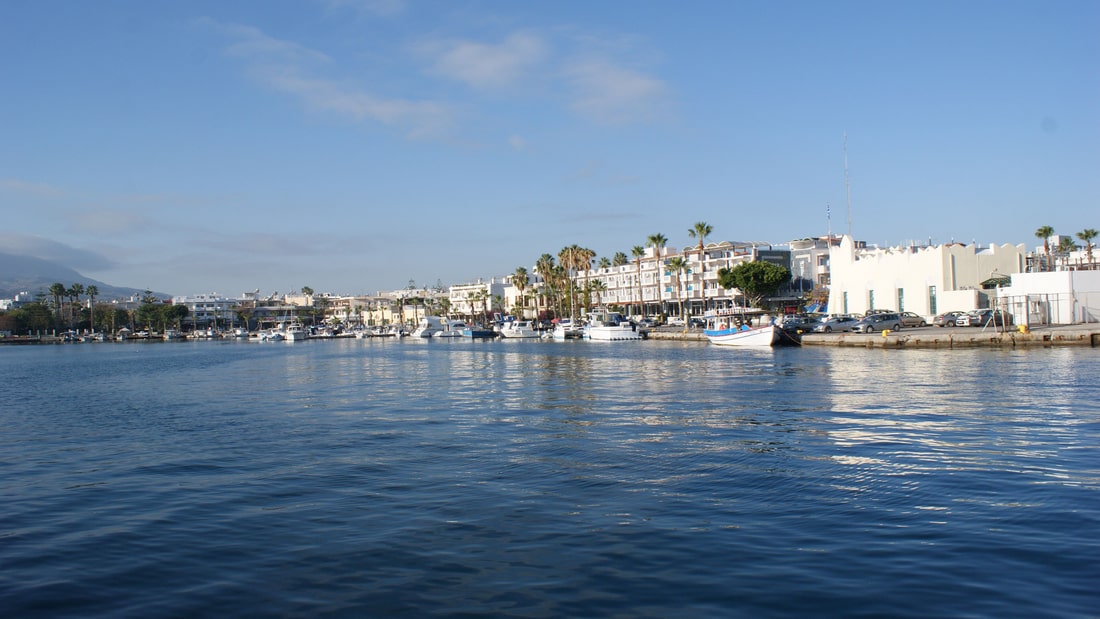
A Kos food tour tastes the produce of the Dodecanese island where Hippocrates was born, from the old town and harbour of Kos Town to the mountain villages, with island cheeses, village dishes, local wine, honey and sweets. This post covers what a Kos food tour includes, where tours walk, the cheeses, the dishes, the wines and spirits, the sweets and honey, the history behind the island table and the best season. It is one of the food and wine tours in Greece on Greece VIP.
Each section ends with a Kos food tour that can be booked online.
What does a Kos food tour include?
A Kos food tour is an escorted tasting route through the old town and market area of Kos Town, village kitchens, farms and wineries on the Dodecanese island, covering the cheese, honey, olive oil and wine of its fertile land.
Antiquity knew Kos as the garden of the Aegean, an island that exported fruit, vegetables and olive oil. That fertile past still sets the tasting list of a Kos food tour. Orchards, olive groves and vineyards feed the island under a hot-summer Mediterranean climate, and the main local products of the island are cheese, extra-virgin olive oil, honey and wine.
Farming is the second main occupation on Kos, after tourism. The island grows grapes, olives, figs, almonds, watermelons and tomatoes as main crops, along with wheat and corn. Cos lettuce, also called romaine, carries the island’s name and is said to have started there. Menus add aubergines, courgettes, pulses of all kinds, melons and peaches to this list of produce.
A Kos food tour can leave the town for working producers. A honey factory on the road to Kefalos, run by one family for more than a century, presents the history of beekeeping. An olive oil factory near Marmari beach keeps the machinery of earlier generations and explains cold-press methods, both traditional and modern. Wineries offer tastings and vineyard tours.
- Olive oil: Olive groves grow all over Kos.
- Honey: Beekeeping on Kos dates back to antiquity.
- Wine: Winemaking on Kos dates from the days of Hippocrates.
The island behind a Kos food tour ranks third in size among the Dodecanese, after Rhodes and Karpathos, and second in population, after Rhodes. A Kos island tour follows the history of the same island, from the 1315 harbour fortress of the Knights Hospitaller to the Byzantine castle at Antimachia.


Where does a Kos food tour walk?
A Kos food tour walks first through Kos Town, the main port of the island, then continues to villages such as Zia, Pyli, Antimachia and Kefalos, where the food stops lie close to farms, vineyards and honey producers.
Kos Town serves as the main port and population centre of the island, with whitewashed buildings that house hotels and restaurants. A fortress that the Knights Hospitaller erected in 1315 marks the harbour entrance. A Kos food tour begins at the harbour and the old town, where the earthquake of 23 April 1933 wrecked a large part of the old city.
Kos had one of the largest market places of the ancient world, and it formed the commercial centre of the old city. Shops stood on its eastern side, and a workshop at its southern end made pigments, including Egyptian Blue. Mosaic floors in its western rooms showed beast fights. A Kos food tour in the market area crosses that old trading ground.
Zia ranks among the smaller villages of Kos, alongside Zipari, Platani, Lagoudi and Asfendiou. Zipari was the seat of the former Dikaios municipality, which covered about one-fifth of the island’s territory. Vineyards grow mainly on the limestone-rich lower slopes of Mount Dikaios, and an olive oil factory in Zipari opens to visitors. A Kos food tour here crosses wine and olive country.
- Pyli: The other large town of the Dikaios unit.
- Antimachia: One of the two biggest honey-producing areas, with Kefalos.
- Kefalos: The westernmost town, 43 kilometres from Kos Town.
In the west, a Kos food tour reaches Kefalos, a town on a peninsula, built on a stone height beneath the windmill of Papavasilis and home to 2,329 inhabitants at the 2021 census. Below the old town lies the Bay of Kamari, where beach settlements line the bay for about 2 kilometres.
Which cheeses does a Kos food tour taste?
A Kos food tour tastes krasotyri, the soft goat and sheep milk cheese of Kos that ripens in the residue of boiled red grape skins, together with feta, mizithra and anthotyro and with cheeses from the Greek table.
Krasotyri, also called posas, is a soft cheese made on Kos from goat or sheep milk. Both its characteristic red skin and its subtle taste come from ripening in the leftover skins of boiled red grapes. The Greek name translates as wine cheese, and it is the only cheese of the island with the protected geographical indication status of the EU.
Krasotyri counts as the third classic local product of Kos, after honey and olive oil. The island produces other cheeses as well: feta that is strong and spicy, mizithra that is smooth and creamy, and anthotiro, whose name means flowery cheese. A Kos food tour tastes these beside the red-skinned krasotyri, so the cheese board covers spicy, creamy and subtle flavours.
Greek cuisine counts feta, kasseri, kefalotyri, graviera, manouri, anthotyros, metsovone and mizithra among its cheeses. Ladotyri is a cheese with olive oil, and kalathaki is a specialty of the island of Limnos. Greece breeds goats and sheep more readily than cattle, because of its climate and terrain, so goat and sheep milk stands behind the cheeses that a Kos food tour tastes.
- Feta: A white brined sheep milk cheese, sometimes with goat milk.
- Mizithra: A sheep or goat whey cheese, sold fresh or aged.
- Anthotyros: The fresh type goes with honey and fruit.
Kasseri, a medium-hard pale yellow cheese of sheep milk with up to 20% goat’s milk, holds protected designation of origin, which limits its production to four areas: Thessaly, Macedonia, Lesbos and Xanthi. A Kos food tour can set such a regional cheese beside krasotyri, whose EU protection ties that cheese to Kos.
Which dishes does a Kos food tour serve?
A Kos food tour serves island vegetable dishes, stuffed vine leaves, Dodecanese specialities, seafood and meze. The plates draw on tomatoes, pulses, grapes, olive oil and fish from the surrounding sea, a table shaped by Kos and the wider island chain.
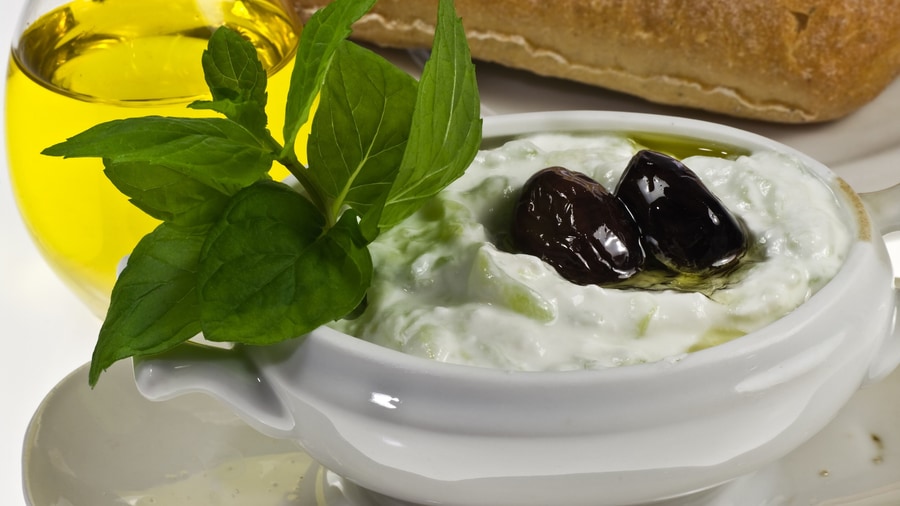
Tomatoes, aubergines, courgettes, pulses of all kinds, grapes, melons, watermelons and peaches all appear on the menu of Kos. The home-cooked style called lathera stews seasonal vegetables in a tomato sauce flavoured with olive oil and herbs, and that produce goes straight into a Kos food tour menu. Gemista, meaning filled, are baked peppers and tomatoes holding rice or ground beef.
Stuffed vine leaves are part of the dolma family, a staple across the cuisines of post-Ottoman nations. Stuffed grape leaves go by the names dolmades, dolmadakia and sarmadakia, and grapes rank among the main crops of Kos. The Dodecanese adds katimeria pancakes, koulouria, pouggia and tsirigia to its local specialities. On neighbouring Rhodes, matsi is hand made pasta used to make koulouria.
Seafood and meze complete the table. Island menus lean on fish, and the lists include fried squid with a lemon wedge, grilled octopus and shrimp sautéed as saganaki with ouzo and a tomato sauce. The meze tradition goes back to Byzantine times and grew in Greek houses, and a Kos food tour turns them into a full meal of shared plates.
- Vegetables: Tomatoes, courgettes and pulses fill seasonal plates.
- Dolmades: Grape leaves wrap rice, herbs and spices.
- Seafood: Squid, octopus and shrimp fill island menus.
Lentil soup, tiganites, retsina and pasteli date to ancient Greece, and Greek cooking rests on a trio of wine, olive oil and wheat. Barley, used for paximathia, sits beside wheat bread. A Kos food tour follows that trio from the first plate to the last, with the Dodecanese dishes added.
Which wines and spirits does a Kos food tour pour?
A Kos food tour pours wine from island vineyards on Mount Dikeos and grape spirits of the Dodecanese. The glass also carries Coan wine, the salty style invented on Kos in classical antiquity and mentioned by Strabo beside Chian wine.
Coan wine is the island’s oldest wine story. Pliny credited its invention to a slave who added sea water to the must to meet a quota. Large exports began about the 4th century BC. Winemakers on Rhodes imitated the salty style. Roman connoisseurs preferred wines without sea water, and a Kos food tour places modern bottles beside that ancient style.
Modern winemaking on Kos is recent. Vineyards stand mostly on the limestone-rich lower slopes of Mount Dikeos. The local grape Mavrothyliko, also called Black Lady, was nearly extinct before a winemaker revived it, and it has held Protected Geographical Indication status since 2008. Cabernet Sauvignon, Merlot, Syrah and Sauvignon Blanc also grow on the island, next to Assyrtiko and Malagouzia.
Souma, a colourless drink distilled from grapes, and koriantolino are the main alcoholic drinks of Rhodes. Tsipouro and raki are grape pomace brandies, and rakomelo blends the two with honey and spices. Ouzo is a dry aperitif flavoured with anise. Meze arrive with spirits like ouzo and raki, so a Kos food tour pairs small plates with these clear drinks.
- Coan wine: Sea water made the ancient style salty.
- Mavrothyliko: A revived local grape with protected status.
- Souma: A colourless spirit distilled from grapes.
Kanelada is a cinnamon soft drink served over ice in village coffee houses. Aloe vera grows on Kos and, mixed with fresh orange and pomegranate juice, becomes a cooling summer drink sold in delis. A Kos food tour offers these drinks beside wine, which Hippocrates used as a cure for fevers.
Which sweets and honey does a Kos food tour taste?
A Kos food tour tastes thyme honey, the tomato spoon sweet and other Greek sweets. Honey sits on every breakfast table on the island, and spoon sweets arrive as small preserved portions of fruit or vegetables served with Greek coffee or yogurt.
Beekeeping on Kos reaches back to antiquity, and honey goes into all sorts of local dishes. Much of it comes from apiaries around Kefalos and Antimahia, the two biggest honey-producing areas. Thyme honey ranks among the standout local products, while Greek honey comes from fruit trees, citrus trees, thyme and pine. A Kos food tour tastes honey in cooked dishes.
The tomato spoon sweet ties the sweets table to island farming, because tomatoes rank among the main crops of Kos. Glyko tomataki, meaning sweet little tomato, is the spoon sweet that best marks the island. The long, thin vergaki tomato ripens during July and August, and households and confectioners make the sweet then. Cinnamon, vanilla, almonds and lemon juice go into the pot.
Spoon sweets follow a slow method. Fruit simmers in water and sugar for hours or days until the syrup sets, and the method calls for patience and a heavy pot. Greek hosts serve them by the spoon as a gesture of hospitality, and they top yogurt or ice cream. A Kos food tour tastes preserves of pears, grapes, figs or aubergines.
- Honey: The apiaries of Kefalos and Antimahia lead production.
- Glyko tomataki: The tomato spoon sweet of July and August.
- Loukoumades: Fried balls of dough with cinnamon and honey.
Pasteli is a sesame bar made with sugar or honey, diples are fried pastry sheets soaked in honey syrup, and amygdalota are almond sweets. The Dodecanese adds melekouni, fanouropita, pouggakia and takakia. Honey over strained yogurt with walnuts is a simple finish, and a Kos food tour has honey ready for it.
How does Dodecanese history shape a Kos food tour?
A Kos food tour passes through layers of Dodecanese history: Hippocrates, who tied illness to diet, the Knights Hospitaller, Ottoman rule from 1522 and Italian rule from 1912. Greek cuisine counts Middle Eastern, Balkan and Italian influences among its sources.
Kos is the home island of Hippocrates, the physician born there about 460 BC. He held that disease was no punishment from the gods but the product of environment, diet and living habits. The Hippocratic Corpus includes On Regimen in Acute Diseases. A saying that equates food with medicine is credited to him, yet it appears to be a misquotation of unknown origin.
Under Genoese control, Kos hosted the Knights Hospitaller, who paid rent to the Genoese republic. Among the Dodecanese islands Kos ranks third in size, and only Rhodes has more people. The Knights made Rhodes their stronghold, so the Rhodes Old Town tour centres on a medieval capital, while a Kos food tour draws on an island whose second occupation is farming.
Ottoman rule began in 1522, when Rhodes fell to Suleiman and Kos surrendered under the terms of that agreement. Rhodes and Kos came under direct Ottoman rule, while the other islands kept extensive privileges in taxation and in self-government. A Turkish community of 2,000 people is estimated to live on Kos today, and Greek cuisine inherited dishes from Ottoman cooking.
- Prescriptions: Hippocrates prescribed fasting and honey with vinegar.
- Italian farms: Italian farmers founded agricultural settlements on Kos.
- Union: Greece received the Dodecanese in 1947.
Greek cuisine rests on wheat, olive oil and wine, and Hellenistic Kos was rich in wines of considerable fame. Italy began mass-scale tourism on Rhodes and Kos, and Greek cooks borrowed dishes from Italian cuisine. A Kos food tour tastes an island where ancient farming, medieval rule and modern tourism overlap.
When is the best season for a Kos food tour?
A Kos food tour follows the growing year: greens in spring, tomatoes in the hot summer, figs from early August, grapes from September and olives from October. The hot-summer Mediterranean climate keeps the summer dry, and autumn brings the harvests.
Kos has a hot-summer Mediterranean climate, a type with dry summers and wet winters. Almost all of the precipitation falls in winter and spring, and the dry spell lasts four to six months through summer and early autumn. Summer here brings clear skies and high temperatures, so a Kos food tour in those months meets farm produce in dry weather.
From the north, dry etesian winds sweep the Aegean through summer until mid-September. Their strength peaks in the afternoon, and they temper the fierce heat of the season. Tomato plants need heat and a long growing season, and the crop grew easily in Mediterranean climates after reaching Europe by the 1540s, so tomatoes belong to the hot months on Kos.
Grapes are harvested from early September until early November in the northern hemisphere, and in the Mediterranean olives are harvested in autumn, from October onwards. Timing matters because underripe fruit gives bitter oil and overripe fruit gives oil with fermentation defects. Grapes and olives are both among the main crops of Kos, so both harvests belong to its food year.
- Spring: Chard, a Greek green, is ready to harvest from April.
- Late summer: Figs are in season from early August to early October.
- Honey: The main Greek honeys come from fruit trees, citrus trees, thyme and pine.
The food year on Kos therefore opens with spring greens, moves through summer tomatoes and August figs, and closes with grapes, almonds and olives in autumn. Each stage adds a crop to the plate, so a Kos food tour meets a different set of ingredients in spring, summer and autumn.
What do travelers ask about a Kos food tour?
A Kos food tour prompts five queries from travelers: vegetarian dishes, children, villages, products to take home and sightseeing. Greek cooking holds plant-based dishes, the island runs 42.1 kilometres from end to end, and ancient ruins stand in Kos town.
Does a Kos food tour suit vegetarians?
Plant-based dishes sit at the centre of Greek cooking. Khorta are boiled greens served as a side dish, hot or cold, and dressed with olive oil and lemon. Filo pies of greens, or of spinach and cheese, add dairy beside the vegetables.
Can children join a Kos food tour?
The Greek table holds plain staples. Wheat bread is everywhere, strained yogurt with honey is a common dessert, and breakfast adds fresh fruit and sesame bread rings. Kos farms grow figs, watermelons and tomatoes, so fresh produce comes from the island.
Which villages can a Kos food tour reach?
Kos measures 42.1 by 11.5 kilometres, so every village lies within one island length of the town of Kos. Kefalos stands near the island’s west end, Pyli, Antimachia and Kardamena are other main villages, and Platani, Zia and Asfendiou are smaller.
Which products come home from a Kos food tour?
Grapes, almonds, figs and olives grow on Kos, and figs are eaten fresh or dried. Greek cooking has always kept wine and olive oil at its centre, so wine, olive oil, almonds, dried figs and honey are the local foods to carry home.
Can a Kos food tour combine with sightseeing?
The ancient market place of Kos was considered one of the biggest in the ancient world, built around a yard 50 metres wide and 300 metres long. The town also holds the plane tree of Hippocrates, so a Kos food tour there meets ancient sights.
Featured photo: Asurnipal, CC BY-SA 4.0, via Wikimedia Commons.